

Future Financial Planning and Asset Division

Maximizing Wealth: Future Financial Planning & Asset Management Strategies
Overview of Future Financial Planning and Asset Management Strategies
Financial planning and asset management are essential components of achieving long-term financial stability and security. These strategies involve careful planning and management of one’s financial resources, including income, expenses, assets, and investments. With the uncertainty of the future, it is crucial to have a solid financial plan and effective asset management strategies in place to protect and grow your wealth.
Defining Financial Planning and Asset Management
Financial planning is the process of creating a comprehensive plan to manage your finances and achieve your financial goals. This includes setting financial goals, analyzing your current financial situation, and creating a budget. It also involves identifying and managing potential risks, such as loss of income, medical emergencies, or unexpected expenses.
Asset management, on the other hand, focuses on managing your investments and other assets to maximize their potential and achieve your financial goals. This includes diversifying your portfolio, monitoring market trends, and making strategic investment decisions.
Importance of Future Planning for Long-Term Financial Stability
Future planning is crucial for achieving long-term financial stability and security. It allows you to set financial goals and create a roadmap to achieve them. Without a plan in place, you may find yourself struggling to cover unexpected expenses or unable to retire comfortably.
Moreover, future planning helps you to identify and manage potential risks that could affect your finances. By having a contingency plan in place, you can protect yourself and your assets from unforeseen circumstances.
Key Components of a Solid Financial Plan
A solid financial plan should include the following key components:
- Financial goals: These are the specific objectives you want to achieve with your finances, such as saving for retirement, buying a house, or paying off debt.
- Budget: A budget helps you track your income and expenses and make informed decisions about your spending.
- Emergency fund: This is a savings account that can cover at least 3-6 months of living expenses in case of unexpected events.
- Insurance: Having the right insurance coverage can protect you from financial loss in the event of an accident, illness, or other unexpected situations.
- Debt management: Paying off debt should be a key component of your financial plan to free up more money for saving and investing.
- Retirement planning: It’s crucial to plan for your retirement early to ensure you have enough savings to support your lifestyle after you stop working.
Understanding Different Types of Assets and Investment Options
Assets are anything that has monetary value and can be used to generate wealth. There are various types of assets, including cash, stocks, bonds, real estate, and business ownership. Each type of asset comes with its own set of risks and potential for returns.
Investment options for assets include stocks, bonds, mutual funds, exchange-traded funds (ETFs), real estate, and alternative investments. These options have varying levels of risk and return potential, so it’s important to carefully assess your risk tolerance and goals before making investment decisions.
Evaluating Risk and Reward in Asset Management Strategies
Risk and reward go hand in hand in asset management strategies. The higher the potential return, the higher the risk involved. It’s crucial to evaluate and understand your risk tolerance before making any investment decisions.
Diversification is an essential risk management strategy in asset management. By spreading your investments across different assets and industries, you can reduce the overall risk in your portfolio. This way, if one investment performs poorly, the others can help balance it out.
Incorporating Tax Planning into Your Financial Strategy
Taxes can significantly impact your finances, so it’s essential to incorporate tax planning into your financial strategy. Tax planning involves understanding how taxes affect your income and investments and taking advantage of any tax-saving opportunities.
Some tax planning strategies include contributing to tax-advantaged retirement accounts, taking advantage of tax deductions and credits, and strategically timing capital gains and losses. It’s best to consult a financial advisor or tax professional to help you create a tax-efficient financial plan.
Utilizing Technology for Efficient Asset Management
Technology has made asset management more accessible and efficient than ever before. There are various financial planning and asset management tools and software that can help you track your finances, analyze your investments, and make informed decisions.
Some of these tools include budgeting apps, investment tracking platforms, and robo-advisors. These tools can help you save time and make more informed investment decisions based on data and analysis.
Common Mistakes to Avoid in Future Financial Planning
When it comes to future financial planning and asset management, there are some common mistakes that people make. Some of these include:
- Not having a financial plan in place
- Not setting realistic financial goals
- Not diversifying investments
- Not regularly reviewing and adjusting the financial plan
- Not considering taxes in financial planning
It’s important to be aware of these mistakes and avoid them to ensure your financial plan is effective and aligned with your goals.
Staying Ahead with Regular Reviews and Adjustments to Your Financial Plan
Lastly, it’s crucial to regularly review and adjust your financial plan to ensure it aligns with your goals and current financial situation. Life is unpredictable, and your financial plan may need to be adjusted to adapt to changes in your life or in the economy.
Schedule regular reviews with a financial advisor to assess your progress, make any necessary changes, and stay on track towards achieving your financial goals.
Conclusion
In conclusion, future financial planning and asset management are crucial for achieving long-term financial stability and security. By creating a solid financial plan, understanding different types of assets and investments, managing risks, and regularly reviewing and adjusting your plan, you can protect and grow your wealth for a secure financial future.
Handling Business Assets in Mediation

Maximizing Assets: The Power of Mediation for Effective Management
Introduction
Welcome to our guide on handling business assets in mediation. In today’s business world, disputes and disagreements over assets are a common occurrence. When these issues arise, mediation can be a helpful and effective way to reach a resolution without going to court. In this guide, we will explore the concept of asset management mediation, its benefits, and the role of a mediator in this process. We will also provide practical advice on choosing the right asset management mediator, the mediation process for handling business assets, and addressing common challenges. We will also showcase some successful case studies and discuss the future of asset management mediation. Let’s dive in.
What is Asset Management Mediation?
Asset management mediation is a form of alternative dispute resolution (ADR) where a neutral third party, known as a mediator, helps parties in a dispute to reach a mutually acceptable agreement regarding their assets. This can include any type of asset, such as real estate, intellectual property, stocks, or businesses. The goal of asset management mediation is to find a fair and efficient resolution that satisfies all parties involved.
Why Use Asset Management Mediation?
There are several reasons why businesses and individuals may choose to use asset management mediation instead of going to court:
- Cost-effective: Going to court can be costly, with legal fees, court costs, and potential damages. Mediation, on the other hand, is often less expensive and can save both parties time and money.
- Confidentiality: Court proceedings are a matter of public record, which means that anyone can access and view the details of your dispute. In contrast, mediation is confidential, and the details of the agreement reached are not disclosed to anyone outside of the involved parties.
- Preserves relationships: Mediation allows parties to maintain a working relationship, especially in business disputes where ongoing collaboration is necessary.
- Control over the outcome: In court, a judge makes the final decision, which may not be satisfactory to either party. In mediation, both parties have control over the outcome and can come to an agreement that meets their needs.
The Role of a Mediator in Asset Management
The mediator plays a crucial role in asset management mediation. They are responsible for facilitating the negotiation process and guiding the parties towards a mutually agreeable solution. Here are some of the key roles of a mediator:
- Neutral facilitator: The mediator acts as a neutral third party who does not have any stake in the outcome of the mediation. This neutrality helps build trust and ensures that both parties are treated fairly and respectfully.
- Effective communicator: A mediator must have excellent communication skills to understand the parties’ needs and concerns and facilitate productive discussions.
- Problem-solver: The mediator must be skilled at identifying the underlying issues and finding creative solutions that meet the parties’ needs.
- Impartial decision-maker: In some cases, the mediator may need to make decisions if the parties cannot agree. In this role, the mediator must remain impartial and base their decisions on the facts presented.
Benefits of Asset Management Mediation
Asset management mediation offers several benefits that make it a popular choice for resolving disputes over assets. Some of these benefits include:
- Flexibility: Mediation allows both parties to come up with a customized and mutually agreeable solution that may not be possible in court.
- Less stressful: Court proceedings can be stressful and emotionally draining, while mediation is a more relaxed and informal setting.
- Quicker resolution: Mediation can often resolve disputes in a matter of weeks, whereas court proceedings can take months or even years.
- Preserves relationships: As mentioned earlier, mediation allows parties to maintain a working relationship, which can be crucial for businesses.
How to Choose the Right Asset Management Mediator
Choosing the right mediator is essential for a successful mediation process. Here are some factors to consider when selecting an asset management mediator:
- Experience and expertise: Look for a mediator who has experience and expertise in asset management mediation. They should have a thorough understanding of the business world and the complexities of asset division.
- Reputation: Research the mediator’s reputation and read reviews from previous clients. A good mediator should be highly regarded by their peers and have a track record of successful mediations.
- Communication skills: As mentioned earlier, a mediator must have excellent communication skills to understand the parties’ needs and facilitate productive discussions.
- Compatibility: It’s essential to meet with a potential mediator beforehand to determine if you feel comfortable working with them. Mediation is a collaborative process, and a good mediator should be someone you can trust and communicate effectively with.
The Mediation Process for Asset Management
The mediation process for asset management typically involves the following steps:
- Initial meeting: The mediator meets with both parties to discuss the dispute and explain the mediation process.
- Identification of issues: The mediator helps the parties identify the underlying issues and interests.
- Information exchange: The parties exchange information and documents related to the dispute.
- Joint session: The mediator brings both parties together in a joint session to discuss the issues and negotiate a resolution.
- Private sessions: The mediator may hold private sessions with each party to discuss their concerns and offer suggestions for a resolution.
- Agreement and documentation: If an agreement is reached, the mediator will draft a written agreement detailing the terms of the resolution.
- Finalization: Once the parties have reviewed and agreed to the terms, the agreement is signed, and the mediation process is complete.
Addressing Common Challenges in Asset Management Mediation
While asset management mediation can be an effective way to resolve disputes, it’s not without its challenges. Here are some common challenges and tips for addressing them:
- Power imbalance: In some cases, one party may hold more power or be more knowledgeable about the assets in question. The mediator must recognize and address any power imbalances to ensure a fair negotiation process.
- Emotions: Disputes over assets can be emotionally charged, and parties may have a hard time separating their emotions from the negotiation process. The mediator must create a safe and respectful environment for all parties to express their feelings and concerns.
- Complexity: Asset division can be a complex and technical process, especially in business disputes. The mediator must have the knowledge and skills to understand and explain the complexities involved.
- Non-compliance: In some cases, one party may agree to a resolution during mediation but fail to follow through on their end. It’s essential for the mediator to address this and ensure both parties are committed to the agreement.
Case Studies: Successful Asset Management Mediation
Let’s take a look at two case studies that showcase the effectiveness of asset management mediation:
Case Study 1: Business Partnership Dispute
In this case, two partners in a successful business were in a dispute over ownership and division of assets in the event of a partnership dissolution. The disagreement had already caused a strain on their relationship and threatened the future of the business.
The partners decided to try mediation to resolve their issues. The mediator helped them identify their underlying interests and concerns and facilitated productive discussions. After several sessions, they reached a mutually acceptable agreement that included an amicable division of assets and a partnership dissolution plan. The business remained intact, and the partners were able to maintain a working relationship.
Case Study 2: Divorce and Business Assets
In this case, a couple was going through a divorce, and one of the main points of contention was the division of their business assets. The couple had built a successful business together, and both parties had invested a significant amount of time and effort into it.
The couple agreed to try mediation to avoid a lengthy and costly court battle. The mediator helped them identify their interests and concerns, and they were able to come up with a fair division of business assets that satisfied both parties. The couple was also able to reach an amicable child custody and support agreement. Mediation allowed them to preserve their working relationship and co-parent effectively.
The Future of Asset Management Mediation
Asset management mediation is becoming increasingly popular as businesses and individuals seek more cost-effective and efficient ways to resolve disputes. Its benefits, such as flexibility, confidentiality, and preserving relationships, make it a preferred choice for handling business assets. With qualified and skilled mediators, asset management mediation has the potential to become the go-to method for resolving asset disputes in the future. We hope this guide has provided you with valuable insights and practical tips for navigating this complex and sensitive issue. Thank you for reading!
Handling Inherited Assets in Mediation
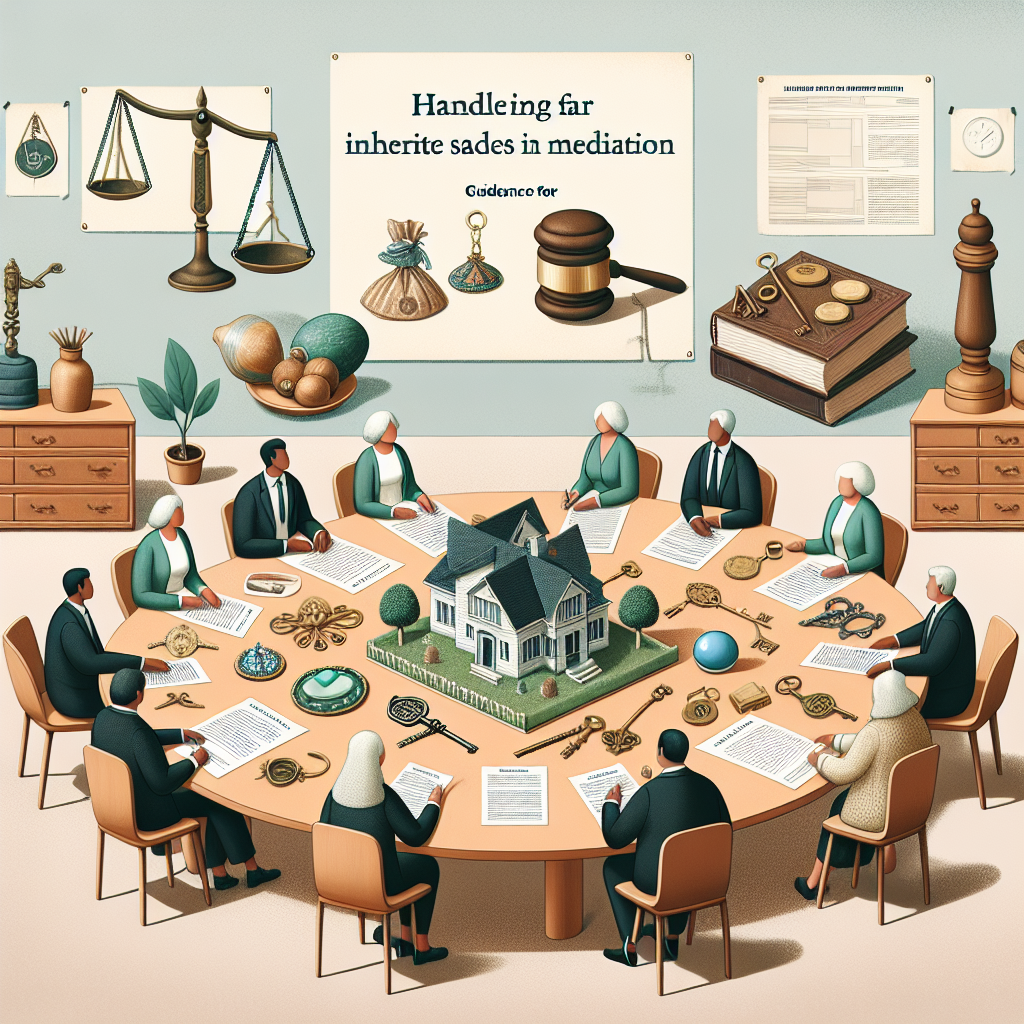
Maximizing Inherited Assets: Mediation Strategies
Overview of Mediation for Inherited Assets
Inherited assets can often be a source of conflict and tension among family members. When a loved one passes away, the process of dividing their assets can be emotionally charged and complicated. In many cases, disputes may arise among family members over who is entitled to what and how the assets should be distributed.
Mediation can be a helpful tool in managing these disputes and reaching a fair and mutually agreeable solution. In this article, we will discuss the importance of mediation in handling inherited assets and provide strategies for effective communication and resolution.
The Importance of Mediation in Managing Inherited Assets
Inherited assets are often a sensitive and personal matter. They can represent not just financial value, but also emotional ties to a loved one who has passed away. As such, disputes over inherited assets can quickly escalate into bitter and lengthy legal battles.
Mediation offers an alternative to this costly and emotionally draining process. By bringing all parties together in a neutral and non-adversarial setting, mediation can facilitate open communication and help to find a mutually agreeable solution.
Additionally, mediation can help to preserve family relationships that may be strained by the process of distributing inherited assets. By working together to find a solution, rather than having a decision imposed by a court, family members can maintain a sense of control and respect for one another.
Understanding the Complexities of Inherited Assets
There are many factors that can make dividing inherited assets a complex process. These may include:
- The emotional attachment to the assets
- The varying needs and financial situations of family members
- The legal and tax implications of asset distribution
- The potential for family dynamics and conflicts to influence decision-making
It is important to recognize and address these complexities in order to effectively manage and resolve disputes over inherited assets. This is where mediation can play a crucial role.
Role of Mediation in Resolving Family Conflicts over Inherited Assets
One of the key benefits of mediation is that it allows for open and honest communication among family members. Rather than each party sticking to their own entrenched positions, mediation encourages active listening and understanding of each other’s perspectives.
Through this process, family members can work together to find a solution that considers everyone’s needs and interests. This can help to de-escalate conflicts and lead to a more satisfactory resolution for all involved.
Moreover, mediation can help to reduce the financial and emotional costs associated with lengthy legal battles. By avoiding court and reaching a timely and mutually acceptable agreement, all parties can save time, money, and emotional strain.
Identifying Potential Issues in Inherited Assets Mediation
Before entering into mediation for inherited assets, it is important to identify any potential issues that may need to be addressed. These may include:
- Disagreements over the value and distribution of specific assets
- Differences in opinions on how to manage or divide assets
- Unresolved conflicts and power imbalances among family members
- Legal or tax implications that may need to be factored into the decision-making process
By identifying these potential issues early on, the mediator can help to guide the discussions and keep the focus on finding a fair and sustainable solution.
Strategies for Effective Communication in Inherited Assets Mediation
Effective communication is crucial in any mediation process, but it is especially important when it comes to handling inherited assets. The following strategies can help to facilitate productive communication between family members:
- Active listening: Encourage all parties to actively listen to each other’s perspectives and avoid interrupting or dismissing each other’s views.
- Empathy: Encourage family members to put themselves in each other’s shoes and consider the emotions and motivations behind their positions.
- Clarification: It is important to clarify each party’s needs and interests, as well as any underlying concerns or priorities.
- Respectful communication: Emphasize the importance of respectful and non-confrontational communication, even when discussing difficult topics.
By using these strategies, the mediator can help to create a safe and constructive environment for open communication and collaboration.
Legal Considerations in Mediation for Inherited Assets
While mediation is a non-adversarial process, it is still important to consider legal implications when dealing with inherited assets. The mediator may not provide legal advice, but they can help to facilitate discussions and ensure that all parties are aware of the legal implications of any decisions made during the mediation process.
It may also be beneficial to involve legal professionals, such as estate planning attorneys, in the mediation process. These experts can provide guidance and clarification on any legal matters that may arise.
Addressing Emotional Factors in Inherited Assets Mediation
Emotions can run high when it comes to inherited assets, as it may involve the loss of a loved one and the potential for family conflicts. It is important to address these emotional factors in order to reach a fair and sustainable resolution.
The mediator can help to create a safe and respectful space for family members to express their emotions and concerns. By acknowledging and addressing these underlying emotions, the mediator can help to de-escalate conflicts and work towards a mutually satisfactory agreement.
Creating Fair and Sustainable Solutions in Inherited Assets Mediation
The ultimate goal of mediation for inherited assets is to find a fair and sustainable solution that considers the needs and interests of all involved. This may involve creative solutions that go beyond simply dividing assets equally.
For example, in cases where there are sentimental assets involved, the mediator may help to find a way for all family members to benefit from the asset in some way, rather than just one person receiving it outright.
It is also important to consider the long-term implications of any decisions made during the mediation process. The mediator can help to ensure that the solutions reached are not only fair in the present, but also sustainable in the future.
Benefits of Using Mediation for Managing Inherited Assets
In conclusion, mediation can be a valuable tool in managing disputes over inherited assets. By promoting open communication, understanding, and collaboration, mediation can help to reach a fair and mutually satisfactory resolution for all involved.
Furthermore, mediation can help to preserve family relationships and avoid costly and emotionally draining legal battles. By addressing legal considerations and emotional factors, the mediator can help to create a safe and productive environment for navigating the complexities of inherited assets.
If you are facing a dispute over inherited assets, consider the benefits of using mediation as a way to find a fair and sustainable solution that considers the needs and interests of all involved.
Identifying Marital vs. Non-Marital Assets

Maximizing Divorce Assets: A Guide to Identification
Introduction
Begins with a brief overview of the concept of divorce asset identification and its importance in divorce proceedings. Mention the benefits of conducting a thorough asset identification process.
Understanding Community Property
Define community property and its role in divorce. Discuss how community property is divided during divorce and mention any exceptions to community property.
Identifying Marital Assets
Explain what constitutes as marital assets and discuss the different types of assets that fall under this category. Provide tips on how to locate and identify marital assets.
Valuing Marital Assets
Discuss the various methods used to value assets and explain the importance of accurate valuation in asset division. Provide examples of assets that may require expert valuation.
Separate Property
Define separate property and its role in divorce. Discuss the difference between community and separate property and how separate property is treated during asset division.
Hidden Assets
Define hidden assets and their impact in divorce proceedings. Discuss common methods used to hide assets and provide tips on how to uncover hidden assets.
Business Assets
Explain how business assets are handled during divorce. Discuss the importance of proper valuation for business assets and mention the different approaches to dividing business assets.
Retirement Accounts
Discuss the treatment of retirement accounts in divorce and explain the process of dividing retirement accounts. Provide tips on how to properly value and divide retirement accounts.
Real Estate
Discuss how real estate is dealt with during divorce. Explain the importance of proper valuation for real estate and provide tips on how to handle jointly-owned real estate.
Finalizing Asset Division
Discuss the various options for finalizing asset division and mention the importance of seeking legal and financial advice. Provide advice on how to reach a fair and amicable asset division agreement.
Impact of Asset Division on Children

Maximizing Child Custody and Asset Division: Expert SEO Strategies
Understanding Child Custody and Asset Division in a Divorce
Divorce can be a difficult and emotionally draining process, especially when there are children involved. In addition to the emotional toll, there are also legal and financial implications to consider, such as child custody and asset division. These two issues are often intertwined and can greatly impact the well-being of the children involved.
The Importance of Hiring a Skilled Family Law Attorney
When going through a divorce, it is crucial to have a skilled family law attorney by your side. They can guide you through the legal process and advocate for your rights as a parent. In terms of child custody and asset division, a family law attorney can help negotiate fair agreements and ensure that the best interests of the children are prioritized.
Factors that Can Affect Child Custody Agreements
Child custody agreements are determined based on a variety of factors, including the child’s age, relationship with each parent, and the ability of each parent to provide for the child’s physical and emotional needs. Additionally, the court will consider any history of abuse or neglect, as well as the child’s preference (if they are old enough to express it).
Dividing Assets: What You Need to Know
Asset division is a major aspect of any divorce, and it can greatly impact the financial stability of both parties involved. When children are involved, the division of assets can also have a significant impact on their well-being. It is important to understand the different types of assets that may need to be divided, such as real estate, investments, and personal belongings. Additionally, it is important to consider the tax implications and potential future financial needs of both parties.
The Role of Mediation in Child Custody and Asset Division
In some cases, mediation may be used as a way to reach agreements on child custody and asset division outside of court. This can be a beneficial option as it allows both parties to have more control over the outcome and can help minimize conflict. A mediator can also help facilitate open communication and find creative solutions that meet the needs of both parties and their children.
Common Mistakes to Avoid in Child Custody and Asset Division Negotiations
When navigating child custody and asset division, it is important to avoid common mistakes that can negatively impact the outcome. These may include not seeking legal advice, making emotional decisions, or not considering the long-term implications of the agreements being made. It is important to approach these negotiations with a clear head and prioritize the well-being of the children.
Navigating High-Conflict Child Custody Cases
In some cases, child custody and asset division can become highly contentious and lead to a high-conflict divorce. This can be especially damaging to the well-being of the children involved. In these situations, it is important to have a skilled family law attorney who can advocate for the best interests of the children and help navigate the legal process in a way that minimizes the negative impact on them.
Protecting Your Rights as a Parent during Asset Division
During the asset division process, it is important to protect your rights as a parent. This may include ensuring that you have equal access to your children and are able to maintain a stable and loving relationship with them. Your family law attorney can help you understand your rights and work towards a fair and equitable division of assets that prioritizes the well-being of your children.
Creative Solutions for Child Custody and Asset Division
When it comes to child custody and asset division, there is no one-size-fits-all solution. Each family is unique and has different needs and circumstances. In order to reach agreements that are in the best interests of everyone involved, it may be necessary to get creative. This could include alternative custody arrangements, co-parenting agreements, or collaborative asset division strategies.
The Impact of Child Custody and Asset Division on Your Future
The decisions made during child custody and asset division will not only impact the present but also the future. It is important to carefully consider the long-term implications of these agreements and ensure that they are fair and in the best interests of the children. By prioritizing their well-being and making informed decisions, you can lay the foundation for a positive and stable future for your children.
Intellectual Property Rights in Divorce

Protecting Your Intellectual Property Rights During Divorce
Introduction
Divorce can be a complicated and emotionally taxing process, especially when it comes to dividing assets. And one type of asset that may often be overlooked is intellectual property (IP). In today’s digital age, IP has become increasingly valuable and can be a significant factor in a divorce settlement. It is crucial for individuals going through a divorce to understand their intellectual property rights and how they may be affected by the divorce. In this article, we will discuss the implications of divorce on intellectual property rights, ways to protect IP during marriage, and how IP assets are divided in a divorce settlement.
What is Intellectual Property?
Before diving into the specifics of intellectual property rights in divorce, let’s first define what is meant by “intellectual property.” In simple terms, intellectual property refers to creations of the mind, such as inventions, literary and artistic works, designs, symbols, and names used in commerce.
There are three main types of intellectual property: patents, trademarks, and copyrights. Patents protect inventions, trademarks protect brand names and logos, and copyrights protect creative works such as books, music, and artwork. These forms of IP can be valuable assets that contribute to an individual’s or a company’s overall wealth.
In a divorce, intellectual property is classified as either marital or separate property. Marital property is any asset acquired during the marriage, while separate property includes assets acquired before the marriage or through inheritance or gift. How IP is classified can have significant implications on its division during a divorce settlement.
Implications of Divorce on Intellectual Property Rights
Divorce can have a significant impact on the ownership and control of intellectual property assets. In a marriage, both spouses may have contributed to the creation and development of IP, making it challenging to determine who has the rights to it. Additionally, the divorce process can become more complicated if there are multiple IP assets involved, such as patents, trademarks, and copyrights.
One of the main implications of divorce on IP rights is that it can result in the loss of control over the asset. For example, if one spouse owns a patent and the other spouse is a co-inventor, the non-owner spouse may have the right to use the patent commercially. This can be a significant issue if the two spouses have different interests or ideas for the patent’s use.
Another implication is financial. IP assets can generate significant income and may be a significant source of wealth for one or both spouses. If these assets are not divided fairly in a divorce, it can have long-term financial consequences for both parties.
Protecting Intellectual Property during Marriage
One of the best ways to protect intellectual property during a marriage is to have proper documentation and agreements in place. For example, if one spouse owns a business that holds valuable IP assets, it is essential to have a legitimate business structure and contract in place to protect against any potential claims from the other spouse. This can help avoid disputes and complications if the couple decides to divorce in the future.
Additionally, it is crucial to have proper agreements and documentation for any jointly created IP assets. In the absence of a clear agreement, both spouses may have equal rights to the asset, which can lead to conflicts and potentially expensive legal battles in the event of a divorce.
Another way to protect IP during marriage is to keep detailed records of the development and ownership of the assets. This can help determine the contribution of each spouse to the creation of the asset and can be used as evidence in a divorce settlement.
Marital vs. Separate Intellectual Property
As mentioned earlier, the classification of intellectual property as marital or separate can significantly impact its division during a divorce. Marital property is typically divided equally between the spouses, while separate property remains with the original owner.
Marital IP includes any assets created or acquired during the marriage, regardless of which spouse owns it. For example, if one spouse writes a book during the marriage, the copyright would be considered marital property, even if the book is published under the author’s name alone. This is because it was created during the marriage and may have been influenced by the other spouse’s support or contributions.
On the other hand, separate IP includes assets that were acquired before the marriage or through inheritance or gift. This could include any patents, trademarks, or copyrights that were created or acquired before the marriage. It is crucial to have proper documentation and evidence to prove the separate ownership of these assets.
In some cases, IP assets may have both marital and separate components. For example, if one spouse owned a patent before the marriage but then made significant improvements to it during the marriage with the other spouse’s help, the patent may be considered both marital and separate property. In this case, the court may use a formula to determine the percentage of ownership and divide it accordingly in the divorce settlement.
Valuing Intellectual Property in a Divorce
Valuing intellectual property can be a complex and challenging process. Unlike tangible assets such as real estate or stocks, IP assets do not have a set market value, making it difficult to determine their worth. In a divorce, it is crucial to accurately value IP assets to ensure they are divided fairly between the spouses.
One of the main challenges in valuing IP is that its worth is often tied to future income and potential growth. For example, a patent may have a significant potential for future profits, but its current value may be relatively low. This poses a problem when dividing assets in a divorce settlement, as one spouse may receive a more valuable asset, while the other may only receive a small portion of its future income.
It is always recommended to hire a professional to accurately value IP assets in a divorce case. These professionals may include forensic accountants, business valuation experts, or IP attorneys who have experience in valuing and dividing intellectual property in a divorce.
Dividing Intellectual Property in a Divorce Settlement
When it comes to dividing IP assets in a divorce settlement, there are a few options. The first is to sell the asset and divide the proceeds between the spouses. This may be a viable option if both parties agree and there is a willing buyer for the asset.
Another option is to have one spouse buy out the other spouse’s share of the IP asset. This can be done by using other marital assets to compensate for the value of the IP asset. For example, if one spouse owns a patent worth $100,000, the other spouse may receive $50,000 worth of other marital assets to compensate for their share of the patent.
The final option is to continue co-owning the IP asset after the divorce. This may be a practical solution for assets that generate ongoing income, such as patents. However, this option may not be suitable for assets that require both spouses’ involvement to continue its success.
It is essential to consider not only the current value but also the future income and potential growth of IP assets when dividing them in a divorce settlement. This can help ensure a fair and equitable distribution of assets.
The Role of Prenuptial Agreements in Protecting IP Rights
Prenuptial agreements, also known as prenups, are contracts that couples enter into before getting married. They outline how assets and liabilities will be distributed in the event of a divorce. Prenups can be an effective tool for protecting IP rights in case of a divorce.
Including IP provisions in a prenuptial agreement can help clarify the ownership and control of IP assets during the marriage and in the event of a divorce. It can also help avoid any disputes or legal battles over the ownership of these assets.
However, it is essential to carefully consider and draft IP provisions in a prenuptial agreement. It is crucial to consult with an attorney who has experience in drafting prenups and understands the complexities of intellectual property. Both parties should also fully disclose their IP assets and seek independent legal advice before signing the agreement.
Common Mistakes in Divorce and Intellectual Property Rights
When it comes to divorce and intellectual property rights, there are a few common mistakes that couples make. These mistakes can put valuable IP assets at risk and result in significant financial losses. Here are some of the most common mistakes to avoid:
- Not keeping proper documentation and records of IP assets. This can make it challenging to prove ownership and contribution in case of a dispute.
- Not considering the future growth and income of IP assets when dividing them in a divorce settlement.
- Not valuing IP assets accurately, resulting in an unfair division of assets.
- Forgetting to include IP provisions in a prenuptial agreement or not having a prenup at all.
- Failing to seek professional help in valuing and dividing IP assets in a divorce case.
By avoiding these common mistakes and taking the necessary precautions, individuals can better protect their IP rights in a divorce and avoid potential conflicts and financial losses.
Conclusion
In conclusion, divorce can have a significant impact on intellectual property rights. It is crucial for individuals going through a divorce to understand their IP assets’ value, classification, and implications in the divorce process. Having proper documentation, agreements, and professional guidance can help protect IP rights and ensure a fair and equitable division of assets in a divorce settlement. By taking these steps, individuals can safeguard their intellectual property and avoid potential legal battles and financial losses in the future.
International Assets in Divorce Mediation

Maximizing Assets: International Divorce Asset Division
Understanding International Divorce Asset Division
International divorce cases can be complex and challenging, especially when it comes to dividing assets. Unlike domestic divorces, where the laws and processes are more familiar, international divorces involve assets and legal systems from different countries. This adds a layer of difficulty to the already emotional and stressful process of divorce.
Key Considerations for International Divorce
When facing an international divorce, there are several key considerations that need to be taken into account. These include the location of the marriage, the location of the assets, and the laws of each country involved. It’s crucial to understand the legal implications of each of these factors and how they may impact the division of assets.
Additionally, cultural differences and language barriers can also play a significant role in international divorce proceedings. It’s essential to have a clear understanding of the cultural norms and legal systems of each country involved to ensure a fair and equitable outcome.
Factors that Impact Asset Division in International Divorce
When it comes to dividing assets in an international divorce, there are several factors that can impact the outcome. These include the length of the marriage, the financial contributions of each spouse, and the value of the assets. In some cases, the location of the assets may also play a role, as certain countries have different laws and regulations regarding the division of assets.
Another critical factor to consider is the presence of a pre-nuptial agreement. This legal document can significantly impact the division of assets in an international divorce, as it may dictate how assets are divided and can provide guidance on which country’s laws should apply.
The Role of Pre-Nuptial Agreements in International Divorce
Pre-nuptial agreements are becoming increasingly common in international marriages, as couples seek to protect their assets in the event of a divorce. These agreements can provide clarity and guidance on how assets should be divided and can help avoid disputes during the divorce process.
In the case of an international divorce, a pre-nuptial agreement can be especially crucial. It can specify which country’s laws should apply to the division of assets and can help prevent one party from taking advantage of the legal system in their home country.
Protecting Your Assets in International Divorce Proceedings
One of the most significant concerns in an international divorce is the protection of assets. With assets scattered across different countries, it’s essential to take steps to safeguard them during the divorce process.
One way to protect assets is to have a comprehensive inventory of all assets and their value. This can help ensure that all assets are accounted for and can help prevent one party from hiding assets during the divorce proceedings.
Another way to protect assets is to seek legal counsel from a lawyer who specializes in international divorce. They can provide guidance on the best strategies for protecting assets and can negotiate on your behalf to ensure a fair division of assets.
Strategies for Negotiating a Fair Asset Division Agreement
When it comes to dividing assets in an international divorce, negotiation is often the most effective approach. By working with your spouse and their legal counsel, you can come to an agreement on how assets should be divided. This can help avoid lengthy and costly court battles and can provide a more amicable resolution.
During negotiations, it’s crucial to consider the laws and regulations of each country involved. This can help ensure that the division of assets is fair and equitable and that it complies with the laws of both countries.
The Importance of Seeking Legal Counsel for International Divorce
Given the complexities and challenges of an international divorce, it’s highly recommended to seek the assistance of a lawyer who specializes in this area. They can provide invaluable guidance and support throughout the process and can ensure that your rights are protected.
A lawyer with experience in international divorce can navigate the different laws and legal systems involved and help you understand your options. They can also work to negotiate a fair division of assets and help you avoid potential legal pitfalls.
Tax Implications of International Divorce Asset Division
It’s crucial to consider the tax implications of dividing assets in an international divorce. Each country has its own tax laws, and assets may be subject to different tax rates depending on where they are located.
It’s essential to consult with a tax professional to understand the potential tax implications of dividing assets in different countries. This can help ensure that you are not hit with unexpected tax bills down the line.
Enforcing Asset Division Agreements in Different Countries
Once an agreement on asset division has been reached, it’s essential to ensure that it can be enforced in each country involved. This can be a challenging process, as each country’s legal system is different.
One option is to have the agreement written in multiple languages and notarized in each country to ensure its validity. It’s also essential to seek legal counsel in each country to determine the best approach for enforcing the agreement.
Moving Forward After International Divorce Asset Division
Dividing assets in an international divorce can be a complicated and emotionally taxing process. It’s essential to have a clear understanding of the legal implications and cultural differences involved to ensure a fair and equitable outcome.
By seeking legal counsel and carefully considering all factors, you can protect your assets and reach a mutually beneficial agreement with your spouse. Remember to consult with tax professionals and legal experts in each country to ensure that your rights are protected and that the division of assets is in compliance with all laws and regulations.
Legal Principles of Property Division
Navigating Property Division Laws: Tips from an SEO Expert
Understanding Property Division Laws: An Essential Guide for Couples Going Through Divorce
Welcome to our comprehensive guide on property division laws for couples going through a divorce or separation. Divorce can be a difficult and emotional process, and one of the most complex and contentious aspects is often dividing assets and property. This guide aims to provide a clear and informative overview of the legal principles and guidelines surrounding property division, and offer insights and strategies for navigating this aspect of the divorce process.
What Exactly Is Property Division and Why Is It Important?
Property division, also known as asset division, refers to the process of dividing the assets and property owned by a couple during their marriage or relationship. This can include real estate, vehicles, investments, retirement accounts, and personal possessions. In most cases, any debts accumulated during the marriage are also divided between the parties.
Property division is an important aspect of divorce because it can significantly impact the financial stability and future of both parties. It is also a key factor in determining the fairness and equity of the divorce settlement. Understanding the legal principles and guidelines surrounding property division is crucial in ensuring a fair and satisfactory outcome for both parties.
The Different Types of Property in a Divorce: Marital, Separate, and Commingled
When it comes to property division, it’s important to understand the different types of property that may be involved. These include marital, separate, and commingled property.
Marital property refers to assets and property acquired by either party during the marriage. This can include income, property purchases, and other assets accumulated during the marriage.
Separate property refers to assets and property owned by one party before the marriage, or acquired during the marriage through gifts or inheritance. In most cases, separate property is not subject to division during a divorce.
Commingled property refers to assets that have been mixed or combined with both marital and separate property. In these cases, determining the division of these assets can be more complex, and may require the help of a legal professional.
How Property Is Divided in Community Property States vs. Equitable Distribution States
When it comes to property division, the laws and guidelines can vary depending on the state in which the divorce takes place. There are two main types of property division laws in the United States: community property states and equitable distribution states.
Community property states follow the principle that all assets and property acquired during the marriage are owned equally by both parties and should be divided equally between them. This means that both parties are entitled to 50% of the marital assets, regardless of their individual contributions during the marriage.
Equitable distribution states follow the principle that property should be divided fairly and equitably based on various factors such as the length of the marriage, individual contributions, and future needs of each party. In these states, the division of assets may not necessarily be equal, but rather based on what is deemed fair and just for both parties.
The Role of a Prenuptial Agreement in Property Division
A prenuptial agreement, also known as a prenup, is a legal document that outlines how assets and property will be divided in the event of a divorce. While prenups are often associated with protecting the assets of the wealthier spouse, they can also be useful in establishing clear guidelines and expectations for property division for both parties.
If a prenuptial agreement is in place, it will generally dictate how assets and property are divided, regardless of the state’s property division laws. However, prenups may be deemed invalid if they were signed under duress or if they are deemed to be unfair or one-sided.
Factors That Influence Property Division: Duration of Marriage, Individual Contributions, and Future Needs
When determining the division of assets and property, courts in equitable distribution states will consider various factors to ensure a fair and just outcome for both parties. Some of the main factors that may influence property division include:
- Duration of marriage: In general, the longer the marriage, the more likely it is that assets will be divided equally.
- Individual contributions: Courts will consider the individual contributions of each party during the marriage, including financial contributions, domestic contributions, and any other contributions that may have contributed to the acquisition of assets.
- Future needs: The courts will also consider the future needs of each party, such as their earning potential, health, and childcare responsibilities, when determining the division of assets.
Common Misconceptions About Property Division and How to Avoid Them
There are many misconceptions surrounding property division in divorce, which can lead to confusion and disputes between the parties. Some of the most common misconceptions include:
- Everything will be divided 50/50: As discussed, this is not necessarily the case in equitable distribution states, where other factors are considered.
- Separate property is never subject to division: This is not always true, as separate property can become commingled with marital property, making it subject to division.
- Prenups are only for the wealthy: Prenups can be useful for establishing clear guidelines and expectations for both parties, regardless of their wealth or assets.
To avoid these and other misconceptions, it’s important to seek legal advice and educate yourself on the legal principles and guidelines surrounding property division in your state.
Strategies for Negotiating a Fair Property Division Settlement
When it comes to negotiating a fair property division settlement, there are a few key strategies that can help both parties reach a satisfactory outcome:
- Communicate openly and honestly: It’s important for both parties to communicate openly and honestly about their assets, debts, and individual needs in order to reach a fair and mutually beneficial agreement.
- Consider the future needs of both parties: It’s important to consider the future needs and financial stability of both parties when negotiating a property division settlement.
- Be willing to compromise: In most cases, both parties will have to make compromises in order to reach a fair and amicable settlement. Being willing to negotiate and compromise can help prevent prolonged and costly legal battles.
When Mediation or Arbitration May Be a Better Option for Property Division
In some cases, mediation or arbitration may be a more effective and efficient way to resolve property division disputes. In mediation, a neutral third party helps both parties reach a settlement through open communication and negotiation. In arbitration, a neutral third party makes a binding decision on the division of property based on the evidence presented by both parties.
Mediation or arbitration can offer a more amicable and cost-effective alternative to prolonged legal disputes, and can also help both parties maintain more control over the outcome of the property division.
Seeking Legal Advice: How an Experienced Divorce Attorney Can Help with Property Division
Finally, it’s important to seek the advice and guidance of an experienced divorce attorney when going through a divorce and dealing with property division. A knowledgeable attorney can help you understand your rights and obligations, negotiate a fair settlement, and avoid common misconceptions and disputes during the property division process.
We hope this guide has provided helpful information and insights to guide you through the complex and emotionally charged process of property division in divorce. Remember to always seek professional legal advice and educate yourself on the legal principles and guidelines in your state to ensure a fair and satisfactory outcome for both parties.
Mediating the Division of Digital Assets and Online Businesses

Maximizing Value: Digital Asset & Online Business Mediation
Introduction
Welcome to our guide on mediating the division of digital assets and online businesses. In today’s digital age, businesses and individuals are increasingly relying on online assets for their operations and personal use. However, with the rise of digital assets, there also comes the need for fair and efficient mediation in the event of a divorce, business dissolution, or other conflicts. In this guide, we will explore the role of mediators in digital asset division, key factors to consider, benefits of mediation, successful strategies, common challenges, legal considerations, and future trends in this field.
Understanding Digital Assets Mediation
Digital asset mediation is the process of resolving disputes related to online businesses and digital assets, such as websites, social media accounts, domain names, intellectual property, and online data. Mediators act as neutral third parties who facilitate discussions and negotiations between conflicting parties to reach a mutually agreeable solution.
Mediation is a popular alternative to litigation as it is typically faster, less expensive, and more collaborative. Rather than relying on a judge or arbitrator to make a decision, mediation allows parties to actively participate in finding a solution that meets their needs and interests.
The Role of Mediators in Online Business Division
In the context of digital asset division, mediators play a critical role in helping parties reach a fair and equitable agreement. They act as facilitators, communicators, and negotiators to guide parties through the mediation process.
Mediators help parties identify their interests, explore potential solutions, and communicate effectively to find common ground. They also provide a safe and neutral environment for discussions, ensuring that both parties have an equal opportunity to express their perspectives and concerns.
In addition, mediators can provide technical expertise and knowledge on digital assets and online businesses, which can help parties make informed decisions and reach mutually beneficial agreements.
Key Factors to Consider in Digital Asset Distribution
Dividing digital assets and online businesses can be a complex and challenging process, especially when there are multiple assets and parties involved. Here are some key factors to consider when mediating the distribution of digital assets:
Ownership and Control
The first step in mediating digital asset division is determining ownership and control. This includes identifying the legal owner(s) of the assets and who has the authority to make decisions regarding them. In the case of online businesses, this may involve determining the percentage of ownership and the roles of each party in the business.
Valuation
Valuing digital assets can be difficult as they often have intangible value. However, it is important to determine their worth to reach a fair distribution. This may involve hiring an expert to assess the value of intellectual property, websites, and other assets.
Tax Implications
Mediators should also consider the potential tax implications of dividing digital assets. For example, transferring ownership of a website or social media account may have tax implications that need to be addressed in the mediation process.
Future Considerations
When mediating digital asset division, it is essential to consider the future implications of the agreement. This includes determining how ongoing maintenance and updates will be handled, as well as any potential changes in ownership or control in the future.
Benefits of Online Business Separation Mediation
There are several benefits to using mediation for the division of digital assets and online businesses:
Cost-Effective
Mediation is often more cost-effective than litigation as it does not involve lengthy court proceedings or expensive legal fees. This is especially important when dividing digital assets, which may have an intangible or uncertain value that can be difficult to determine in a court setting.
Confidentiality
Mediation is a confidential process, which means that discussions and agreements reached in mediation are not made public. This can be beneficial for parties who wish to keep the details of their digital assets and businesses private.
Control
Mediation allows parties to have more control over the outcome of the division of their digital assets and businesses. Rather than leaving the decision in the hands of a judge or arbitrator, parties can actively participate in finding a solution that meets their needs and interests.
Preserves Relationships
Dividing digital assets and online businesses can be a contentious and emotional process. Mediation promotes communication and collaboration, which can help preserve relationships between parties. This is especially important in cases where the parties may need to continue working together, such as in the case of business partners or co-owners of a website.
Successful Strategies for Mediating Digital Assets and Online Businesses
Here are some strategies that can help mediators successfully navigate the division of digital assets and online businesses:
Establishing Ground Rules
It is essential to establish ground rules at the beginning of the mediation process to ensure that discussions remain respectful and productive. This may include guidelines for communication, decision-making, and confidentiality.
Encouraging Open Communication
Effective communication is key to successful mediation. Mediators should encourage parties to express their perspectives and concerns openly and actively listen to each other.
Exploring Options
Mediators should help parties explore a range of options and potential solutions to find one that meets their needs and interests. This may involve brainstorming, prioritizing, and evaluating different options.
Focusing on Interests, Not Positions
In mediation, parties often have different positions on the division of assets. Mediators should help parties identify their underlying interests and focus on finding solutions that meet those interests rather than just their initial positions.
Common Challenges and How to Overcome Them
Mediating digital asset division can come with its own set of challenges. Here are some common challenges and strategies for overcoming them:
Emotional Attachments to Assets
Parties may have emotional attachments to certain digital assets, making it challenging for them to reach an agreement. Mediators should acknowledge these attachments and help parties focus on their interests rather than their emotional ties to the assets.
Disagreements on Valuation
Valuing digital assets can be a source of conflict between parties. Mediators should bring in experts to assess the value of assets and help parties reach a mutual understanding.
Power Imbalances
In some cases, one party may have more power or control over the assets in question. Mediators should ensure that both parties have an equal opportunity to participate in discussions and decision-making.
Legal Considerations in Digital Asset and Online Business Mediation
Mediators should also be aware of the legal considerations when mediating the division of digital assets and online businesses. These may include intellectual property rights, tax implications, and ownership agreements. It is important for mediators to have a basic understanding of these legal considerations and to involve legal experts when necessary.
The Future of Digital Assets and Online Businesses: Trends and Predictions
The world of digital assets and online businesses is constantly evolving, and it is essential for mediators to stay informed about future trends and changes. Here are some predictions for the future of digital assets and online businesses:
Increase in Online Businesses
With the rise of e-commerce and the shift towards remote work, the number of online businesses is expected to continue to grow in the coming years. This means that there will be a higher demand for digital asset mediation services.
Greater Emphasis on Data Privacy and Security
As online businesses collect and use customer data, there will be a greater emphasis on data privacy and security. This may lead to more disputes and the need for mediation in this area.
Rise of Online Dispute Resolution Platforms
With the increasing use of technology, it is likely that online dispute resolution platforms will become more prevalent and may even be used for digital asset mediation in the future.
Conclusion: The Importance of Mediation in Digital Asset and Online Business Management
Mediation plays a crucial role in the division of digital assets and online businesses. It offers parties a cost-effective, confidential, and collaborative way to reach mutually beneficial agreements. Mediators should be aware of the key factors, successful strategies, and common challenges in this area and stay informed about future trends and changes. By utilizing mediation, parties can effectively resolve disputes and manage their digital assets and online businesses in a fair and efficient manner.
Mediation for Disputed Asset Ownership

Resolving Disputes: Asset Ownership Mediation
Understanding Asset Ownership Mediation
Asset ownership disputes can arise in various situations, such as divorce, business partnerships, or inheritance. These disputes can cause significant tension and strain relationships, resulting in lengthy and expensive legal battles. Fortunately, there is a more peaceful and efficient alternative to resolving these conflicts – mediation.
The Role of Mediation in Resolving Disputed Assets
Mediation is a form of alternative dispute resolution that involves a neutral third party, known as a mediator, who facilitates communication and negotiation between the parties in conflict. The mediator does not make decisions for the parties but instead helps them find a mutually acceptable solution.
In the context of disputed asset ownership, mediation can be a useful tool for resolving conflicts without resorting to court litigation. The mediator can assist the parties in reaching a fair and practical agreement regarding the division or ownership of the assets in question.
Benefits of Using Mediation for Asset Ownership Disputes
There are several advantages to using mediation for resolving disputed asset ownership:
- Cost-effective: Mediation is generally less expensive than going to court, as it does not involve lengthy legal proceedings and attorney fees.
- Time-saving: Mediation can be completed in a relatively short period, depending on the complexity of the dispute. In contrast, court cases can take months or even years to reach a resolution.
- Confidentiality: The mediation process is private and confidential, allowing the parties to discuss sensitive issues without fear of public disclosure.
- Control over the outcome: In mediation, the parties have more control over the outcome, as they work together to reach a mutually beneficial solution. In contrast, in court cases, the final decision is in the hands of a judge or jury.
- Preservation of relationships: Mediation allows the parties to maintain a more amicable relationship as they work towards a resolution together, rather than being pitted against each other in a courtroom.
Choosing a Mediator for Asset Ownership Mediation
When selecting a mediator for asset ownership disputes, it is essential to consider their qualifications, experience, and style. Ideally, the mediator should have a background in conflict resolution and a thorough understanding of the relevant laws and regulations. They should also have experience in handling asset ownership disputes and be familiar with the complexities of this type of conflict.
Additionally, the mediator’s approach and style should align with the parties’ needs and preferences. Some mediators are more facilitative, while others take a more evaluative approach. It is crucial to discuss the mediator’s style beforehand to ensure that the process meets the parties’ expectations.
Preparing for Asset Ownership Mediation: Important Considerations
Before entering into mediation for disputed asset ownership, it is essential to prepare adequately. Here are some key considerations to keep in mind:
- Know your rights: It is crucial to understand your legal rights and obligations concerning the disputed assets before entering into mediation. This knowledge will help you make informed decisions during the process.
- Identify your goals: What is your desired outcome for the mediation? Clarifying your objectives can help guide the discussions and negotiations during the process.
- Gather relevant information: Make sure to gather all necessary documentation and information related to the disputed assets. This can include property deeds, financial statements, and any other relevant documents that can help facilitate the discussions.
- Keep an open mind: Mediation is a collaborative process, and it is essential to approach it with an open mind. Be willing to listen to the other party’s perspective and work together towards finding a mutually acceptable solution.
- Be respectful: It is crucial to maintain a respectful and professional attitude throughout the mediation process. Avoid personal attacks or aggressive behavior, as this can hinder progress and escalate tensions.
The Mediation Process for Resolving Disputed Assets
The mediation process typically involves the following steps:
- Introduction: The mediator will introduce themselves and explain the mediation process, including the ground rules and expectations.
- Opening statements: Both parties will have the opportunity to give an opening statement, outlining their perspective on the dispute.
- Discussion and negotiation: The mediator will facilitate a discussion between the parties, allowing each side to express their concerns and propose potential solutions.
- Exploring alternatives: The mediator will help the parties explore different options and alternatives for resolving the dispute.
- Reaching an agreement: If the parties are able to reach a mutual agreement, the mediator will help them draft a written agreement outlining the terms.
- Closing: Once an agreement is reached, the mediator will review and finalize the written agreement with the parties.
Common Challenges in Asset Ownership Mediation and How to Overcome Them
Mediation can be a highly effective method for resolving disputed asset ownership, but it is not without its challenges. Here are some common difficulties that may arise during the process and tips for overcoming them:
- Emotional barriers: The emotions involved in asset ownership disputes can be significant, and they can sometimes hinder the mediation process. It is essential to acknowledge and address these emotions and try to approach the discussions in a calm and rational manner.
- Lack of communication: In some cases, the parties may struggle to communicate effectively with each other, leading to misunderstandings and impeding progress. The mediator can help facilitate communication and ensure that both sides are heard and understood.
- Power imbalances: In certain situations, there may be a power imbalance between the parties, such as in a business partnership or a divorce. The mediator must ensure that both parties have an equal opportunity to participate in the discussions and negotiations.
- Difficulty in reaching an agreement: Sometimes, the parties may have difficulty finding a mutually acceptable solution. In these cases, the mediator can help the parties explore alternative options and facilitate creative problem-solving.
Success Stories: Real-Life Examples of Asset Ownership Mediation
Mediation has been successfully used to resolve disputed asset ownership in various real-life cases. Here are a few success stories:
- Dividing a family business: In one case, two siblings were in a dispute over the ownership of their family business after their father’s passing. Through mediation, they were able to reach a mutually beneficial agreement, dividing the business’s assets and responsibilities fairly.
- Resolving a partnership dispute: Two business partners were in a disagreement over the division of profits from their successful venture. Through mediation, they were able to find a compromise that satisfied both parties and allowed them to continue their partnership.
- Division of inherited property: A family was in a conflict over the division of a property they inherited from their late grandfather. Through mediation, they were able to come to an agreement that satisfied all parties and preserved their relationship.
Additional Resources for Asset Ownership Mediation
Here are some helpful resources for learning more about asset ownership mediation:
- American Bar Association – Mediation
- Mediate.com – Asset Division Mediation
- Mediate.com – Asset Ownership Disputes
The Power of Mediation in Resolving Disputed Asset Ownership
Mediation is a valuable tool for resolving disputes over asset ownership. It offers a cost-effective, efficient, and collaborative approach to finding a mutually beneficial solution. By choosing a qualified mediator, adequately preparing for the process, and maintaining an open mind and respectful attitude, parties can successfully resolve their asset ownership conflicts and preserve their relationships.