

Choosing Between Mediation and Litigation

Mediation vs. Litigation: Choosing the Best Dispute Resolution Method
Introduction
In today’s complex world, conflicts and disputes are bound to arise in various aspects of our lives. Whether it’s a business partnership gone sour, a disagreement with a neighbor, or a marriage falling apart, there are many situations where legal intervention may be necessary to resolve a dispute. In such cases, the two most common options are mediation and litigation. Both processes have their advantages and drawbacks, which can make it difficult for individuals to decide which approach to take. In this article, we will explore the differences between mediation and litigation and provide insight into which option may be best for your specific situation.
Overview of Mediation and Litigation
Before delving into the details, it’s essential to have a basic understanding of what mediation and litigation entail.
- Mediation: Mediation is a form of alternative dispute resolution (ADR) where a neutral third party, known as a mediator, helps the parties involved in a dispute reach a mutually agreeable resolution. The mediator does not make any decisions but assists in facilitating communication and finding common ground between the parties.
- Litigation: Litigation is the legal process of resolving a dispute through the court system. It involves filing a lawsuit, presenting evidence, and having a judge or jury make a decision on the case.
Definition of Mediation
Mediation is a voluntary and confidential process that involves a trained third party, known as a mediator, who assists the parties in reaching a mutually acceptable resolution. It is a non-adversarial approach to resolving disputes, where the mediator acts as a facilitator to help the parties communicate effectively and find a solution that works for both sides.
Definition of Litigation
Litigation is the process of resolving a dispute through the court system. It involves filing a lawsuit, presenting evidence, and having a judge or jury make a decision on the case. Litigation can be a lengthy and costly process and often involves a high level of conflict between the parties involved.
Differences between Mediation and Litigation
While both mediation and litigation aim to resolve disputes, they differ in several key aspects. Here are some of the main differences between these two approaches:
- Process: Mediation is a non-adversarial, collaborative process where the mediator helps the parties communicate and find a mutually acceptable resolution. In contrast, litigation is an adversarial process, where the parties advocate for their positions, and a judge or jury makes the final decision.
- Timeline: Mediation can be completed in a matter of hours or days, depending on the complexity of the dispute. Litigation, on the other hand, can take months or even years to reach a resolution due to the court’s backlog and the potential for appeals.
- Cost: Mediation is generally less expensive than litigation since it involves fewer legal fees and does not require as much time and resources as going through the court system.
- Control over the outcome: In mediation, the parties have more control over the outcome since they are actively involved in the decision-making process. In litigation, the outcome is ultimately in the hands of the judge or jury, which can be unpredictable.
- Confidentiality: Mediation is usually confidential, meaning that the discussions and information shared during the process cannot be disclosed in court. In contrast, litigation is a public process, and all information shared during court proceedings becomes part of the public record.
Pros and Cons of Mediation
Mediation has several advantages and disadvantages that are worth considering before choosing this approach to resolve a dispute.
- Pros:
- Cost-effective: Mediation is generally less expensive than litigation since it does not involve extensive legal fees and can be completed in a shorter timeframe.
- Efficient: Mediation can be completed much more quickly than the litigation process, saving both time and resources.
- Control over the outcome: The parties involved in mediation have more control over the outcome since they are actively involved in the decision-making process.
- Preservation of relationships: Mediation allows for open communication and collaboration, which can help preserve relationships between the parties, especially in cases where they may need to continue working together in the future.
- Confidentiality: Mediation is usually confidential, meaning that the discussions and information shared during the process cannot be used in court.
- Cons:
- Not legally binding: Mediation results in a mutually acceptable resolution, but it is not legally binding. If either party does not comply with the agreement, the other party may have to go through litigation to enforce it.
- Does not work for all disputes: Mediation may not be appropriate for all types of disputes, such as those involving a power imbalance or a criminal matter.
- Requires cooperation: Mediation requires both parties to be willing to communicate and work towards a resolution. If one party is not cooperative, the process may not be effective.
Pros and Cons of Litigation
Like mediation, litigation also has its advantages and disadvantages, which should be considered before choosing this approach to resolve a dispute.
- Pros:
- Legally binding: A court decision is legally binding, meaning that the parties must comply with the ruling or face consequences.
- Public record: Court proceedings and decisions are part of the public record, which can be helpful in certain situations.
- No need for cooperation: Unlike mediation, litigation does not require the parties to cooperate with each other. If one party is uncooperative, the court can still make a decision.
- Cons:
- Expensive: Litigation can be a costly process, involving legal fees, court fees, and other expenses.
- Time-consuming: Going through the court system can be a lengthy process, and it may take months or even years to reach a resolution.
- Loss of control: In litigation, the outcome is ultimately in the hands of a judge or jury, which can be unpredictable and may not align with either party’s desired outcome.
- High level of conflict: Litigation is an adversarial process, which can lead to a high level of conflict between the parties involved.
- Publicity: Court proceedings and decisions are part of the public record, meaning that any sensitive information shared during the process can be made public.
Factors to Consider When Choosing Between Mediation and Litigation
When deciding between mediation and litigation, there are several factors to consider to determine which approach may be best for your specific situation.
- Nature of the dispute: Some types of disputes may be more suitable for mediation, such as family disputes or business conflicts where preserving relationships is crucial. Other types of disputes, such as those involving criminal matters or a significant power imbalance, may require the legal formalities of the court system.
- Relationship between the parties: If the parties involved have a continued relationship, such as in a business partnership or family matter, mediation may be a better option as it allows for open communication and collaboration. If the parties do not have an ongoing relationship, litigation may be a more appropriate approach.
- Financial resources: Mediation is generally less expensive than litigation, making it a more attractive option for those with limited financial resources.
- Desired outcome: If you want more control over the outcome and are willing to work collaboratively with the other party, mediation may be a better option. If you want a legally binding decision and are not concerned about preserving the relationship, litigation may be the way to go.
- Time constraints: Mediation can be completed much more quickly than litigation, which may be a crucial factor for those with time constraints.
Case Studies Comparing the Outcomes of Mediation and Litigation
To understand how mediation and litigation can affect the outcome of a dispute, here are two case studies that highlight the differences between these two approaches.
-
- Case study 1: Business partnership dispute
In this case, two business partners, John and Peter, were in a dispute over the division of profits and decision-making in their company. John wanted a 60/40 split in profits, while Peter believed they should have an equal share. After months of unsuccessful negotiations, they decided to turn to mediation to resolve their conflict. With the help of a mediator, they were able to have open and productive discussions, which led to a compromise that both parties were happy with. The company continued to operate successfully, and the business partners were able to maintain their professional relationship. In this case, mediation allowed for a mutually agreeable resolution, preserving the partnership and avoiding costly and time-consuming litigation.
-
- Case study 2: Divorce settlement
In this case, a couple, Sarah and Tom, were going through a contentious divorce and could not agree on the division of assets and child custody arrangements. After several failed attempts at mediation, they decided to go to court to settle their dispute. The litigation process was lengthy and expensive, and the judge’s decision was not what either party had hoped for. The couple’s relationship deteriorated even further, and they struggled to co-parent effectively. In this case, litigation did not result in a favorable outcome for either party and had a negative impact on their relationship and well-being.
Conclusion: Which Option is Best for Your Specific Situation?
Choosing between mediation and litigation is not a one-size-fits-all decision. Each approach has its unique advantages and drawbacks, and the best option for your specific situation will depend on several factors, such as the nature of the dispute, the relationship between the parties, and your desired outcome. It’s essential to carefully consider these factors and seek professional advice before making a decision. In some cases, a combination of both approaches may be the most effective way to resolve a dispute. Ultimately, the goal should be to find a resolution that is fair, cost-effective, and preserves relationships, if possible.
Confidentiality in Mediation vs. Litigation

Confidentiality in Dispute Resolution: Protecting Your Privacy
Introduction to Confidentiality in Dispute Resolution
Confidentiality is a critical aspect of dispute resolution, whether it be through mediation or litigation. It refers to the protection of sensitive information and maintaining the privacy of parties involved in a dispute. In this article, we will explore the importance of confidentiality in dispute resolution, the role it plays in maintaining trust and privacy, and the legal considerations for confidentiality. We will also discuss the different types of confidentiality agreements in dispute resolution, best practices for maintaining confidentiality, and the impact of confidentiality in real-life case studies. Additionally, we will address the challenges to confidentiality in dispute resolution and how to overcome them, as well as the importance of maintaining confidentiality in a digital world. Finally, we will discuss the future of confidentiality in dispute resolution.
Understanding the Importance of Confidentiality in Dispute Resolution
Confidentiality is crucial in dispute resolution for several reasons. Firstly, it allows parties to freely and openly discuss their issues without the fear of sensitive information being revealed to the public. This encourages honest communication and increases the chances of reaching a mutually beneficial resolution. Confidentiality also helps to maintain a level of trust between the parties involved. Without confidentiality, parties may fear that their private information will be used against them, making them less likely to share all the necessary details for a successful resolution.
Another crucial aspect of confidentiality in dispute resolution is protecting the privacy of the parties involved. Mediation and litigation can involve personal and sensitive information that the parties may not want to be made public. Confidentiality ensures that this information remains private and is not shared with anyone outside of the dispute resolution process.
The Role of Confidentiality in Maintaining Trust and Privacy
As mentioned earlier, confidentiality plays a significant role in maintaining trust between the parties involved in a dispute. In mediation, parties are encouraged to openly communicate and collaborate to reach a resolution. Without confidentiality, parties may fear that their statements or offers could be used against them in future legal proceedings. This fear can hinder open communication and make it challenging to reach a resolution.
Confidentiality also protects the privacy of the parties involved. In many cases, disputes involve sensitive personal information that parties would not want to be shared publicly. This could include financial information, personal relationships, or business strategies. By keeping this information confidential, parties can have peace of mind that their privacy is being respected.
Legal Considerations for Confidentiality in Dispute Resolution
Confidentiality in dispute resolution is not only essential for the parties’ trust and privacy, but it also has legal implications. Mediation and litigation processes have different laws and rules regarding confidentiality.
In mediation, confidentiality is typically protected by state laws, and parties are required to sign a confidentiality agreement before beginning the process. These agreements outline what information is considered confidential and how it will be protected. They also include consequences for violating confidentiality, such as the termination of the mediation process or legal action.
In contrast, litigation has stricter rules for confidentiality, as it is a public legal process. However, there are still measures in place to protect sensitive information. For example, parties can request to keep certain information confidential through a protective order. This order would prevent the information from being shared with anyone outside of the legal proceedings, such as the media or the public.
Types of Confidentiality Agreements in Dispute Resolution
As mentioned earlier, confidentiality agreements are typically signed before beginning the dispute resolution process. These agreements outline the terms and conditions of confidentiality and what information is considered confidential. There are two main types of confidentiality agreements in dispute resolution: mutual and unilateral.
A mutual confidentiality agreement is signed by both parties involved in the dispute. This type of agreement ensures that both parties keep any information shared during the process confidential. A unilateral confidentiality agreement, on the other hand, is only signed by one party. This type of agreement is typically used when one party is sharing sensitive information with the other, such as in a settlement offer.
Best Practices for Maintaining Confidentiality in Dispute Resolution
There are several best practices that parties should follow to maintain confidentiality in dispute resolution. These include:
- Signing a confidentiality agreement before beginning the process: As mentioned earlier, this agreement outlines the terms and conditions of confidentiality and what information is considered confidential.
- Limiting the number of people involved in the process: The more people involved, the higher the risk of information being leaked.
- Being mindful of what is said and shared during the process: Parties should avoid discussing anything that could be considered confidential outside of the dispute resolution process.
- Keeping electronic communication secure: With the increasing use of technology in dispute resolution, parties should ensure that any electronic communication, such as emails or video conferences, are secure and cannot be accessed by unauthorized individuals.
Case Studies: The Impact of Confidentiality in Dispute Resolution
To further understand the importance of confidentiality in dispute resolution, let us look at some real-life case studies.
Case study 1: Confidentiality in a workplace dispute
In a workplace dispute between an employee and their employer, confidentiality played a significant role in reaching a resolution. The parties signed a mutual confidentiality agreement before beginning the mediation process. Through open and honest communication, the parties were able to resolve the issue and come to a settlement without any confidential information being leaked to the public or the media.
Case study 2: Confidentiality in a divorce mediation
In a divorce mediation, the parties signed a unilateral confidentiality agreement, with one party sharing sensitive financial information with the other. The confidentiality agreement ensured that the information was not shared with anyone outside of the mediation process. This helped to protect both parties’ privacy and maintain trust, leading to a successful resolution.
Challenges to Confidentiality in Dispute Resolution and How to Overcome Them
While confidentiality is crucial in dispute resolution, there can be challenges to maintaining it. The most common challenge is the possibility of confidential information being leaked or shared without the parties’ consent. This could be due to human error, such as accidentally sending an email to the wrong person, or malicious intent, such as sharing information with the media.
To overcome these challenges, parties should take extra precautions, such as limiting the number of people involved in the process and avoiding discussing confidential information outside of the dispute resolution process. They should also address the issue immediately if they suspect that confidential information has been shared without their consent.
Maintaining Confidentiality in a Digital World
In today’s digital world, where technology is an integral part of dispute resolution, parties must take extra precautions to maintain confidentiality. This includes using secure communication methods, such as encrypted emails and video conferencing platforms, and ensuring that any electronic information is stored securely.
The Future of Confidentiality in Dispute Resolution
Confidentiality will continue to be a crucial aspect of dispute resolution in the future. With technology playing a more significant role in the process, parties must adapt and implement stricter measures to maintain confidentiality. This includes using secure communication methods and regularly reviewing and updating confidentiality agreements to keep up with changing laws and regulations.
Overall, confidentiality plays a significant role in the success of dispute resolution. Parties must understand its importance and take the necessary steps to maintain it to achieve a satisfactory resolution. By following best practices and being mindful of the challenges, parties can ensure that their private information remains private and their trust is maintained throughout the process.
Control and Flexibility in Mediation vs. Litigation

Unlocking Solutions: The Power of Mediation for Disputes
Introduction
In today’s legal system, there are various methods of resolving disputes between parties. Two commonly used approaches are mediation and litigation. While both aim to find a resolution for conflicts, they differ in their processes and outcomes. Mediation, also known as alternative dispute resolution (ADR), involves a neutral third party assisting parties in reaching a mutually satisfactory solution. On the other hand, litigation involves a formal legal process where a judge or jury makes a decision based on evidence presented by each side. One of the key differences between mediation and litigation is the level of control and flexibility that parties have in the resolution process.
Understanding Mediation
Mediation is a voluntary process where parties come together to work towards a resolution with the help of a neutral mediator. The mediator’s role is to facilitate communication and negotiation between the parties, rather than making a decision for them. This allows parties to have a more active role in the outcome of their dispute.
Benefits of Mediation
Mediation offers numerous benefits, including a faster and more cost-effective resolution compared to litigation. It also allows parties to have more control over the outcome of their dispute.
The Role of Control in Mediation
Control is a crucial aspect of mediation. Unlike litigation, where a judge or jury makes the final decision, parties in mediation have the ability to control the outcome of their dispute. This means that they have a say in the terms and conditions of the resolution, rather than having a decision imposed on them.
How Control Empowers Parties
Having control over the outcome of a dispute can be empowering for parties involved in mediation. It allows them to feel more invested in the resolution process and gives them a sense of ownership over the agreement reached. This can lead to a more positive and satisfying outcome for all parties involved.
The Importance of Flexibility in Mediation
Flexibility is another essential aspect of mediation. Unlike the rigid and formal process of litigation, mediation allows for more flexibility in the resolution process. This means that parties can explore various options and be more creative in finding a solution that works for both sides.
How Flexibility Leads to Resolution
The flexibility in mediation allows parties to have open and honest discussions about their concerns and interests. It also allows for the introduction of new ideas and potential solutions, leading to a more collaborative and constructive approach to resolving disputes. As a result, parties may be more willing to compromise and reach a resolution that meets the needs of both parties.
Techniques for Maintaining Control and Flexibility
There are several techniques that parties can use to maintain control and flexibility in mediation. One effective technique is to have clear communication and actively listen to each other’s perspectives. This allows parties to understand each other’s interests and priorities and work towards finding common ground. Another technique is to focus on finding a mutually beneficial solution rather than trying to win the dispute. This can help parties maintain a cooperative and collaborative approach to mediation.
The Impact of Mediation on Dispute Resolution
The use of mediation in dispute resolution has had a significant impact on the legal system. It has provided parties with an alternative to the adversarial and often lengthy process of litigation. Mediation has also been shown to result in higher satisfaction rates for parties involved and can help reduce the strain on the overloaded court system.
Embracing Mediation for Successful Conflict Resolution
In conclusion, mediation offers parties a more flexible and empowering option for resolving legal disputes. It allows for more control and flexibility in the resolution process and can result in a more satisfying outcome for all parties involved. By understanding the benefits of mediation and utilizing techniques for maintaining control and flexibility, parties can make the most of this alternative dispute resolution method and achieve successful conflict resolution.
Cost Comparison: Mediation vs. Litigation
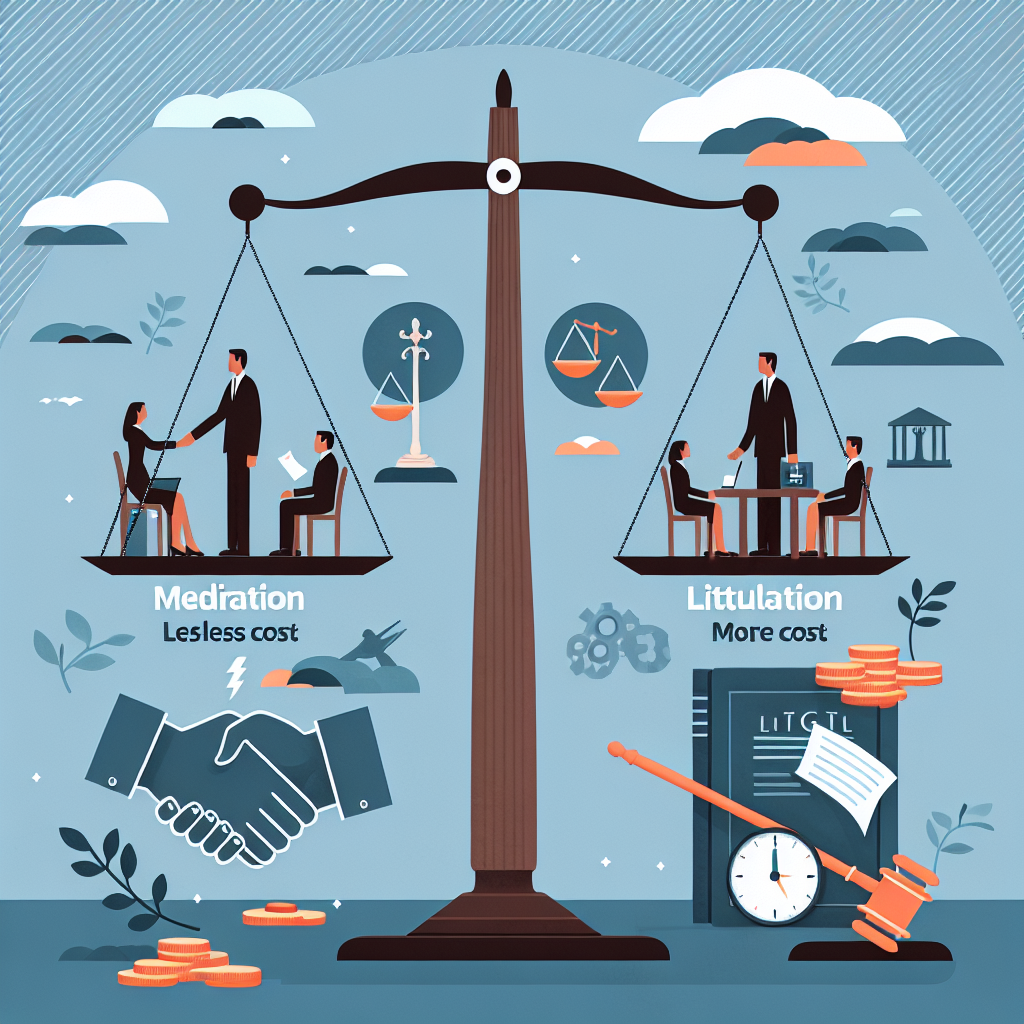
Mediation vs Litigation Cost Comparison: Which Saves You More?
Introduction
Welcome to our guide on cost comparison between mediation and litigation. If you are facing a legal dispute, you may be wondering which route to take – mediation or litigation. In this guide, we will provide you with insight into the costs associated with these two dispute resolution methods, as well as the potential savings and other factors to consider when making your decision.
Definition of Mediation
Mediation is a form of alternative dispute resolution (ADR) where a neutral third party, known as a mediator, facilitates discussions between the parties involved in a dispute. The goal of mediation is for the parties to reach a mutually acceptable resolution without the need for court intervention.
Definition of Litigation
Litigation, on the other hand, involves taking a legal dispute to court to be resolved by a judge or jury. This process typically involves each party presenting their arguments and evidence in a trial, where a legally binding decision will be made by the court.
Cost Comparison of Mediation vs. Litigation
One of the main reasons people may choose mediation over litigation is the cost difference. Mediation tends to be significantly less expensive than litigation. The cost of mediation is typically divided between the parties, and the total cost will depend on the mediator’s hourly rate and the amount of time needed to reach a resolution. In contrast, litigation can be a lengthy and complex process, involving court fees, attorney fees, and other expenses. The cost of litigation can quickly add up and become a significant financial burden for the parties involved.
Factors Affecting Cost in Mediation
The cost of mediation can vary depending on several factors, including the mediator’s experience and reputation, the complexity of the case, and the length of the mediation session. Typically, mediators charge an hourly rate, which can range from $100 to $500 per hour. Some factors that may affect the cost of mediation include:
- The number of parties involved in the dispute
- The type and complexity of the issue being mediated
- The location of the mediation
- The amount of preparation needed by the mediator
Factors Affecting Cost in Litigation
The cost of litigation can also vary depending on several factors. Some of the main factors that can affect the cost of litigation include:
- The complexity of the legal issues involved
- The number of parties involved in the dispute
- The need for expert witnesses or other outside resources
- The length of the trial and pre-trial procedures
- The location of the court
- The hourly rate of the attorneys involved
Potential Savings with Mediation
As mentioned earlier, one of the main advantages of mediation is the potential for cost savings. By avoiding the lengthy and costly court process, parties can save significantly on attorney fees, court fees, and other expenses associated with litigation. Additionally, mediation may lead to quicker resolution, saving parties time and money in the long run.
Impact of Time in Mediation vs. Litigation
Time is another factor to consider when comparing the cost of mediation versus litigation. Mediation can often be completed within a few sessions, while litigation can take months or even years to reach a resolution. The longer a legal dispute goes on, the higher the costs will likely be. Time is also valuable to consider in terms of the potential impact on relationships between the parties. Mediation can be a less confrontational and more cooperative process, potentially preserving relationships and avoiding further legal battles in the future.
Additional Costs in Litigation
In addition to attorney fees and court costs, there may be other expenses associated with litigation, such as expert witness fees, document production fees, and other administrative costs. These costs can quickly add up and significantly increase the overall cost of litigation.
Choosing the Right Path for Your Dispute Resolution Needs
In conclusion, while the cost of mediation and litigation can vary, mediation tends to be a more cost-effective option for resolving legal disputes. However, it is essential to consider all factors and potential savings associated with each method when making your decision. Ultimately, the right path for resolving your dispute will depend on the specifics of your case and your individual needs and preferences.
Cultural Considerations in Mediation and Litigation

Unlocking Success: Cross-Cultural Mediation and Litigation
Understanding the Importance of Cultural Considerations in Mediation and Litigation
Mediation and litigation are two commonly used methods for resolving disputes and conflicts. While these processes are often seen as objective and impartial, it is important to recognize that cultural considerations play a significant role in how they are conducted and the outcomes that are reached. In today’s globalized world, where individuals and businesses from different cultures regularly interact and engage in legal proceedings, it is crucial to understand and address these cultural considerations in order to ensure fairness and effectiveness in the mediation and litigation process.
Defining Cross-Cultural Mediation and Litigation
Cross-cultural mediation and litigation refer to the use of mediation and litigation techniques in a culturally diverse setting. This can involve parties from different countries, ethnicities, religions, or other cultural backgrounds. These differences can impact how individuals perceive and respond to conflict, as well as their expectations and preferences for how disputes should be resolved.
Cultural Sensitivity in Mediation and Litigation: Key Factors to Consider
When engaging in cross-cultural mediation and litigation, it is crucial for all parties involved to be culturally sensitive. This involves being aware of and understanding the cultural differences that may impact the process and being respectful of these differences. Some key factors to consider include:
- Communication styles and norms
- Power dynamics and hierarchy
- Attitudes towards conflict and negotiation
- Nonverbal cues and gestures
- Gender roles and expectations
- Religious and spiritual beliefs
- Legal and justice systems
Identifying Cultural Differences and Their Impact on the Mediation and Litigation Process
One of the first steps in addressing cultural considerations in mediation and litigation is to identify the specific cultural differences at play and understand how they may impact the process. For example, in some cultures, direct and confrontational communication is seen as appropriate, while in others, indirect and non-confrontational communication is preferred. This can lead to misunderstandings and difficulties in communication during mediation and litigation. Similarly, different cultural attitudes towards time and punctuality can also impact the process, as some cultures prioritize promptness while others may have a more flexible approach to time.
Strategies for Effective Cross-Cultural Communication in Mediation and Litigation
In order to navigate cultural differences in mediation and litigation, it is important to employ effective cross-cultural communication strategies. These may include:
- Active listening and seeking to understand the other party’s perspective
- Using neutral and non-judgmental language
- Being aware of and respectful of cultural norms and differences
- Allowing for breaks and pauses in the conversation to allow for reflection and cultural differences in communication styles
- Using interpreters or translators when necessary and ensuring their cultural competence
- Being open to compromise and finding common ground
Addressing Cultural Biases and Stereotypes in Mediation and Litigation
In addition to being aware of and respectful towards cultural differences, it is also important to address and challenge any biases or stereotypes that may be present in the mediation and litigation process. These biases can lead to unequal treatment and unfair outcomes for individuals from different cultural backgrounds. It is crucial for all parties involved to recognize and address any subconscious biases in order to promote fairness and justice in the process.
The Role of Cultural Competence in Mediation and Litigation
Cultural competence refers to the ability to effectively communicate and work with individuals from different cultural backgrounds. In the context of mediation and litigation, cultural competence is essential for ensuring that all parties are able to fully participate and understand the process. This may involve training and education for mediators and legal professionals to enhance their knowledge and skills in working with diverse cultural groups.
Mitigating Cultural Conflicts and Ensuring Fairness in Mediation and Litigation
Cultural conflicts can arise in mediation and litigation when individuals from different cultures have conflicting values, norms, and expectations. In order to mitigate these conflicts and ensure fairness in the process, it is important to establish ground rules and guidelines for cultural sensitivity and competence. This may involve having a diverse and culturally competent team of mediators and legal professionals, as well as providing opportunities for all parties to share their perspectives and concerns.
Cultural Considerations in Mediation and Litigation: Case Studies and Examples
To better understand the impact of cultural considerations in mediation and litigation, it can be helpful to examine real-life case studies and examples. Some potential examples may include:
- A business dispute between a Western company and a Middle Eastern company, where differences in communication styles and attitudes towards negotiation lead to misunderstandings and difficulties in reaching a resolution.
- A family mediation involving parents from different cultural backgrounds who have differing ideas about parenting and child-rearing practices.
- A personal injury case where cultural biases and stereotypes result in unequal treatment of the plaintiff based on their cultural background.
Best Practices for Incorporating Cultural Considerations in Mediation and Litigation Strategies
In order to effectively address cultural considerations in mediation and litigation, it is important to incorporate best practices into the process. Some potential best practices may include:
- Conducting cultural assessments and identifying potential cultural conflicts and considerations early on in the process.
- Diversifying the team of mediators and legal professionals to ensure cultural competence and sensitivity.
- Providing training and education on cross-cultural communication and sensitivity for all parties involved.
- Creating a safe and inclusive environment for all parties to express their perspectives and concerns.
- Being open to using culturally-specific mediation and negotiation techniques if appropriate.
In conclusion, cultural considerations play a significant role in mediation and litigation, and it is crucial for all parties involved to be aware of and address these considerations in order to ensure fairness and effectiveness in the process. By employing cultural competence, effective communication strategies, and best practices, individuals and businesses can navigate cross-cultural disputes and reach mutually beneficial resolutions.
Emotional Impact of Mediation vs. Litigation
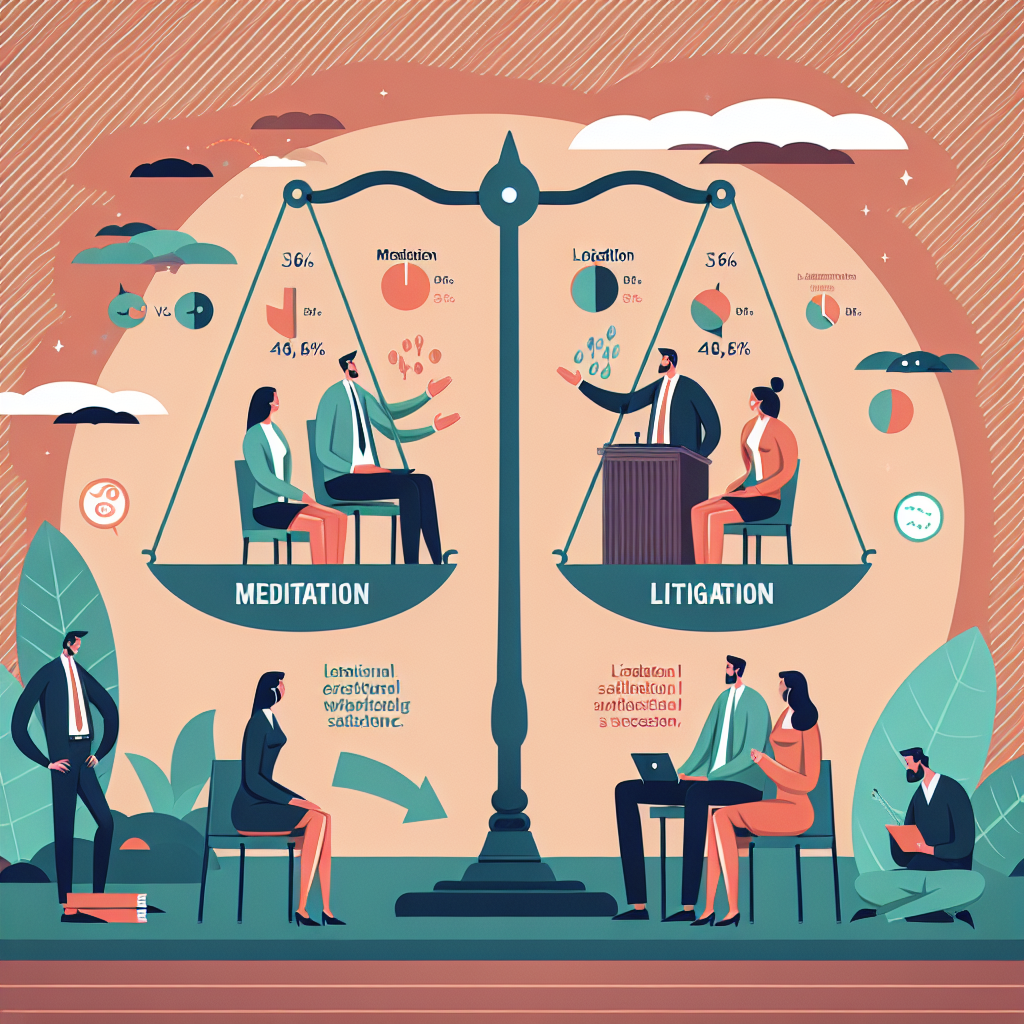
Emotional Well-Being: Mediation vs. Litigation
The Importance of Emotional Well-Being in Legal Proceedings
Legal disputes can be emotionally taxing experiences. Whether it is a divorce, a business conflict, or a personal injury case, the high stakes and adversarial nature of litigation can lead to heightened emotions, stress, and anxiety for all parties involved. In fact, the emotional toll of a legal battle can often outweigh the financial costs and time commitment.
Defining Mediation and Litigation
When faced with a legal dispute, individuals have two main options for resolving their conflict: mediation and litigation. Mediation is a form of alternative dispute resolution (ADR) where a neutral third party, known as a mediator, helps the parties involved in the dispute to communicate and reach a mutually acceptable agreement. On the other hand, litigation involves taking the case to court and having a judge or jury make a final decision.
Understanding the Differences between Mediation and Litigation
There are several key differences between mediation and litigation. In mediation, the parties have more control over the outcome and can work together to find a solution that meets their needs. In contrast, litigation can be more adversarial and often leads to a winner and loser mentality. Additionally, mediation is typically a more private and confidential process, whereas litigation takes place in a public courtroom. Finally, mediation tends to be a faster and less costly process compared to litigation, which can drag on for months or even years.
The Effects of Emotional Stress in Litigation
The adversarial nature of litigation can take a toll on all parties involved. The constant conflict, uncertainty, and lack of control can lead to heightened stress, anxiety, and even depression. This emotional distress can also affect the quality of life and relationships of those involved, as well as their ability to perform at work or school. For some individuals, the emotional strain of litigation can have long-term impacts on their mental health.
How Mediation Prioritizes Emotional Well-Being
In contrast to litigation, mediation prioritizes the emotional well-being of the parties involved. As a non-adversarial process, mediation promotes open communication and understanding between the parties, which can help to reduce conflict and manage emotions. Additionally, the confidentiality of mediation allows individuals to share their feelings and concerns without fear of it being used against them in court. The mediator also ensures that all parties are heard and their needs are taken into consideration during the negotiation process.
The Role of Communication in Mediation and Litigation
Communication is key in both mediation and litigation, but the approach is different. In mediation, the parties are encouraged to listen to each other and express their perspectives in a respectful and constructive manner. This open dialogue can help to improve understanding and find common ground. In contrast, litigation often involves more formal and structured communication between the parties and their lawyers, which can lead to a breakdown in communication and further escalate emotions.
Maintaining Control and Empowerment in Mediation
One of the major benefits of mediation is that it allows individuals to maintain control and empowerment in the decision-making process. In litigation, the outcome is ultimately in the hands of a judge or jury, and the parties have little say in the final decision. This lack of control can add to the emotional burden of the process. In mediation, the parties work together to find a solution that works for them, which can lead to a more satisfactory and empowering outcome.
The Cost of Emotional Well-Being in Litigation
In addition to the financial costs of litigation, there is also a significant emotional cost. The stress and strain of a legal battle can take a toll on mental and emotional well-being, leading to potential long-term effects. This emotional cost is often overlooked when individuals are considering their options for resolving a conflict, but it is an important factor to consider.
The Long-Term Impact of Emotional Well-Being in Legal Outcomes
The emotional well-being of individuals involved in a legal dispute can also have a direct impact on the outcome. Emotions can cloud judgment and lead to irrational decisions, which can ultimately result in a less satisfactory outcome in court. In mediation, the focus on managing emotions and finding a mutually beneficial solution can lead to more positive outcomes for all parties involved.
Why Choosing Mediation Can Lead to Better Emotional Well-Being and Resolution
In conclusion, the emotional impact of mediation and litigation can have a significant effect on the overall outcome of a legal dispute. While litigation may seem like the only option in some cases, it is important to consider the toll it can take on one’s emotional well-being. Mediation offers a more collaborative and supportive approach to conflict resolution, which can lead to better emotional outcomes for all parties involved. By prioritizing emotional well-being and choosing mediation, individuals can not only find a more satisfactory resolution to their dispute, but also avoid the negative emotional impact of a drawn-out and adversarial legal battle.
Expert Witnesses in Mediation and Litigation

Expert Witness Services: Your Legal Advantage
Introduction
Welcome to our guide on expert witness services in mediation and litigation. In this article, we will provide an in-depth look at the role of legal expert witnesses in the courtroom, their qualifications and areas of specialization, the process of retaining and working with them, and the benefits of utilizing their services for your case.
What are Expert Witness Services?
Expert witness services refer to the specialized knowledge and expertise provided by individuals in a legal case to assist the court in understanding complex or technical matters. These individuals, known as expert witnesses, are typically professionals with extensive experience and qualifications in a specific field related to the case at hand.
Qualifications of a Legal Expert Witness
The qualifications for a legal expert witness may vary depending on the jurisdiction and the specific requirements of the case. However, in general, expert witnesses are expected to have the following qualifications:
- Extensive knowledge and experience in a specific field relevant to the case
- Education and training in the relevant field
- Relevant licenses and certifications, if applicable
- Previous experience providing expert testimony in court
Additionally, expert witnesses should have a good reputation and be able to present their credentials and qualifications to the court in a clear and professional manner.
Areas of Specialization for Legal Expert Witnesses
Expert witnesses can specialize in a wide range of fields, including but not limited to:
- Medical and healthcare
- Finance and accounting
- Engineering and construction
- Forensics and criminal investigations
- Insurance and risk management
- Technology and digital forensics
- Real estate and property valuation
It is crucial to hire an expert witness with expertise directly related to the case at hand to ensure their testimony is relevant and credible.
The Role of a Legal Expert Witness in a Court Case
The primary role of a legal expert witness is to provide unbiased and objective testimony to the court based on their specialized knowledge and experience. They are not advocates for either party in the case and are expected to provide their professional opinion based on facts and evidence.
Expert witnesses play a crucial role in helping the court understand complex or technical matters that are relevant to the case. They may also assist in the evaluation of evidence and provide insights that can aid in the resolution of the dispute.
The Importance of Hiring a Reputable Legal Expert Witness
Hiring a reputable and qualified expert witness can significantly impact the outcome of a legal case. In many cases, the opinion of an expert witness can be the deciding factor in the judge or jury’s decision. Therefore, it is crucial to thoroughly research and choose an expert witness with a good reputation and relevant experience.
Furthermore, a reputable expert witness can help build credibility for your case and strengthen your arguments and evidence. They can also effectively counter the opposing party’s expert witness testimony, if necessary.
How to Find and Choose the Right Legal Expert Witness for Your Case
There are several ways to find and select a legal expert witness for your case:
- Referrals from attorneys or other legal professionals
- Online directories and databases of expert witnesses
- Networking events and conferences
- Professional associations and organizations
When considering potential expert witnesses, it is crucial to thoroughly research their qualifications, experience, and reputation. Additionally, it is essential to interview them to ensure they have the necessary expertise and are a good fit for your case.
The Process of Retaining and Working with a Legal Expert Witness
Once you have selected an expert witness, the process of retaining and working with them typically involves the following steps:
- Discussing the scope of their services and fees
- Signing a contract or agreement outlining the terms and expectations of the expert witness’s involvement
- Providing them with all relevant case materials and information
- Working with them to prepare their testimony and presentation of evidence
- Attending court proceedings and providing testimony
It is crucial to maintain open communication with the expert witness throughout the process and provide them with any updates or changes in the case.
Common Challenges and Obstacles in Using a Legal Expert Witness
While expert witnesses can provide invaluable assistance in a legal case, there are some common challenges and obstacles that may arise when working with them. These include:
- Difficulty finding a qualified and available expert witness
- Conflicting expert witness testimonies from both parties
- High fees and costs associated with expert witness services
- Challenges in presenting complex or technical information in a way that is easily understandable to the court
It is essential to address these challenges early on and work closely with your expert witness to overcome them effectively.
The Benefits of Utilizing Legal Expert Witness Services for Your Case
There are numerous benefits to utilizing expert witness services for your case, including:
- Providing expertise and insights that may not be available from other sources
- Strengthening your arguments and evidence
- Increasing your chances of a favorable outcome in court
- Saving time and resources by having a professional handle complex or technical matters
- Building credibility for your case
Overall, expert witness services can be a crucial asset in resolving disputes and achieving a successful outcome in mediation and litigation processes.
Conclusion
Expert witnesses play a critical role in the legal process, providing specialized knowledge and expertise to assist the court in understanding complex matters. By understanding the qualifications and process of hiring and working with an expert witness, you can effectively utilize their services to strengthen your case and achieve a favorable outcome. We hope this guide has provided you with valuable insights into expert witness services in mediation and litigation.
Financial Settlements: Mediation vs. Litigation

Mediation vs. Litigation: The Best Financial Dispute Resolution
Overview of Financial Dispute Resolution
Financial disputes can arise in various situations, such as business transactions, contracts, divorce, or personal injury. These disputes can have a significant impact on individuals and businesses, both financially and emotionally. When faced with a financial dispute, it is essential to find a resolution method that is efficient, effective, and fair for all parties involved.
The Importance of Resolving Financial Disputes
Resolving financial disputes is crucial for several reasons. First and foremost, it allows the parties involved to reach a final outcome and move on from the issue. This can prevent ongoing tension and animosity between the parties. Additionally, resolving financial disputes can save time, money, and resources compared to prolonged legal battles. It also allows for more control over the outcome, as opposed to leaving the decision in the hands of a judge or jury.
Understanding Mediation and Litigation as Resolution Methods
Mediation and litigation are two commonly used methods for resolving financial disputes. Mediation is a form of alternative dispute resolution where a third party, called a mediator, assists the parties in reaching a mutual agreement. On the other hand, litigation involves taking the dispute to court, where a judge or jury will make a legally binding decision.
The Mediation Process: Pros and Cons
The mediation process starts with the parties involved selecting a mediator or having one appointed by the court. The mediator’s role is to facilitate communication and help the parties understand each other’s perspectives. They also guide the parties in exploring potential solutions that meet everyone’s needs.
One of the main advantages of mediation is that it is a voluntary process, meaning that the parties involved have control over the outcome. It also allows for open communication, which can help improve relationships between the parties. Additionally, mediation is generally a less expensive and time-consuming option compared to litigation.
However, mediation may not be suitable for all disputes, especially if there is a significant power imbalance between the parties. It also requires a willingness to compromise and reach a mutual agreement, which may not be possible in all cases. Furthermore, the mediator does not have the power to make a binding decision, so if the parties cannot reach an agreement, the dispute may still have to go to court.
The Litigation Process: Pros and Cons
The litigation process typically begins when one party files a lawsuit against the other. The party being sued must then respond to the claim, and the case will proceed to court. During the trial, both parties present their evidence, and a judge or jury makes a final decision.
One of the main advantages of litigation is that the decision made by the court is legally binding, meaning that both parties must comply with it. It also allows for more formal procedures and evidence, which can help ensure a fair outcome. Additionally, if the dispute involves a significant amount of money or complex legal issues, litigation may be the most appropriate option.
However, litigation can be a lengthy and expensive process, as it involves going through the court system. It also requires the parties to adhere to strict deadlines and procedures, which can be overwhelming for those without legal representation. Furthermore, the outcome is ultimately in the hands of the judge or jury, which may not always align with the parties’ interests.
Comparing Mediation and Litigation in Terms of Cost
One of the significant differences between mediation and litigation is the cost. Mediation is generally a less expensive option for resolving financial disputes. Since the process is less formal and does not involve going to court, the parties do not have to pay for court fees or legal representation. However, they may still incur costs for hiring a mediator and other associated expenses.
In contrast, litigation can be a costly process. The parties involved may have to pay for court fees, legal representation, and other expenses related to the trial. The overall cost can vary significantly depending on the complexity of the case and the length of the trial.
Comparing Mediation and Litigation in Terms of Time
Another factor to consider when deciding between mediation and litigation is the time it takes to resolve the dispute. Mediation usually takes less time compared to litigation, as the parties can schedule mediation sessions at their convenience. The length of the mediation process can vary depending on the complexity of the dispute and the parties’ willingness to cooperate.
Litigation, on the other hand, can be a lengthy process. It involves going through the court system, which has strict deadlines and procedures that can prolong the case. The length of the trial can also vary significantly depending on the complexity of the case and the availability of court resources.
Factors to Consider When Choosing Between Mediation and Litigation
When faced with a financial dispute, it is essential to consider various factors before choosing between mediation and litigation. One of the main factors is the nature of the dispute. Certain disputes, such as those involving complex legal issues or a significant amount of money, may be more suitable for litigation.
Another factor to consider is the relationship between the parties involved. Mediation may be a more suitable option if the parties want to maintain a positive relationship and have a willingness to communicate and find a mutual agreement. However, if the dispute has caused irreparable damage to the relationship, litigation may be the only option.
The availability of resources is also an important consideration. Mediation is generally a more cost-effective option, but it may not be accessible to those who cannot afford the mediator’s fees. On the other hand, litigation can be expensive, but individuals may have access to legal aid or contingency fee arrangements.
The Role of Legal Counsel in Financial Dispute Resolution
Regardless of whether the parties choose mediation or litigation to resolve their dispute, having legal counsel can be beneficial. A lawyer can provide valuable advice and representation throughout the process, ensuring the parties’ rights and interests are protected.
In mediation, legal counsel can help the parties understand their rights and obligations and assist in negotiating a fair settlement. They can also review any agreements reached to ensure they are legally binding and in the parties’ best interests.
In litigation, legal counsel is essential in navigating the complex legal system and advocating for the parties in court. They can also advise on the strength of the case and potential outcomes, helping the parties make informed decisions.
Making an Informed Decision for Your Financial Dispute Resolution Needs
When faced with a financial dispute, it is essential to consider various factors before deciding on a resolution method. Mediation and litigation are two commonly used options, each with its own pros and cons. It is crucial to weigh these factors and consider the nature of the dispute, the relationship between the parties, and the availability of resources before making an informed decision. Additionally, having legal counsel can provide valuable support and guidance throughout the process, ensuring the best possible outcome for all parties involved.
Impact on Children: Mediation vs. Litigation

Choosing the Best Approach: Child Impact Resolution
Introduction: Understanding Child Impact Resolution
Child impact resolution refers to the process of resolving conflicts and disputes that arise between parents or caregivers that directly affect children. This can include issues such as custody arrangements, parenting styles, and decision-making for the child’s well-being. When relationships between parents or caregivers break down, it can have a significant impact on the emotional and psychological well-being of children. Therefore, it is crucial to find a resolution method that is in the best interest of the child.
Overview of Mediation and Litigation in Child Impact Resolution
Mediation and litigation are two main methods used for resolving conflicts and disputes in child impact cases. Both approaches have their advantages and disadvantages, and it is essential to understand them before making a decision.
Benefits of Mediation for Child Impact Resolution
Mediation is a collaborative and non-adversarial approach to resolving conflicts. It involves a neutral third-party mediator who helps the parties communicate and reach a mutually satisfactory agreement. Mediation has several benefits when it comes to child impact resolution.
- Promotes cooperation and communication: In mediation, both parties are encouraged to communicate and work together to find a solution. This can help improve their relationship and create a more cooperative co-parenting dynamic.
- Less adversarial: Mediation is a less confrontational approach compared to litigation. This can help reduce stress and tension for both parents and ultimately create a more positive environment for the child.
- Empowers the parties: In mediation, the parties have more control over the outcome and can come up with creative solutions that work for their unique situation. This can be especially beneficial for children, as their specific needs can be taken into account.
- Less time-consuming and costly: Mediation is typically a quicker and less expensive process compared to litigation. This can save both parties time and money, and also minimize the disruptive impact on children.
Benefits of Litigation for Child Impact Resolution
Litigation is a more traditional and formal approach to resolving conflicts. It involves going through the court system and having a judge make a final decision. While litigation may not seem ideal for child impact cases, it does have some benefits.
- Clear legal guidelines: In litigation, the court follows specific legal guidelines and rules when making decisions. This can provide a sense of structure and certainty for both parties.
- Judgment by a neutral third-party: In some cases, parents may not be able to reach a resolution on their own, and a judge may need to make the final decision. This can be beneficial for situations where there is a high level of conflict or one party is being unreasonable.
- Enforcement of decisions: If one party does not comply with the court’s decision, there are legal consequences that can be enforced. This can help ensure that the child’s best interests are being prioritized.
- Can address complex issues: In some cases, such as those involving high-conflict or high-income families, litigation may be the best option as it can address complex issues more effectively.
Factors to Consider When Choosing Between Mediation and Litigation
Deciding between mediation and litigation for child impact resolution can be a challenging decision. Some factors to consider include the nature of the conflict, the level of cooperation between the parties, and the potential impact on the children.
- Level of conflict: If there is a high level of conflict between the parties, mediation may not be the best option as it relies on cooperation. In these cases, litigation may be necessary to reach a resolution.
- Co-parenting relationship: If the parents have a relatively amicable co-parenting relationship, mediation may be a better option as it can help improve communication and cooperation.
- Child’s best interests: The primary consideration in any child impact case should be the child’s best interests. Both parties should carefully consider how their chosen method of resolution will affect the child before making a decision.
- Time and cost constraints: Mediation is generally a quicker and less expensive process compared to litigation. If time and cost are significant concerns, mediation may be the better option.
How Mediation Works for Child Impact Resolution
Mediation typically involves several steps that aim to reach a mutually satisfactory agreement between the parties. These steps may include:
- Initial meeting: The mediator will meet with both parties to explain the mediation process and establish ground rules for communication and behavior during the sessions.
- Identifying issues: Both parties will have the opportunity to identify the issues they want to address, such as custody arrangements, decision-making, and child support.
- Negotiation: The mediator will facilitate negotiations between the parties, helping them communicate effectively and find common ground.
- Drafting an agreement: If an agreement is reached, the mediator will help draft a formal agreement that outlines the terms and conditions agreed upon by both parties.
- Final agreement: Once both parties have reviewed and agreed to the terms, the agreement is finalized and becomes legally binding.
How Litigation Works for Child Impact Resolution
The process of litigation for child impact resolution typically involves the following steps:
- Filing a petition: The first step in litigation is to file a petition with the court outlining the issues that need to be resolved, such as custody and support.
- Discovery: Both parties will have the opportunity to gather evidence and information to support their case.
- Pre-trial conference: The court may schedule a pre-trial conference to discuss the issues and attempt to reach a settlement.
- Trial: If a settlement cannot be reached, the case will go to trial, and a judge will make a decision based on the evidence presented.
- Judgment: The judge’s decision will be made into a court order and will be legally binding.
Impact on Children in Mediation vs. Litigation
Both mediation and litigation can have an impact on children, but the nature of that impact may differ.
Impact of Mediation:
- Mediation can help reduce the level of conflict between parents, ultimately creating a more positive and cooperative co-parenting dynamic.
- The child may feel more involved and heard in the decision-making process, which can help them feel more secure and supported.
- The child may experience less disruption and stress as the process is typically quicker and less confrontational compared to litigation.
- The child may benefit from seeing their parents working together to find a solution, which can serve as a positive role model for conflict resolution.
Impact of Litigation:
- The child may feel more pressure and stress as their parents are involved in a confrontational and adversarial process.
- The child may feel like their needs and preferences are not considered as much, as the final decision is made by a judge rather than through a collaborative process.
- The child may experience more disruption and uncertainty as the process is typically longer and more complex compared to mediation.
- Depending on the outcome, the child may feel a sense of loss or rejection if one parent is awarded more custody or decision-making rights.
Cost Comparison: Mediation vs. Litigation for Child Impact Resolution
One of the significant differences between mediation and litigation is the cost. Mediation is generally a more cost-effective option, while litigation can be quite expensive. The following are some factors to consider when comparing the costs of mediation and litigation:
- Legal fees: In mediation, you only need to pay for the mediator’s services, while in litigation, you may have to pay for legal representation for each party, which can add up quickly.
- Court fees: In litigation, there are filing fees, document fees, and other court-related expenses that can significantly increase the cost.
- Expert fees: In some cases, expert witnesses may be required, such as psychologists or financial experts. These fees can add up in a litigated case.
- Time and effort: Mediation can be completed in a few sessions, while litigation can take months or even years to reach a resolution. This can result in significant time and effort spent on the legal process.
Making the Best Choice for Child Impact Resolution
When it comes to resolving conflicts and disputes that affect children, it is crucial to consider all factors carefully. Both mediation and litigation have their advantages and disadvantages, and the best approach will depend on the individual situation. Ultimately, the goal should be to prioritize the child’s best interests and find a resolution method that will minimize the negative impact on their emotional and psychological well-being.
Long-Term Effects of Mediation vs. Litigation

Unlocking the Power of Long-Term Mediation: Benefits Revealed
Introduction
When faced with a legal dispute, many people’s first thought may be to take the matter to court and let a judge decide the outcome. However, there is another option available that can often result in a more beneficial and long-term solution for all parties involved: mediation. In this article, we will explore the differences between mediation and litigation and discuss the long-term implications of choosing mediation over traditional legal proceedings.
Definition of Mediation
Mediation is a form of alternative dispute resolution (ADR) that involves a neutral third party, known as a mediator, facilitating a conversation between two or more parties in conflict. The goal of mediation is to help the parties reach a mutually agreeable solution without the need for court intervention.
Explanation of Long-Term Mediation Benefits
While litigation may seem like the more obvious and straightforward solution to a legal dispute, there are several long-term benefits to choosing mediation instead.
Improved Communication Skills
One of the biggest advantages of mediation is that it promotes improved communication between the parties in conflict. In a court setting, each party is represented by their own attorney who does most of the talking and negotiating on their behalf. This can lead to miscommunications and misunderstandings, making it difficult to reach a resolution that satisfies both parties. In mediation, the parties have the opportunity to directly communicate with each other and work towards finding a solution that meets their needs.
Reduction in Conflict and Anger Management
In a courtroom, there is often a winner and a loser in a legal dispute, which can lead to feelings of resentment and anger between the parties. This can have long-lasting negative effects on their relationship, especially if they are family members or have a continuing business partnership. In mediation, the focus is on finding a mutually beneficial solution, rather than determining a winner and a loser. This can help reduce tension and conflict between the parties and promote a more positive and productive working relationship in the long-term.
Cost-Effective Solution
Another significant benefit of mediation is that it is often a more cost-effective solution compared to litigation. In court, each party is responsible for their own legal costs, which can quickly add up, especially in lengthy legal proceedings. In mediation, the parties split the cost of the mediator’s fees, which are typically much lower than the cost of hiring attorneys for a court case. This can save both parties a significant amount of money in the long run.
Preservation of Relationships
In addition to reducing conflict, mediation can also help preserve relationships between the parties. In a courtroom, the adversarial nature of the process can strain even the strongest of relationships. Mediation, on the other hand, promotes cooperation and collaboration, which can help maintain a positive relationship between the parties, especially if they will continue to have a personal or professional connection in the future.
Confidentiality and Privacy
Court cases are a matter of public record, which means that anyone can access the details of the proceedings. This can be uncomfortable and even damaging for the parties involved, especially if sensitive information is revealed. In mediation, the discussions and negotiations are confidential, and the details of the case are not made public. This can provide a sense of privacy and protection for the parties involved.
Flexible and Customizable Solution
Mediation allows the parties to have more control over the outcome of their dispute. Unlike a judge’s decision in court, which is binding and non-negotiable, mediation offers a more flexible and customizable solution. The parties have the ability to work together and come up with a solution that takes into account their unique needs and circumstances. This can lead to a more satisfactory and long-lasting resolution for all parties involved.
Why Long-Term Mediation is Beneficial for All Parties Involved
While litigation may seem like the obvious choice for resolving a legal dispute, it is important to consider the long-term implications of this decision. Mediation offers many benefits that can have a positive impact on the parties involved, such as improved communication, reduced conflict, cost-effectiveness, preservation of relationships, confidentiality, and flexibility. Ultimately, by choosing mediation over litigation, the parties have a better chance of finding a mutually beneficial and long-lasting solution to their dispute.