

Mediation and Litigation in High-Conflict Divorces

Maximizing Results: Mediation & Litigation for High-Conflict Divorce Cases
Understanding the Differences Between Mediation and Litigation
In a high-conflict divorce, it is important to understand the differences between mediation and litigation as they are two common approaches to resolving legal disputes. Mediation is a form of alternative dispute resolution where a neutral third party, known as a mediator, facilitates discussions between the two parties in conflict. Unlike litigation, which involves resolving disputes in court, mediation takes place in a non-adversarial setting with the goal of reaching a mutually acceptable agreement.
One of the main differences between mediation and litigation is the level of control the parties have over the outcome. In mediation, the parties have more control over the outcome as they are actively involved in negotiating and agreeing upon the terms of the settlement. In contrast, in litigation, the outcome is ultimately determined by a judge or jury, with limited input from the parties involved.
Another key difference is the level of confidentiality. Mediation is a confidential process, meaning that discussions and information shared during mediation cannot be used in court if the mediation does not result in a settlement. This allows for open and honest communication between the parties without fear of it being used against them in court. In litigation, however, all information is admissible in court, and the proceedings are a matter of public record.
Additionally, the cost and time involved in mediation and litigation can differ significantly. Mediation typically involves fewer formal procedures and can often be completed in a shorter amount of time compared to the lengthy court process involved in litigation. This can result in lower legal fees and less overall stress for both parties.
The Benefits of Mediation for High-Conflict Divorce Cases
High-conflict divorce cases can be emotionally and financially draining for all parties involved. In such cases, mediation can offer several benefits that may not be available through litigation.
- Improved Communication: In high-conflict cases, communication between the parties is often strained or non-existent. Mediation provides a structured and safe environment for the parties to communicate and work towards a resolution. The mediator acts as a neutral facilitator, helping each party to express their thoughts and concerns effectively.
- Increased Flexibility and Creativity: Unlike litigation, where the outcome is determined by a judge, mediation allows for more flexibility in finding creative solutions that can work for both parties. This can be especially beneficial in high-conflict cases where there is no clear-cut solution.
- Cost-Effective: As mentioned earlier, mediation can be a cost-effective alternative to litigation. With fewer formal procedures and less time involved, the legal fees can be significantly lower, saving both parties time and money.
- Confidentiality: As discussed, mediation is a confidential process, which can be particularly valuable in high-conflict cases where sensitive personal information may be discussed. This allows for open and honest communication without the fear of it being used against either party in court.
- Reduced Stress: In litigation, the adversarial nature of the process can often exacerbate the tension and conflict between the parties. In mediation, the focus is on finding common ground and reaching a resolution, which can help reduce the overall stress and emotional toll of the divorce process.
- The Role of a Mediator in Resolving Divorce Disputes
Mediators play a crucial role in facilitating the resolution of divorce disputes. Their primary responsibility is to act as a neutral third party and guide the discussions between the parties towards a mutually acceptable agreement.
Mediators are trained professionals who have expertise in conflict resolution and communication techniques. They do not have any decision-making authority and cannot impose any decisions on the parties. Instead, they help the parties to identify their needs and interests and work towards finding common ground. They also help the parties to explore potential options and assist in drafting a legally binding agreement.
Mediators are also responsible for maintaining a safe and respectful environment throughout the mediation process. They ensure that both parties have an equal opportunity to express their thoughts and feelings without fear of judgment or retaliation.
How Mediation Can Help Reduce the Cost and Time of a Divorce
In high-conflict divorce cases, litigation can often be a lengthy and expensive process. Mediation, on the other hand, can offer a more cost-effective and time-efficient alternative.
As mediation takes place outside of the court system, the parties can often avoid the high costs associated with legal fees, court filing fees, and other court-related expenses. Additionally, as the parties are actively involved in the negotiation process, there are fewer formal procedures and less time involved compared to litigation.
Mediation can also help reduce the overall time of the divorce process by allowing the parties to address and resolve issues in a more timely manner. In litigation, the court’s schedule and backlog can significantly delay the resolution of a case. In contrast, mediation can be scheduled at a time that is convenient for both parties and can often be completed in a matter of weeks or months, rather than months or years.
The Importance of Open Communication in Successful Mediation
Effective communication is crucial in any successful mediation process, and this is particularly true in high-conflict divorce cases. As these cases are often fueled by emotion and past conflicts, open and honest communication can be challenging to achieve.
The mediator plays a vital role in facilitating productive communication between the parties. They create a safe and respectful environment where both parties can express their thoughts and feelings without fear of being judged or attacked. They also encourage active listening and effective communication techniques to ensure that each party understands the other’s perspective.
Open communication can also help the parties to identify their needs and interests, rather than focusing on their positions. This can be crucial in finding mutually acceptable solutions that address the underlying concerns of both parties.
The Process of Mediation for High-Conflict Divorce Cases
The mediation process for high-conflict divorce cases typically follows the same steps as any other mediation:
- Initial Consultation: This is the first step in the mediation process, where the mediator meets with both parties to discuss the issues and determine if mediation is a suitable option for them.
- Mediation Sessions: The mediator will schedule a series of mediation sessions at a time and place that works for both parties. In these sessions, the mediator will facilitate discussions and assist the parties in reaching a resolution.
- Drafting the Agreement: Once a mutually acceptable agreement is reached, the mediator will assist the parties in drafting a legally binding agreement that outlines the terms of the settlement.
- Signing the Agreement: Once both parties have reviewed and agreed to the terms of the agreement, they will sign the document, making it legally binding. The agreement can then be submitted to the court for approval.
The Potential Challenges and Obstacles in Mediation for High-Conflict Divorces
While mediation can offer many benefits in resolving high-conflict divorces, there are also potential challenges and obstacles that may arise.
One of the most significant challenges in mediation is the level of cooperation and willingness to communicate between the parties. In high-conflict cases, where there is a history of intense conflict and communication breakdown, it can be challenging to establish effective communication and find common ground. In such cases, the parties may need to work through their emotions and past conflicts before productive discussions can take place.
Another potential obstacle is the power imbalance between the parties. In some cases, one party may feel intimidated or overpowered by the other, making it challenging for them to express their thoughts and needs freely. The mediator must create a safe and respectful environment where both parties feel comfortable and have an equal opportunity to participate in the process.
Additionally, if one party is not fully committed to the mediation process or has ulterior motives, it can significantly hinder the success of the mediation. In such cases, the mediator may need to terminate the mediation and recommend litigation as a more suitable option.
The Role of Lawyers in Mediation for High-Conflict Divorce Cases
While lawyers are not actively involved in the mediation process, they can play a crucial role in ensuring that their clients’ best interests are protected throughout the process.
Before entering into mediation, it is recommended that each party consult with a lawyer to understand their legal rights and options. Lawyers can also assist their clients in preparing for mediation and ensuring that they understand the implications of any proposed agreements.
During mediation, lawyers can also provide guidance and support to their clients, ensuring that the terms of the settlement are fair and reasonable. They can also review the final agreement before it is signed to ensure that their client’s interests are adequately represented.
Ultimately, lawyers can play a valuable role in mediation, helping their clients make informed decisions and navigate the legal process effectively.
The Advantages of Litigation for High-Conflict Divorces
While mediation can offer many benefits in resolving high-conflict divorce cases, there may be situations where litigation is a more suitable option.
- Clear Decision-Making: In mediation, the parties have more control over the outcome, which can result in a less clear-cut decision. In litigation, the decision is made by a judge, providing a final and definitive decision.
- Legal Representation: In mediation, lawyers are not actively involved in the process. In litigation, however, each party has legal representation, which can be particularly beneficial for individuals who may feel overpowered or intimidated by their spouse.
- Court Enforcement: In mediation, the final agreement is legally binding, but it may not have the same level of enforceability as a court order. In contrast, court orders are legally binding and can be enforced if one party fails to comply.
- Discovery Process: In litigation, the parties are required to provide all relevant information and evidence during the discovery process, which can help ensure a fair outcome. In mediation, there may be less transparency and a higher risk of one party withholding information or assets.
Is Litigation the Best Option for Your High-Conflict Divorce?
Deciding between mediation and litigation for a high-conflict divorce is a highly personal decision that should be made after careful consideration of all factors involved.
While mediation can offer many benefits, it may not be suitable for all high-conflict cases. If there is a history of domestic violence or abuse, or if one party is not willing to participate in the mediation process, litigation may be a more appropriate option. Additionally, if the parties are unable to communicate effectively or have significant power imbalances, mediation may not be successful in reaching a resolution.
Ultimately, the best option for your high-conflict divorce will depend on your unique situation and needs. Consulting with a lawyer and a trained mediator can help you determine the best approach for your case.
Mediation and Litigation in International Divorce

Maximizing Success: International Divorce Mediation vs. Litigation
Understanding International Divorce Mediation and Litigation
International divorce cases, also known as cross-border divorces, involve a couple who are seeking to legally end their marriage but are living in different countries or have different nationalities. These cases are often complex, as they must navigate the laws and regulations of multiple countries, and can be emotionally draining for all parties involved. In such situations, the process of mediation and litigation can play a crucial role in resolving the divorce and reaching a fair settlement.
The Role of Mediators in International Divorce Cases
Mediators, also known as divorce mediators or family mediators, play a crucial role in international divorce cases. They act as neutral third parties and facilitate communication and negotiation between the divorcing couple. Their role is to help the couple reach a mutually agreeable settlement without the need for going to court.
In international divorce cases, mediators must have a thorough understanding of the laws and regulations of the countries involved, as well as the cultural and emotional factors that may impact the couple’s decision-making process. They must also be skilled in conflict resolution and have excellent communication skills to effectively navigate any challenges that may arise in the mediation process.
Benefits of Choosing Mediation over Litigation
There are several benefits to choosing mediation over litigation in an international divorce case. Some of the key advantages include:
- Cost-effectiveness: Mediation is often more cost-effective than litigation, as it avoids the expensive legal fees and court costs associated with going to trial.
- Control over the outcome: In mediation, the divorcing couple has more control over the outcome of their case, as they work together to reach a mutually agreeable settlement. In litigation, the final decision is in the hands of a judge.
- Confidentiality: Mediation is a private and confidential process, whereas litigation is a public process that can be emotionally taxing for the parties involved.
- Preserving relationships: Mediation can help preserve relationships, especially in cases where the divorcing couple will need to maintain a relationship for the sake of their children or business interests.
- Efficiency: Mediation is often a faster and more efficient process than litigation, as it avoids the delays and backlog often associated with court cases.
Factors to Consider When Choosing International Divorce Mediators
Choosing the right mediator for your international divorce case is crucial for a successful outcome. Some of the key factors to consider when selecting a mediator include:
- Experience and expertise: Look for mediators who have experience in handling international divorce cases and have a thorough understanding of the laws and regulations of the countries involved.
- Cultural sensitivity: It is essential to choose a mediator who is culturally sensitive and aware of the potential cultural differences that may arise in the mediation process.
- Communication skills: Mediators must have excellent communication skills to facilitate effective communication and negotiation between the divorcing couple.
- Availability and flexibility: Mediation requires flexibility and availability, as it may involve coordinating with parties living in different time zones. Choose a mediator who can accommodate these needs.
- Cost: While cost should not be the only factor in your decision, it is essential to consider the mediator’s fees and compare them to your budget.
The Process of International Divorce Mediation
The process of international divorce mediation may vary depending on the specific circumstances of each case. However, it generally follows a similar structure:
- Initial consultation: The first step in international divorce mediation is an initial consultation with the mediator. This meeting is an opportunity for the mediator to gather information about the case and for the divorcing couple to ask any questions they may have.
- Information gathering: The mediator will then gather information from both parties to gain a better understanding of their needs, concerns, and goals.
- Identification of issues: The mediator will work with the couple to identify the main issues that need to be addressed in the mediation process.
- Exploration of options: The mediator will facilitate communication and negotiation between the couple to explore potential solutions to their issues.
- Agreement: Once the couple has reached a mutually agreeable settlement, the mediator will draft an agreement outlining the terms of the settlement.
- Finalization: The final step in international divorce mediation is the finalization of the agreement, which may involve the review and approval of lawyers or the submission of the agreement to the appropriate court for approval.
Common Challenges in International Divorce Mediation and How to Overcome Them
International divorce mediation can be a challenging process, and there are several common challenges that may arise. Some of these challenges include:
- Language barriers: In cases where the divorcing couple speaks different languages, the mediator may need to facilitate the use of interpreters to ensure effective communication.
- Cultural differences: Cultural differences can impact the mediation process, as different cultures may have different attitudes towards divorce and settlement agreements. Mediators must be culturally sensitive and aware of these differences to navigate them effectively.
- Legal complexities: International divorce cases involve complex legal issues, and mediators must have a thorough understanding of the laws and regulations of the countries involved.
- Power imbalances: In some cases, there may be a power imbalance between the divorcing couple, making it challenging to reach a fair settlement. Mediators must be skilled in managing these imbalances to ensure a fair and satisfactory outcome for both parties.
To overcome these challenges, it is crucial to choose a mediator with experience in handling international divorce cases and who has the necessary skills and knowledge to navigate these complex situations.
The Role of Lawyers in International Divorce Cases
While mediation is typically a non-adversarial process, it is essential to involve lawyers in international divorce cases. Lawyers can provide legal advice and review any settlement agreements to ensure that they are fair and in compliance with the laws of the countries involved. They can also help with the finalization of the agreement and any other legal procedures that may be required.
Lawyers can also help ensure that the rights and interests of their clients are protected throughout the mediation process. In some cases, lawyers may also act as mediators, especially in situations where there is a high level of conflict between the divorcing couple.
Key Differences Between International Divorce Mediation and Litigation
There are several key differences between international divorce mediation and litigation. Some of the key distinctions include:
- Control over the outcome: As mentioned earlier, in mediation, the divorcing couple has more control over the outcome of their case, whereas in litigation, the final decision is in the hands of a judge.
- Confidentiality: Mediation is a private and confidential process, whereas litigation is a public process that can be emotionally taxing for the parties involved.
- Flexibility: Mediation offers more flexibility than litigation, as it allows the parties to work on their own schedule and find creative solutions to their issues that may not be possible in a court setting.
- Cost: Mediation is often more cost-effective than litigation, as it avoids the legal fees and court costs associated with going to trial.
The Importance of Cultural Sensitivity in International Divorce Cases
Cultural sensitivity is a crucial factor in international divorce cases, as different cultures may have varying attitudes towards divorce and settlement agreements. It is essential to choose a mediator and involve lawyers who are culturally sensitive and aware of these differences to ensure a fair and satisfactory outcome for both parties.
Cultural sensitivity also plays a role in facilitating effective communication and negotiation between the divorcing couple. Mediators must understand the cultural nuances and potential power imbalances that may impact the mediation process, and be skilled in managing these situations to reach a successful outcome.
Conclusion: Making the Right Choice for Your International Divorce Case
International divorce cases can be complex and emotionally draining for all parties involved. The process of mediation and litigation can play a crucial role in reaching a fair and satisfactory resolution. When considering mediation, it is essential to choose a mediator with experience in handling international divorce cases, who is culturally sensitive, and has the necessary skills to navigate these complex situations. Additionally, involving lawyers can help protect the rights and interests of both parties and ensure that any settlement agreements are fair and in compliance with the laws of the countries involved. By making the right choices and seeking the necessary expertise, couples can successfully navigate their international divorce and reach a resolution that works for all involved.
Mediation as a Pre-Litigation Step

Maximizing Success: Mediation as a Pre-Litigation Strategy
Overview of Mediation as a Pre-Litigation Strategy
Mediation is a form of alternative dispute resolution (ADR) that is often used as a pre-litigation strategy to resolve legal disputes. It involves a neutral third party, known as a mediator, who helps the parties involved in the dispute come to a mutually acceptable resolution. Mediation is often seen as a more collaborative and less adversarial approach compared to traditional litigation, and can be used in a variety of legal disputes, including business, family, and personal injury cases.
Benefits of Using Mediation
There are several benefits to using mediation as a pre-litigation strategy. One of the main advantages is that it allows the parties involved to have more control over the outcome of the dispute. In traditional litigation, a judge or jury ultimately makes the final decision, but in mediation, the parties themselves have a say in the resolution. This can lead to more satisfactory outcomes for both parties.
Mediation also tends to be a faster and more cost-effective process compared to litigation. The parties can schedule mediation at a time that works for them, rather than waiting for a court date, which can often take months or even years. Additionally, mediation can help avoid the high costs associated with legal proceedings, such as attorney fees and court fees.
Another benefit of mediation is that it can help preserve relationships between the parties involved. In some legal disputes, such as business or family conflicts, the parties may have an ongoing relationship, and mediation can help them find a resolution that does not damage that relationship. This can be particularly important when it comes to business disputes, as a contentious legal battle could harm business partnerships and reputations.
Understanding the Role of a Mediator
The role of a mediator in the pre-litigation process is crucial. A mediator is a neutral third party who is trained in conflict resolution and works to facilitate communication and negotiation between the parties involved in the dispute. The mediator does not make decisions or offer their own opinions on the case, but rather helps the parties identify their needs and interests and find a mutually acceptable solution.
Mediators must be skilled communicators, have a deep understanding of the mediation process, and be able to remain impartial and neutral throughout the proceedings. They may also have expertise in specific areas of law, such as business or family law, which can be helpful in mediating disputes in those areas.
Selecting the Right Mediator for Your Case
Choosing the right mediator for your case is crucial to the success of the mediation process. When considering potential mediators, there are several factors to keep in mind:
- Experience: Look for a mediator with experience in the type of dispute you are involved in. For example, if you have a business dispute, it would be beneficial to choose a mediator with experience in business law.
- Qualifications: Make sure the mediator has the necessary qualifications and training in mediation. They may also have certifications or memberships in professional mediation organizations.
- Style: Consider the mediator’s style and approach to mediation. Some mediators may take a more facilitative approach, while others may be more directive. Choose a mediator whose style aligns with your preferences.
- Availability: It’s essential to choose a mediator who is available to schedule sessions at a convenient time for all parties involved.
Steps Involved in the Mediation Process
The mediation process typically involves the following steps:
- Opening statements: The mediator will begin by explaining the purpose and guidelines of the mediation process.
- Parties tell their stories: Each party will have the opportunity to share their perspective on the dispute.
- Identifying issues and interests: The mediator will help the parties identify the main issues at hand and their underlying interests.
- Generating solutions: The parties will work together to come up with potential solutions to the issues at hand.
- Negotiation: The parties will negotiate and discuss the proposed solutions until they come to a mutually acceptable agreement.
- Closing: Once an agreement is reached, the mediator will review and finalize the terms of the agreement.
How Mediation Can Save Time and Money
One of the main advantages of using mediation as a pre-litigation strategy is that it can save both time and money. As mentioned earlier, mediation allows the parties to schedule sessions at a convenient time, rather than waiting for a court date, which can often take months or even years. Additionally, mediation can be completed in a shorter amount of time compared to traditional litigation, which can be a long and drawn-out process.
Mediation can also save money in several ways. First, it can help avoid the high costs associated with legal proceedings, such as attorney fees and court fees. Additionally, by resolving the dispute through mediation, the parties may be able to avoid potential future legal costs if the dispute escalates.
The Importance of Communication in Mediation
Effective communication is crucial in mediation. The mediator’s role is to facilitate communication between the parties and help them understand each other’s perspectives and interests. Without effective communication, it can be challenging to reach a mutually acceptable resolution.
Communication also involves actively listening to the other party’s thoughts and concerns and being willing to compromise. In mediation, it’s essential to focus on finding a solution rather than proving who is right or wrong. Parties must also be willing to be open and honest about their needs and interests to reach a successful resolution.
Common Misconceptions About Mediation
Despite its many benefits, there are still some misconceptions about mediation that may prevent people from considering it as a pre-litigation strategy. Some common misconceptions include:
- Mediation is only for minor disputes: Mediation can be used for a wide range of legal disputes, including complex and high-stakes cases.
- Mediation is only for couples: While mediation is commonly used in family disputes, it can also be used in a variety of other legal situations, including business, employment, and personal injury cases.
- Mediation is a sign of weakness: In fact, mediation can be an effective way to assert control over the outcome of a dispute and save both time and money.
- Mediation will result in an unfair settlement: Mediation is a voluntary process, and the parties involved always have the final say in the resolution. Additionally, mediators are trained to ensure that both parties are treated fairly throughout the process.
Successful Tips for a Productive Mediation Session
To ensure a productive mediation session, consider the following tips:
- Come prepared: It’s essential to gather all necessary information and documents before the mediation session to make the most of your time with the mediator.
- Stay calm and respectful: It’s natural for emotions to run high in a legal dispute, but it’s crucial to remain calm and respectful during mediation. This will help facilitate effective communication and increase the chances of reaching a resolution.
- Be willing to compromise: In mediation, it’s essential to be willing to make compromises to reach a mutually acceptable resolution. This may involve making concessions on certain issues to reach an overall agreement.
- Listen actively: Effective listening is crucial in mediation. Make sure you are listening to the other party’s perspective and actively trying to understand their needs and interests.
- Be open to creative solutions: Mediation allows for more creative and unique solutions compared to traditional litigation. Be open to considering new ideas and solutions proposed by the mediator.
Why Mediation Should be Considered as a Pre-Litigation Strategy
Mediation can be a valuable pre-litigation strategy for resolving legal disputes. It offers numerous benefits, including more control over the outcome, faster and more cost-effective resolutions, and the potential to preserve relationships between the parties involved. By understanding the role of a mediator, selecting the right mediator for your case, and following successful tips for a productive mediation session, parties can increase the chances of reaching a mutually acceptable resolution and potentially avoid the time and expense of going to court.
Mediation vs. Litigation: Case Studies
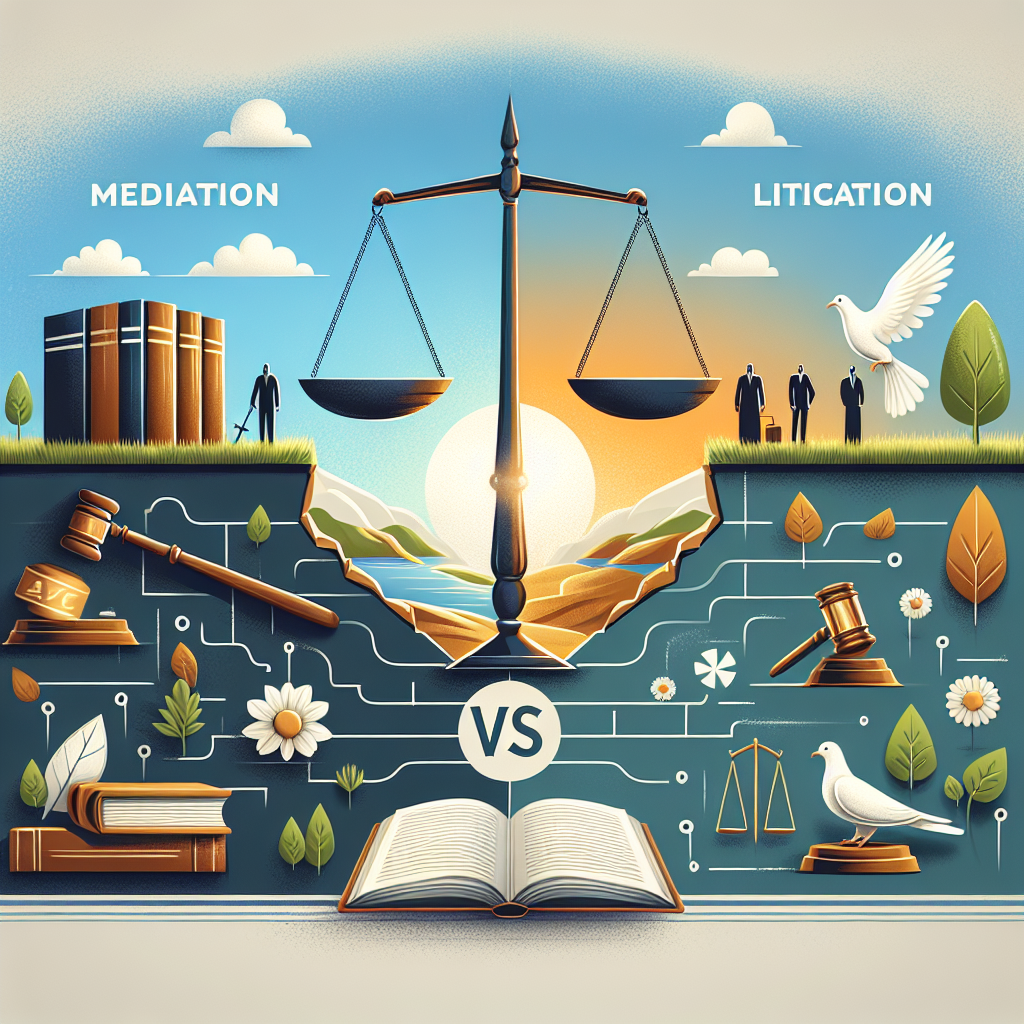
Mediation vs. Litigation: Real-Life Examples
Introduction
When faced with a legal dispute, there are typically two options available for resolving it: mediation and litigation. While both of these methods have the goal of resolving conflicts, they differ significantly in their approaches and outcomes. It is crucial to understand the differences between the two in order to make an informed decision on which approach to choose. In this article, we will delve into the definitions and processes of mediation and litigation, provide real-life examples, discuss their pros and cons, and explore factors to consider when choosing between the two. By the end, readers will have a clear understanding of which approach may be more suitable for their own legal situation.
What is Mediation?
Mediation is a form of alternative dispute resolution (ADR) where a neutral third party, known as a mediator, facilitates negotiations between the disputing parties. The mediator does not make a decision on the outcome but rather helps the parties reach a mutually agreed-upon resolution.
The process of mediation typically involves an initial meeting with the mediator, where each side presents their perspective and goals for resolving the dispute. The mediator then conducts various private and joint sessions with the parties to identify the issues at hand and explore potential solutions. The mediator may also help the parties communicate effectively and manage any emotions or tensions that may arise during the process.
One of the key benefits of mediation is that it allows the disputing parties to actively participate in finding a solution rather than leaving the decision in the hands of a judge or jury. This can also lead to more creative and mutually beneficial resolutions, as both parties have a say in the final outcome.
What is Litigation?
Litigation is the process of resolving a legal dispute through the court system. It involves filing a lawsuit and going through the formal legal process, with a judge or jury ultimately making a decision on the outcome of the dispute.
The process of litigation typically starts with the filing of a complaint by the plaintiff, which outlines the details of the dispute and the relief sought. The defendant then has a certain amount of time to respond to the complaint. The next steps may involve discovery, where both sides gather evidence and information through methods such as depositions and document requests. This is followed by pre-trial motions and possibly a trial, where each side presents their case and arguments. The judge or jury then makes a final decision on the outcome of the dispute.
While litigation may seem like a more straightforward process, it can also be lengthy, complex, and expensive. It also takes the decision-making power out of the hands of the parties involved, potentially leading to an outcome that is not satisfactory for either side.
Real-Life Example of Mediation
An excellent example of a legal dispute that was successfully resolved through mediation is the case of the United States v. Microsoft Corp. In this case, the Department of Justice (DOJ) sued Microsoft for violating antitrust laws by bundling its web browser, Internet Explorer, with its Windows operating system.
After years of litigation, the parties eventually turned to mediation to resolve the dispute. The mediator, Richard Posner, facilitated negotiations between the DOJ and Microsoft and helped them reach a settlement agreement. Under the terms of the settlement, Microsoft agreed to modify its business practices, and the DOJ dropped its lawsuit.
Through mediation, both parties were able to reach a resolution that satisfied their interests and avoided the lengthy and costly litigation process. It also allowed for more flexibility and creativity in finding a solution that would benefit both sides.
Real-Life Example of Litigation
One high-profile example of a legal dispute that went through the full litigation process is the case of Apple Inc. v. Samsung Electronics Co. Ltd. This case involved a patent infringement dispute between the two tech giants over smartphone technology.
The case went through several rounds of litigation in various courts, lasting over seven years. It involved numerous pre-trial motions, appeals, and trials, with each side ultimately winning and losing different parts of the case. The final outcome was a settlement agreement between the two companies, but not before millions of dollars were spent on legal fees and damages.
This case highlights the complexity and potential costs of going through the full litigation process. It can also be emotionally and mentally taxing for the parties involved, as it often involves multiple court appearances and long periods of uncertainty.
Pros and Cons of Mediation
Mediation has several advantages over litigation. Firstly, it is typically a faster process, with most mediations being resolved within a few weeks or months, while litigation can take years. This can save both time and money for the disputing parties, as they are not tied up in lengthy court proceedings. Additionally, mediation allows for more control and input from the parties involved, leading to more personalized and mutually beneficial solutions.
However, mediation does have some challenges and limitations. For one, it requires cooperation and participation from both sides, which may not always be achievable in highly contentious disputes. It also does not guarantee a resolution, as the mediator does not have the power to impose a decision on the parties.
Pros and Cons of Litigation
The primary advantage of litigation is that it provides a formal and structured process for resolving disputes. It also allows for a neutral third party (the judge or jury) to make a decision on the outcome, which may be seen as a fairer approach. Additionally, the court system provides opportunities for appeals if one party is unhappy with the decision.
However, litigation can also have negative consequences and drawbacks. It is a time-consuming and expensive process, which can be emotionally taxing for the parties involved. It also takes the decision-making power out of the hands of the parties, potentially leading to a resolution that is not satisfactory for either side.
Factors to Consider When Choosing Between Mediation and Litigation
There are several factors to consider when deciding whether to pursue mediation or litigation for a legal dispute. One factor is the type of dispute at hand. Some types of disputes may be more suitable for mediation, such as conflicts between businesses or disputes involving ongoing relationships.
Another factor to consider is the time and cost implications. If the dispute needs to be resolved quickly and efficiently, mediation may be a better option. However, if the stakes are high, and the parties are unwilling to compromise, litigation may be necessary.
The relationship between the parties may also play a role in choosing between mediation and litigation. For example, if the parties have a good working relationship and want to maintain it, mediation may be the best approach. However, if the relationship is already strained, litigation may be necessary to resolve the dispute.
How to Prepare for Mediation or Litigation
Before entering into mediation or litigation, it is crucial to take certain steps to prepare for the process effectively. For mediation, this may include gathering all relevant documents and evidence, identifying key issues and interests, and understanding the strengths and weaknesses of your case. It is also essential to seek legal advice before entering into mediation, as an experienced lawyer can provide valuable guidance and support throughout the process.
Similarly, for litigation, it is crucial to have a strong understanding of your case and the evidence that supports it. This may involve conducting extensive research, gathering witness statements, and preparing for the trial. It is also essential to have a skilled and experienced lawyer to represent you in court and advocate for your interests.
Conclusion
Mediation and litigation are two fundamentally different approaches to resolving legal disputes. While mediation allows for more control and input from the parties involved, litigation provides a structured process and decision-making power to a neutral third party. When deciding between the two, it is essential to carefully consider the specific factors and circumstances of the dispute. Seeking legal advice and being prepared for either approach can also significantly impact the outcome. By understanding the differences and benefits of mediation and litigation, individuals and businesses can make an informed decision that is most suitable for their unique legal situation.
Post-Divorce Scenarios: Mediation vs. Litigation

Resolving Post-Divorce Conflict: Mediation vs. Litigation
Introduction
In the aftermath of a divorce, many couples continue to face conflicts and disagreements. These post-divorce disputes can range from child custody and visitation issues to disagreements over financial arrangements and property division. In such scenarios, it may be necessary to seek legal intervention to resolve these conflicts and reach a mutually agreeable solution. However, there are various options available for resolving post-divorce conflicts, with the two most common being mediation and litigation. In this article, we will explore these two options and provide insight on which one may be the most suitable for your post-divorce situation.
Understanding Post-Divorce Conflict
Before delving into the different resolution options, it’s important to understand the nature of post-divorce conflict. Divorce is a highly emotional and stressful process, and it often leads to ongoing resentment and animosity between ex-spouses. This can make it challenging for couples to effectively communicate and reach agreements. In addition, post-divorce conflicts can also arise due to changes in circumstances, such as job loss, relocation, or remarriage. These conflicts can be exacerbated by unresolved issues from the divorce, making it difficult for couples to move on and co-parent amicably.
Benefits of Resolving Conflict after Divorce
Regardless of the cause of the conflict, it’s important to address and resolve these issues for the well-being of all parties involved. Here are some of the benefits of resolving post-divorce conflict:
- Reduced stress: Ongoing conflict can take a toll on your mental and emotional well-being. Resolving post-divorce conflicts can help reduce stress and improve your overall quality of life.
- Better co-parenting: If you have children, addressing post-divorce conflicts can help improve your co-parenting relationship and create a more stable environment for your children.
- Cost-effective: Resolving conflicts outside of court can be more cost-effective than litigation, saving you time and money.
- Flexible solutions: Alternative dispute resolution methods, like mediation, offer more flexibility in finding mutually agreeable solutions compared to a court-imposed decision.
The Role of Mediation in Conflict Resolution
Mediation is a form of alternative dispute resolution (ADR) where a neutral third party, known as a mediator, facilitates communication between the parties to reach an agreement. The goal of mediation is to promote open communication and help the parties find a mutually acceptable solution to their conflict.
Mediation Process: How It Works
The mediation process typically involves the following steps:
- Initiation: One of the parties may initiate the mediation process by contacting a mediator or through a court order.
- Introduction: The mediator will explain the mediation process and their role in facilitating communication between the parties.
- Information gathering: Each party will have the opportunity to present their perspective and share any relevant information with the mediator.
- Discussion: The mediator will facilitate open communication between the parties, helping them identify areas of agreement and disagreement.
- Negotiation: With the help of the mediator, the parties will negotiate and explore potential solutions to their conflict.
- Agreement: If a mutually acceptable solution is reached, the parties will sign a written agreement outlining the terms and conditions of their agreement.
Advantages and Drawbacks of Mediation
Mediation offers several advantages over litigation, including:
- Privacy: Mediation is a confidential process, whereas court proceedings are a matter of public record.
- Control over the outcome: The parties have more control over the outcome in mediation, as opposed to leaving the decision in the hands of a judge.
- Flexibility: Mediation allows for more flexibility in finding creative solutions that may not be available through a court-imposed decision.
- Less adversarial: Mediation promotes open communication and collaboration, as opposed to the adversarial nature of litigation.
However, there are also some drawbacks to consider, such as:
- Not legally binding: Mediation agreements are not legally binding, which means either party can choose not to follow through with the agreed-upon terms.
- Inequality between parties: In cases where there is a significant power imbalance between the parties, one party may feel pressured to agree to terms that are not in their best interest.
- May not be suitable for high-conflict cases: Mediation may not be effective in cases where there is a high level of conflict or a history of abuse.
Litigation as a Conflict Resolution Option
Litigation is the traditional method of resolving legal disputes, where a judge makes a decision based on the evidence presented and applicable laws. This process involves going to court and following the rules of legal proceedings.
Steps in the Litigation Process
The litigation process typically involves the following steps:
- Filing a complaint: One party files a complaint with the court, outlining their claims.
- Response: The other party responds to the complaint, either admitting or denying the claims.
- Discovery: Both parties gather evidence and information to support their case, through methods such as depositions, requests for documents, and interrogatories.
- Pre-trial motions: Either party can file motions, such as a motion to dismiss or a motion for summary judgment, to resolve issues before the trial.
- Trial: The trial involves presenting evidence and arguments to a judge or jury, who will then make a decision on the case.
- Judgment: The judge or jury will make a decision, and a judgment will be entered.
- Appeals: Either party can appeal the judgment if they believe there was a legal error or misconduct during the trial.
Pros and Cons of Litigation
Some advantages of litigation include:
- Legally binding: Unlike mediation, court decisions are legally binding and enforceable.
- Expertise and experience: Judges and lawyers have expertise and experience in handling legal matters, providing a level playing field for both parties.
- Structured process: The litigation process follows a structured and established legal procedure, providing a clear framework for resolving disputes.
However, there are also drawbacks to consider, such as:
- Costly: Litigation is often more expensive than other methods of dispute resolution, as it involves legal fees and court costs.
- Lengthy process: Court proceedings can be lengthy, and it may take months or even years to reach a final decision.
- Adversarial nature: The adversarial nature of litigation can strain relationships and make it difficult for parties to communicate and reach agreements in the future.
Choosing the Right Option for Your Post-Divorce Conflict Resolution
Ultimately, the best option for resolving post-divorce conflicts will depend on your specific situation and the nature of the conflict. In cases where there is a significant power imbalance or high levels of conflict, litigation may be the most appropriate option. However, if you and your ex-spouse are able to communicate and are willing to work together to find a mutually agreeable solution, mediation can offer a more cost-effective and flexible approach. It’s important to consider the pros and cons of each option and consult with a divorce lawyer to determine the best course of action for your specific case.
Conclusion
Post-divorce conflicts can be a challenging and emotionally charged experience. However, by understanding the different options available for resolving these conflicts, you can make informed decisions and find the best solution for your specific situation. Whether you choose mediation or litigation, it’s important to prioritize open communication and finding a mutually agreeable solution for the well-being of all parties involved.
Privacy Considerations in Mediation vs. Litigation

Confidentiality in Mediation vs. Litigation: Importance of Privacy in Resolving Disputes
Introduction
In any legal dispute, the resolution process can be daunting and stressful. However, there are various methods available for individuals and organizations to resolve conflicts, including mediation and litigation. While both mediation and litigation aim to resolve disputes, they differ in many ways, including the level of privacy and confidentiality they offer. In this article, we will explore the importance of confidentiality and privacy in dispute resolution and how they differ between mediation and litigation.
Defining Confidentiality in Mediation and Litigation
Confidentiality is a crucial aspect of dispute resolution. It refers to the protection of sensitive information shared during the resolution process from being disclosed to anyone outside the process. In mediation, confidentiality is a fundamental principle that guides the entire process. It means that all discussions, information, and documents shared during mediation are strictly confidential and cannot be used in court proceedings.
In comparison, litigation does not have the same level of confidentiality. The parties involved in a lawsuit are expected to disclose all relevant information and evidence to the court and the opposing party. This means that any information shared during the litigation process is not confidential and can be used in court proceedings.
The Role of Privacy in Resolving Disputes
Privacy is closely related to confidentiality, but it refers to the protection of an individual’s personal information. In dispute resolution, privacy is essential in maintaining the parties’ trust and promoting open communication.
Mediation offers a higher level of privacy compared to litigation. In mediation, the parties have control over the information they disclose to the mediator and the other party. This means that they can choose to keep certain personal or sensitive information confidential, which can help preserve their privacy.
In litigation, there is very little privacy. The court proceedings are open to the public, and all information shared in court becomes part of the public record. This can be a concern for individuals or organizations who want to protect their personal or business information.
Advantages of Confidentiality in Mediation
Confidentiality is a fundamental aspect of mediation. It offers many advantages for the parties involved, including:
- Promotes open communication: Confidentiality creates a safe and non-judgmental environment for parties to share their perspectives and concerns openly. This can lead to more effective communication and a better understanding of each party’s needs.
- Protects sensitive information: In mediation, sensitive information, such as financial or personal details, can be kept confidential. This can be beneficial for parties who do not want this information to be disclosed in court proceedings.
- Encourages creative solutions: With confidentiality, parties are more likely to explore and propose creative solutions to their dispute without fear of judgment or repercussions. This can lead to mutually beneficial agreements that may not have been possible in a public court setting.
- Saves time and money: Confidentiality in mediation can help parties reach a resolution faster and avoid costly and time-consuming court proceedings.
Advantages of Privacy in Litigation
While mediation offers a higher level of confidentiality, there are also advantages to privacy in litigation, including:
- Full disclosure: In litigation, there is an expectation of full disclosure of all relevant information and evidence. This can help ensure a fair and just resolution to the dispute.
- Public scrutiny: In some cases, the public nature of litigation can pressure parties to behave more ethically and responsibly, as their actions and decisions are subject to public scrutiny.
- Legal precedent: Court decisions in litigation can set legal precedents that can be used in future cases. This can provide clarity and consistency in the law.
Balancing Confidentiality and Transparency
While confidentiality is essential in mediation, it is also necessary to balance it with transparency. In some cases, complete confidentiality can hinder the resolution process, as the parties may not have all the information they need to make informed decisions. In these situations, the mediator may need to disclose certain information to ensure transparency and facilitate the resolution process.
Similarly, while litigation offers transparency, it is also important to balance it with privacy. The court may grant protective orders to keep certain information confidential to protect the parties’ privacy.
Maintaining Confidentiality in Mediation
To maintain confidentiality in mediation, there are a few essential steps that the mediator and parties must take:
- Signing a confidentiality agreement: A confidentiality agreement is typically signed by all parties and the mediator at the beginning of the mediation process. This agreement outlines the confidential nature of the mediation and the consequences of breaching confidentiality.
- Limiting the disclosure of information: The mediator should only disclose information to the other party if it is necessary to facilitate the resolution process.
- Keeping records confidential: All notes and records from the mediation should be kept confidential and destroyed after the process is completed.
Maintaining Privacy in Litigation
In litigation, maintaining privacy can be more challenging, but there are steps that parties can take to protect their privacy:
- Seeking protective orders: Parties can request the court to issue protective orders to keep certain information confidential and not part of the public record.
- Limiting the disclosure of personal information: Parties can work with their lawyers to limit the disclosure of personal information that is not relevant to the dispute.
- Requesting closed hearings: In some cases, parties may be able to request that certain court hearings be closed to the public to protect their privacy.
Legal Implications of Breaching Confidentiality or Privacy
Both mediation and litigation have legal implications for breaching confidentiality and privacy. In mediation, if a party breaches confidentiality, they may face legal consequences, such as fines or sanctions. They may also lose the trust of the other party and hinder the resolution process.
In litigation, breaching confidentiality or privacy may result in a contempt of court charge, which can lead to fines or imprisonment. It can also harm the party’s case and credibility in the eyes of the court.
Why Confidentiality and Privacy are Vital in Dispute Resolution
In conclusion, confidentiality and privacy are essential in any dispute resolution process. While mediation offers a higher level of confidentiality, litigation provides transparency, which is necessary in some cases. Parties must carefully consider the level of confidentiality and privacy they require when choosing between mediation and litigation. They should also work closely with their lawyers to protect their personal information and maintain confidentiality or privacy throughout the resolution process.
Pros and Cons of Mediation vs. Litigation

Mediation vs. Litigation: A Comprehensive Comparison
Introduction to Mediation vs. Litigation Comparison
When it comes to resolving legal disputes, there are two main options: mediation and litigation. Both methods have their own advantages and disadvantages, and understanding the differences between them is key in determining which one is the better option. In this article, we will compare the pros and cons of mediation vs. litigation, and explore the process of each method to give you a better understanding of these two alternative dispute resolution methods.
Definition and Explanation of Mediation
Mediation is a form of alternative dispute resolution where a neutral third party, known as a mediator, assists the disputing parties in reaching a mutually acceptable agreement. The mediator does not make decisions for the parties, but rather facilitates communication and negotiation between them. This allows the parties to have more control over the outcome of the dispute, as they are actively involved in the decision-making process.
Definition and Explanation of Litigation
Litigation, on the other hand, refers to the legal process of resolving disputes through the court system. In this method, the parties present their case to a judge or jury, who then make a binding decision on the dispute. Litigation typically involves formal legal procedures, such as hearings, trials, and appeals, and can be a lengthy and costly process.
Advantages of Mediation
One of the main advantages of mediation is its flexibility. Unlike litigation, which follows a strict legal process, mediation allows for more creativity and customization in finding a resolution. This can be particularly beneficial for complex disputes or those involving unique circumstances.
Mediation is also a more collaborative process, as the parties are encouraged to work together to find a mutually agreeable solution. This can help preserve relationships and promote better communication between the parties.
Additionally, mediation is typically less expensive and time-consuming than litigation. As it does not involve formal legal procedures and does not require court appearances, the costs and time involved in mediation are significantly lower.
Advantages of Litigation
One of the main advantages of litigation is its finality. As the decision is made by a judge or jury, it is binding and cannot be changed unless there is an appeal. This can provide a sense of closure for the parties, as they know the dispute has been resolved conclusively.
Litigation also provides a structured and consistent process for resolving disputes. This can be beneficial for cases that require a strict interpretation of the law or involve complex legal issues.
Furthermore, litigation can offer a higher level of protection for the parties, as it is a formal and legal process. This can be particularly important in cases where there is a power imbalance between the parties, such as in employer-employee disputes.
Disadvantages of Mediation
One of the main disadvantages of mediation is that it is a voluntary process. This means that if one party is not willing to participate, mediation cannot take place. This can be a major obstacle in resolving disputes, especially if the parties have significant disagreements.
Another potential drawback of mediation is that the outcome is not guaranteed. As the mediator does not make decisions for the parties, there is no guarantee that a resolution will be reached. This uncertainty can be stressful and frustrating for the parties involved.
Additionally, mediation may not be suitable for complex or high-stakes disputes. As it relies on the parties’ willingness to negotiate and compromise, it may not be effective in resolving disputes that involve significant legal or financial implications.
Disadvantages of Litigation
One of the main disadvantages of litigation is its cost. As formal legal procedures can be lengthy and involve multiple court appearances, the costs involved in litigation can be significant. This can be a major barrier for individuals or businesses with limited financial resources.
Litigation can also be a time-consuming process, with some cases taking years to reach a resolution. This can add to the stress and emotional toll of the dispute, and may not be a suitable option for those looking for a quick resolution.
Furthermore, the adversarial nature of litigation can strain relationships between the parties, and may not be ideal for resolving disputes where ongoing communication is necessary.
Process of Mediation
The process of mediation typically starts with both parties agreeing to participate in the process. The mediator will then schedule a meeting with the parties to discuss the dispute and establish the ground rules for the mediation.
During the mediation sessions, the mediator will facilitate communication and negotiation between the parties. This may involve one-on-one discussions, joint meetings, or caucuses. The mediator may also suggest different options for the parties to consider in reaching a resolution.
If an agreement is reached, the mediator will draft a written agreement that outlines the terms of the resolution. This agreement is signed by both parties and is binding. If no agreement is reached, the parties may choose to continue with mediation, seek another form of dispute resolution, or proceed with litigation.
Process of Litigation
Litigation begins with the filing of a complaint or petition by the plaintiff, which outlines the dispute and the relief being sought. The defendant then has a certain amount of time to respond to the complaint.
If the parties are unable to reach a settlement, the case will proceed to pre-trial procedures, such as discovery, where both sides gather evidence and information to support their case. This may include depositions, subpoenas, and written interrogatories.
Next, a trial date is set and the parties present their case to a judge or jury. Each side will present evidence and arguments to support their position, and the decision is made by the judge or jury based on the evidence presented.
If either party is dissatisfied with the outcome, they may choose to appeal the decision to a higher court. This process can be lengthy and involve additional costs.
Which is the Better Option?
When it comes to choosing between mediation and litigation, there is no one-size-fits-all answer. Each method has its own advantages and disadvantages, and the best option will depend on the specific circumstances of the dispute.
If the parties are looking for a more collaborative and cost-effective process, mediation may be the better option. However, if the dispute involves complex legal issues or requires a binding and final decision, litigation may be the more suitable choice.
In some cases, a combination of both methods may be used, with mediation taking place initially and litigation being pursued if no resolution is reached. Ultimately, the key is to carefully consider the pros and cons of each method and choose the one that best fits the needs and goals of the parties involved.
Psychological Aspects of Mediation vs. Litigation

Unlocking the Power of Psychological Mediation: Benefits You Need to Know
The Benefits of Psychological Mediation: Exploring Its Impact on Mental Well-Being
Psychological mediation is an alternative dispute resolution process that focuses on resolving conflicts through communication and understanding, rather than legal proceedings. While litigation may be necessary in some cases, the psychological aspect of mediation can provide numerous benefits for individuals involved in a dispute. In this article, we will delve into the various ways in which psychological mediation can positively impact mental well-being, and why it may be a preferable option over traditional litigation.
Understanding the Role of Mediation in Resolving Psychological Conflicts
Mediation involves a trained mediator who acts as a neutral third-party to facilitate communication and help the parties involved in a dispute reach a mutually beneficial resolution. Unlike litigation, mediation focuses on addressing the underlying issues and emotions that fuel the conflict, rather than just determining a winner and a loser. This approach allows for a more comprehensive and holistic resolution, which can have a significant impact on the mental well-being of the parties involved.
The Science Behind Mediation: How It Affects Brain Function and Emotional Regulation
Research has shown that mediation can have a positive impact on various aspects of brain function, including emotion regulation, decision-making, and communication skills. When individuals are engaged in a dispute, their fight or flight response is activated, leading to increased stress and emotional reactivity. However, mediation allows for a safe and controlled environment for individuals to express their emotions and work towards a resolution. This process can help regulate emotions, leading to better decision-making and improved communication skills.
Enhancing Communication and Conflict Resolution Skills through Psychological Mediation
Communication and conflict resolution skills are essential for navigating both personal and professional relationships. However, these skills are often overlooked and not taught formally in traditional education systems. Through mediation, individuals have the opportunity to learn and practice effective communication and conflict resolution techniques. This not only helps in resolving the immediate dispute but also has long-term benefits for all aspects of life.
Rebuilding Trust and Strengthening Relationships through Mediation
Trust is an essential element in any relationship, and it can be significantly impacted by conflicts. In litigation, the adversarial nature of the process can further damage trust between the parties involved. However, mediation focuses on finding common ground and understanding each other’s perspectives, which can help rebuild trust and strengthen relationships. This is especially beneficial in cases where the parties involved have a continuing relationship, such as co-parenting or business partnerships.
The Power of Self-Reflection: How Mediation Helps in Self-Discovery and Personal Growth
Mediation provides a structured and safe space for individuals to reflect on their actions, thoughts, and emotions. Through the process, they may gain insights into their own biases, triggers, and communication patterns. This self-discovery can lead to personal growth and a better understanding of oneself. By addressing and resolving conflicts, individuals can also learn important lessons and develop skills that can be applied in their personal and professional lives.
Overcoming Trauma and Anxiety: Using Mediation to Heal Emotional Wounds
Conflict can often bring up past traumas and trigger anxiety in individuals. Litigation can further exacerbate these emotions, leading to a negative impact on mental health. In contrast, mediation focuses on addressing the underlying emotions and providing a safe space for individuals to express and process them. This process can help individuals heal from past traumas and reduce anxiety related to the conflict at hand.
Navigating Life Transitions with Ease: The Role of Mediation in Coping with Change
Life is full of transitions, and some of them may lead to conflicts. These transitions can include divorce, job changes, or family dynamics. Mediation can be a helpful tool in navigating these transitions and managing any conflicts that may arise. By addressing the underlying emotions and working towards a mutually beneficial resolution, mediation can help individuals cope with change and reduce the stress and anxiety that often comes with it.
Unlocking Inner Strength: The Empowering Effects of Psychological Mediation
Mediation empowers individuals by giving them a voice and an active role in finding a resolution. This can be especially impactful for individuals who may feel disempowered in the face of a legal dispute. By actively participating and making decisions, individuals can tap into their inner strength and feel a sense of control over the situation. This can have a positive impact on their mental well-being and self-confidence.
The Future of Mental Health: How Mediation is Shaping a More Positive Society
The traditional approach to resolving conflicts through litigation is often based on the idea of winning and losing. This can result in a negative impact on mental health for both parties involved. However, as society becomes more aware of the importance of mental health, there has been a shift towards alternative dispute resolution methods like mediation. With its focus on communication, understanding, and mutual benefit, mediation is shaping a more positive and mentally healthy society.
Conclusion
Psychological mediation offers numerous benefits for mental well-being compared to traditional litigation. By addressing the underlying emotions and focusing on communication and understanding, mediation can lead to more comprehensive and long-lasting resolutions. As society continues to prioritize mental health, mediation may become the preferred method for resolving conflicts, ultimately creating a more positive and harmonious society.
Role of Lawyers in Mediation and Litigation

Maximizing Success: Legal Representation in Mediation & Litigation
Understanding Legal Representation
Legal representation refers to the act of having a lawyer or legal counsel represent a party in a legal proceeding. This can include mediation, where parties attempt to resolve a dispute with the help of a neutral third party, and litigation, which involves resolving a dispute through the court system. In both processes, a legal representative plays a crucial role in advocating for their client’s best interests and navigating the complex legal system.
Importance of Legal Representation in Mediation and Litigation
Legal representation is essential in mediation and litigation for several reasons. Firstly, it provides parties with expert legal knowledge and guidance. Many legal issues can be complex and require a thorough understanding of the law and legal procedures. A legal representative can offer their clients this knowledge and help them make informed decisions.
Additionally, having a legal representative can help level the playing field in situations where one party may have more resources or legal knowledge than the other. This ensures that all parties have a fair chance at reaching a favorable resolution.
Furthermore, legal representation can also help parties effectively communicate and negotiate their interests in mediation. A lawyer can act as a mediator between the parties and help them reach a mutually beneficial agreement. In litigation, legal representation is crucial in presenting a strong case and advocating for the client’s best interests in court.
Roles and Responsibilities of a Legal Representative
A legal representative has several roles and responsibilities in both mediation and litigation. They are responsible for providing legal advice and guidance to their clients, helping them understand their rights and options in the legal process.
They also have a duty to advocate for their clients’ best interests, whether that is in reaching a resolution in mediation or presenting a strong case in litigation. This includes gathering evidence, conducting legal research, and negotiating on behalf of their client.
Additionally, a legal representative has a duty to act ethically and maintain confidentiality in all aspects of their representation.
Benefits of Hiring a Legal Representative in Mediation and Litigation
There are several benefits to hiring a legal representative in mediation and litigation. Firstly, they can provide an objective and unbiased perspective on the case. Emotions can run high in legal disputes, and having a legal representative can help parties make rational decisions based on the law.
Legal representation can also save parties time and money. A lawyer can guide their clients through the legal process efficiently and effectively, potentially avoiding costly delays and mistakes. Additionally, a lawyer can also help parties reach a resolution outside of court, saving them the time and expense of a lengthy trial.
Moreover, a legal representative can offer their clients peace of mind, knowing that they have a knowledgeable and experienced advocate working on their behalf.
Differences Between Legal Representation in Mediation and Litigation
The role of a legal representative in mediation differs from their role in litigation. In mediation, a lawyer acts as a mediator between the parties, facilitating communication and helping them reach a resolution. They do not have the same level of advocacy as they would in litigation.
In litigation, legal representation is crucial in advocating for the client’s best interests in court. This involves conducting legal research, gathering evidence, and presenting a strong case on behalf of their client. Additionally, a lawyer may engage in settlement negotiations on behalf of their client in an attempt to avoid a trial.
Factors to Consider When Choosing a Legal Representative
When choosing a legal representative for mediation or litigation, there are several factors to consider. Firstly, it is essential to choose a lawyer with experience in the specific area of law relevant to the case. This ensures that they have the necessary knowledge and skills to effectively represent their client’s interests.
It is also crucial to consider the lawyer’s reputation and track record. Reading reviews and testimonials from previous clients can give insight into their capabilities and success in similar cases.
Cost is another important factor to consider. Legal representation can be expensive, so it is essential to discuss fees and payment options with potential lawyers before hiring them.
Lastly, it is crucial to have a good rapport and open communication with a legal representative. Clients should feel comfortable and confident in their lawyer’s ability to represent their interests effectively.
Common Misconceptions About Legal Representation in Mediation and Litigation
There are several misconceptions about legal representation in mediation and litigation. One common misconception is that hiring a lawyer is only necessary for individuals with significant resources or those involved in high-profile cases. In reality, anyone involved in a legal dispute can benefit from legal representation, regardless of their financial resources.
Another misconception is that legal representation is expensive and only adds to the cost of the legal process. While it is true that lawyers can be costly, their expertise can ultimately save parties time and money by avoiding costly mistakes and delays.
Additionally, some may believe that hiring a lawyer means giving up control of the case. However, legal representation involves working closely with clients and advocating for their best interests, keeping them involved in the decision-making process.
Strategies for Effective Legal Representation in Mediation and Litigation
To be an effective legal representative in mediation and litigation, lawyers must have strong communication and negotiation skills. They should also be knowledgeable about the law and have the ability to analyze and present evidence effectively.
Additionally, lawyers should have a client-focused approach, keeping their clients’ best interests in mind at all times. This includes being flexible and open to compromise in mediation and being assertive and persuasive in litigation.
Furthermore, lawyers should also have excellent time management skills, ensuring that deadlines are met and progress is made in the case. They should also maintain open and honest communication with their clients, keeping them updated on the status of their case and any developments.
Ethical Considerations in Legal Representation
Legal representation comes with ethical considerations that lawyers must adhere to. They have a duty to act with integrity and honesty, putting their clients’ interests above their own. This includes maintaining confidentiality and avoiding conflicts of interest.
Lawyers must also ensure that they are competent and diligent in their representation, continually updating their legal knowledge and skills. They also have a duty to communicate effectively with their clients and keep them informed about their case.
The Impact of Quality Legal Representation in Mediation and Litigation
Legal representation plays a crucial role in mediation and litigation. Lawyers provide expert knowledge, guidance, and advocacy to their clients, helping them navigate the complex legal system and reach a favorable resolution.
By understanding the roles and responsibilities of a legal representative, the benefits of hiring one, and the differences between their roles in mediation and litigation, individuals can make informed decisions when choosing a lawyer to represent them.
Ultimately, quality legal representation can have a significant impact on the outcome of a legal dispute, making it essential to choose a trusted and experienced lawyer to represent one’s interests.
Role of Technology in Mediation vs. Litigation

Resolving Conflict: The Power of Technology
Introduction
Conflict resolution has been an ongoing challenge in society, with disputes arising in various settings such as workplace, community, and family. Traditional methods of resolving conflicts, such as litigation, have their limitations and may not always result in a satisfactory outcome for all parties involved. With the advancement of technology, alternative methods of conflict resolution have emerged, offering more efficient, cost-effective, and convenient ways to resolve disputes.
Understanding Conflict Resolution
Conflict resolution refers to the process of resolving disputes between parties in a peaceful and mutually beneficial way. It involves identifying the underlying issues and finding a resolution that satisfies the needs and interests of all parties involved. Traditional methods of conflict resolution, such as litigation and arbitration, often result in a win-lose outcome, where one party is declared the winner and the other the loser. This approach can lead to strained relationships and may not address the root cause of the conflict.
Role of Technology in Conflict Resolution
Technology has played a significant role in transforming how people communicate and access information. In recent years, technological advancements have also made their way into the field of conflict resolution. With the use of technology, parties can now resolve their disputes efficiently, effectively, and without the need for face-to-face interactions. Technology has also made the dispute resolution process more accessible, especially for those in remote areas or with physical limitations.
The Evolution of Technology in Conflict Resolution
The use of technology in conflict resolution can be traced back to the 1970s with the introduction of online dispute resolution (ODR). ODR involves the use of technology, such as email and online platforms, to facilitate the resolution of disputes. In the 1990s, the development of the internet and other communication technologies paved the way for the growth of ODR. Today, ODR has evolved to include a wide range of tools and applications, such as video conferencing, virtual meeting rooms, and online negotiation platforms.
Advantages of Technology in Conflict Resolution
One of the primary advantages of using technology in conflict resolution is the convenience it offers. Parties no longer have to be physically present in the same location to engage in the resolution process. This makes it easier for individuals from different geographical locations to participate, reducing the costs and time associated with travel. Additionally, technology allows for a more efficient and streamlined resolution process, with tools such as online case management systems and e-filing making it easier to manage and track the progress of a dispute.
Challenges and Limitations of Technology in Conflict Resolution
While technology has brought significant benefits to the field of conflict resolution, it also has its limitations. One of the main challenges is the potential for technical issues, which can hinder the smooth functioning of the process. Technical difficulties, such as poor internet connection or system failures, can disrupt the flow of communication and delay the resolution process. Another limitation is the digital divide, where individuals from low-income or rural areas may not have access to the necessary technology or skills to engage in the process.
Case Studies: Successful Implementation of Technology in Conflict Resolution
Many organizations and institutions have successfully implemented technology in their conflict resolution processes. For example, the International Chamber of Commerce (ICC) has an online dispute resolution platform for resolving commercial disputes. This platform offers a user-friendly interface and secure communication channels for parties to engage in negotiations and reach a settlement. Another successful case is the Singapore International Mediation Centre (SIMC), which has integrated technology into its mediation process and provides a hybrid model of both online and face-to-face mediation.
Future Directions and Innovations in Technology for Conflict Resolution
As technology continues to advance, the possibilities for its use in conflict resolution are endless. One of the most promising innovations is the use of artificial intelligence (AI) in dispute resolution. AI-powered tools can analyze large amounts of data and provide insights into potential solutions that parties may not have considered. Another potential future direction is the integration of virtual and augmented reality into the mediation process, allowing parties to engage in a more immersive and interactive experience.
Ethical Considerations in Using Technology for Conflict Resolution
With the increasing use of technology in conflict resolution, ethical considerations must be addressed to ensure the process remains fair and unbiased. For example, there may be concerns about the security and confidentiality of information shared during the resolution process. Parties must also be aware of the potential for biased algorithmic decision-making in AI-powered tools. It is crucial for mediators and other professionals involved in the conflict resolution process to stay informed about the ethical implications of using technology and take appropriate measures to address them.
The Ongoing Impact of Technology in Conflict Resolution
Technology has had a significant impact on the field of conflict resolution, offering alternative methods that are more efficient, accessible, and cost-effective. Its evolution and ongoing innovations provide potential for a more streamlined and effective resolution process in the future. However, it is essential to consider the ethical implications and limitations of technology and ensure a fair and unbiased process for all parties involved. As technology continues to advance, its role in conflict resolution will only continue to grow and shape the way disputes are resolved in the future.