

Comparative Analysis of Divorce Mediation Laws Across States
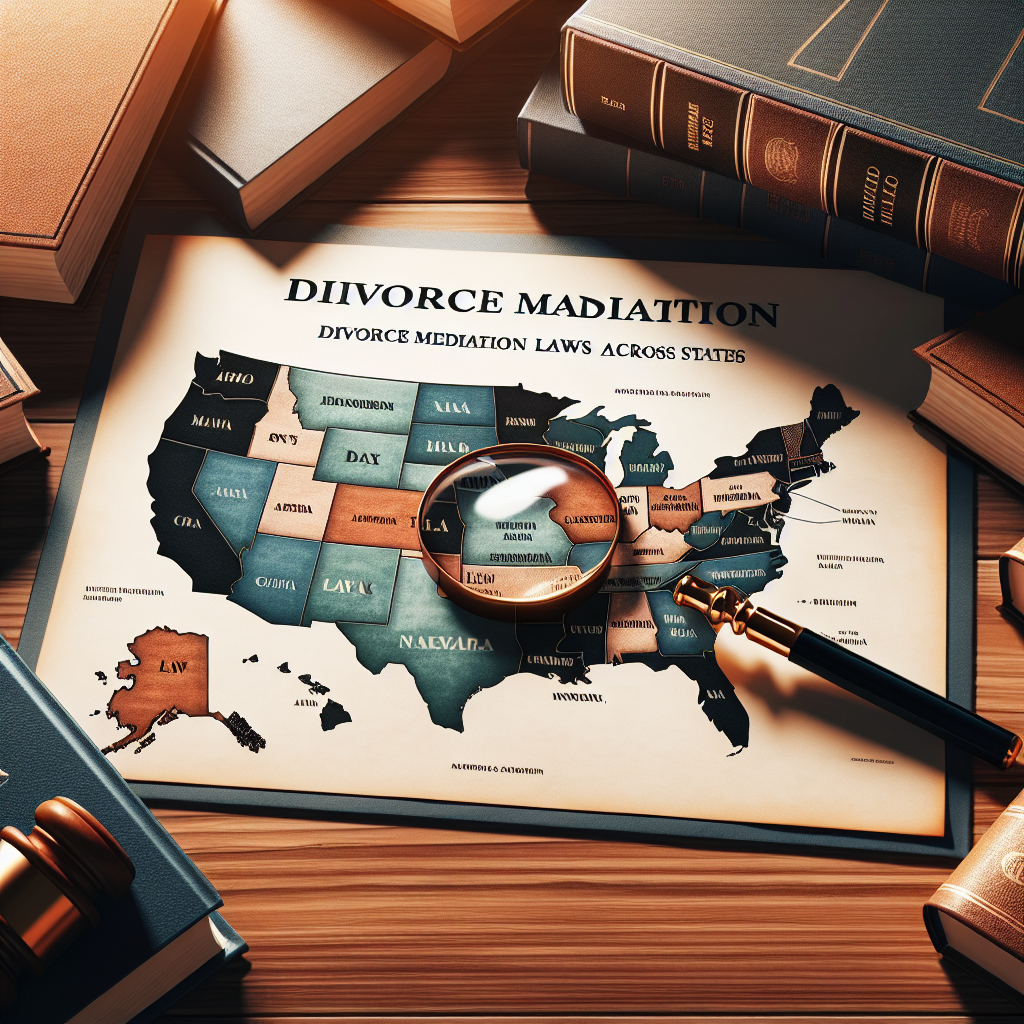
Divorce Mediation Laws: A Comprehensive Comparison
Introduction
Divorce can be a difficult and emotionally charged process, but not all divorces have to be settled in a courtroom. One alternative to traditional litigation is divorce mediation, a process in which a neutral third party helps a couple come to a mutually agreed upon settlement for their divorce. However, the laws and regulations surrounding divorce mediation can vary greatly from state to state. In this article, we will explore the comparative analysis of divorce mediation laws across states, to help individuals understand their options and make informed decisions when it comes to divorce.
What is Divorce Mediation?
Divorce mediation is a process in which a mediator, a neutral third party, facilitates communication and negotiation between a divorcing couple. The goal of mediation is to reach a mutually agreed upon settlement for their divorce, without having to go through the adversarial process of litigation. Mediation can cover a range of issues, including division of assets, child custody and support, and spousal support. Unlike in litigation, where a judge makes the final decision, in mediation, the couple themselves make the decisions and maintain control over the outcome of their divorce.
Understanding the Benefits of Divorce Mediation
There are many benefits to choosing divorce mediation over traditional litigation. First and foremost, mediation can be a less adversarial and emotionally draining process, as it focuses on finding mutually beneficial solutions rather than winning or losing. Additionally, mediation can be less time-consuming and costly compared to litigation, as it removes the need for multiple court appearances and extensive legal fees. Furthermore, mediation can lead to a more amicable and cooperative relationship between the divorcing couple, which can be especially important if they have children together.
The Role of a Mediator in Divorce Mediation
The mediator plays a crucial role in the divorce mediation process. They act as a neutral third party, facilitating communication and negotiation between the divorcing couple. The mediator must be impartial and not favor one party over the other. They also help the couple identify and discuss their needs and interests, and help them come to mutually beneficial solutions. The mediator may also suggest alternative solutions or provide legal information, but they cannot give legal advice.
3 Types of States Comparing Divorce Mediation Laws
There is no standardized set of laws for divorce mediation in the United States, as each state has its own regulations. This can make it challenging for individuals to understand their rights and options when it comes to divorce mediation. To help with this, we have compiled a comparative analysis of divorce mediation laws across states, highlighting key differences and similarities in the legal systems.
Example State 1: Divorce Mediation Laws and Regulations
In States of Type 1, divorce mediation is a voluntary process, meaning that both parties must agree to participate. The state also requires the mediator to be certified or licensed, and they must follow a code of ethics. In terms of confidentiality, any communication made during mediation is privileged and cannot be used in court. The mediator is also required to disclose any conflicts of interest and must remain impartial throughout the process.
Example State 2: Divorce Mediation Laws and Regulations
In States of Type 2, this state has mandatory mediation for divorcing couples, meaning that they are required to attempt mediation before proceeding with litigation. However, if either party does not agree to mediation or if the mediation is unsuccessful, the case will go to court. The state also requires the mediator to be licensed or certified and to follow a code of ethics. Confidentiality is also enforced, and the mediator must remain impartial.
Example State 3: Divorce Mediation Laws and Regulations
In other States, divorce mediation is not mandatory, but it is encouraged. The state also requires the mediator to be certified or licensed, and they must follow a code of ethics. Confidentiality is protected, and the mediator must remain impartial. However, in this state, mediators can also provide legal information and advice, as long as they are trained and qualified to do so.
Comparative Analysis
As we can see from these three examples, there are significant differences in divorce mediation laws and regulations across states. Some states have voluntary mediation, while others have mandatory or encouraged mediation. Some states also have more stringent requirements for mediators, such as mandatory certification or licensing, while others allow for more flexibility in terms of who can act as a mediator.
Additionally, the role and responsibilities of the mediator may also vary from state to state. Some states strictly prohibit mediators from providing legal advice, while others allow for it under certain circumstances. This can significantly impact the effectiveness and outcomes of divorce mediation, as well as the level of satisfaction for both parties.
Factors to Consider When Choosing a Divorce Mediator
When choosing a mediator for your divorce, it is essential to consider a few key factors. First, you should ensure that the mediator is certified or licensed, as this shows that they have received appropriate training and adhere to a code of ethics. It is also crucial to consider the mediator’s experience and expertise, especially in handling cases similar to yours. Additionally, you may want to consider the mediator’s style and approach, as this can also impact the success of the mediation process.
The Process of Divorce Mediation
While the specific details of divorce mediation may vary from state to state, the overall process typically remains the same. First, the couple will meet with the mediator to discuss their goals and expectations for mediation. Then, they will work with the mediator to identify and discuss the key issues to be resolved, such as division of assets and child custody. The mediator will then facilitate communication and negotiation between the couple to reach mutually agreed-upon solutions. If successful, the mediator will draft a settlement agreement, which can then be reviewed and finalized by both parties and their lawyers. If the mediation is unsuccessful, the couple may opt for litigation or other alternatives, such as arbitration.
Common Misconceptions About Divorce Mediation
There are several misconceptions surrounding divorce mediation that can deter people from considering it as an option. One common misconception is that mediation is only for amicable divorces. While it is true that mediation can be more successful in amicable cases, it can also be beneficial for high-conflict divorces, as it can help reduce hostility and find common ground. Another misconception is that mediation favors one party over the other. In reality, mediators are required to remain impartial and help both parties reach a mutually beneficial solution.
The Impact of Divorce Mediation on Children
Divorce can be challenging for children, but the process of divorce can also have a significant impact on them. Traditional litigation can be emotionally draining and often creates a hostile environment between parents, which can be harmful to children. In contrast, divorce mediation can provide a more cooperative and amicable environment that can help reduce the impact on children. Additionally, since the couple themselves make decisions in mediation, they can create a more tailored and flexible agreement that can better meet the needs of their children.
Is Divorce Mediation Right for You?
Ultimately, the decision to pursue divorce mediation is a personal one that should be made after careful consideration of your unique circumstances. However, understanding the comparative analysis of divorce mediation laws across states can help individuals make informed decisions and understand their rights and options. Whether you choose mediation or litigation, it is essential to work with a qualified legal professional to ensure that your rights are protected and that the process is as smooth and amicable as possible.
Divorce Mediation in Louisiana: A Legal Overview

Expert Divorce Mediation Services in Louisiana
Overview of Divorce Mediation in Louisiana
Divorce mediation is a process in which a neutral and impartial third party, known as a mediator, helps divorcing couples reach mutually agreeable solutions for their legal issues without the need for court intervention. In Louisiana, this process is governed by specific laws and guidelines, which must be followed in order for the mediation to be considered legally binding. It is a voluntary process that allows the parties involved to have more control over the outcome of their divorce, as opposed to leaving it in the hands of a judge. In this article, we will provide a legal overview of divorce mediation in Louisiana, including the legal requirements, the role of a mediator, the benefits of choosing mediation, and the common issues resolved through this process.
Understanding the Legal Requirements for Divorce Mediation in Louisiana
In Louisiana, divorce mediation is governed by Louisiana Revised Statute 9:334, which outlines the legal requirements for mediation to be considered a valid alternative dispute resolution method. According to this statute, mediation can be used for all legal issues related to divorce, including child custody, visitation, child support, spousal support, and property division. However, it is important to note that mediation is only allowed if both parties agree to participate voluntarily. If one party does not wish to participate, mediation cannot be enforced.
Additionally, in order for a mediated agreement to be legally binding, it must be in writing and signed by both parties. This agreement must also be presented to a family court judge for approval and incorporation into the final divorce decree. It is important for both parties to have independent legal counsel during this process to ensure that their rights and interests are protected.
The Role of a Divorce Mediator in Louisiana
A divorce mediator plays a vital role in the mediation process in Louisiana. They are responsible for facilitating communication between the parties, helping them identify and prioritize their issues, and guiding them towards mutually acceptable solutions. The mediator must be neutral and impartial, meaning they do not take sides or favor one party over the other. They also cannot provide legal advice to either party.
In Louisiana, mediators are required to have specific training and certification in order to conduct divorce mediation. This can include completing a state-approved training program and being listed on the Louisiana State Bar Association’s roster of certified mediators. It is important for parties to choose a mediator who is knowledgeable about Louisiana divorce laws and has experience in handling similar cases.
Benefits of Choosing Divorce Mediation in Louisiana
There are several benefits to choosing divorce mediation in Louisiana, including:
- Control over the outcome: Mediation allows both parties to have more control over the outcome of their divorce, as opposed to leaving it in the hands of a judge. This can be particularly beneficial in cases where the parties have a good working relationship and are able to communicate effectively.
- Cost-effective: Mediation is typically a more cost-effective option compared to a traditional divorce process, which involves court fees and legal representation fees. Additionally, mediation can potentially save both parties time and emotional stress.
- Confidentiality: The mediation process is confidential, meaning the details of the discussions and agreements reached cannot be disclosed in court. This can provide a more comfortable and safe environment for parties to openly discuss their issues and concerns.
- Flexibility: Mediation allows for more flexibility in terms of scheduling and resolving issues. The parties can work at their own pace and come up with creative solutions that may not be available in a court setting.
The Process of Divorce Mediation in Louisiana
The process of divorce mediation in Louisiana typically involves the following steps:
- Initial Consultation: Both parties, either together or separately, meet with the mediator for an initial consultation. This is an opportunity for the mediator to explain the mediation process and answer any questions.
- Identifying Issues: The parties will then identify and prioritize the issues they need to resolve, such as property division, child custody, and spousal support.
- Negotiation: The mediator will facilitate negotiations between the parties, helping them come up with solutions that are mutually beneficial.
- Drafting the Agreement: Once an agreement has been reached, the mediator will draft a written agreement that is signed by both parties.
- Court Approval: The agreement will then be submitted to a family court judge for review and approval. Once approved, it will become part of the final divorce decree.
Factors to Consider When Choosing a Mediator for Divorce in Louisiana
When choosing a mediator for divorce in Louisiana, parties should consider the following factors:
- Training and Certification: As mentioned before, mediators in Louisiana are required to have specific training and certification. It is important to choose a mediator who has completed this training and is knowledgeable about Louisiana divorce laws.
- Experience: It can be beneficial to choose a mediator who has experience in handling similar cases and has a good track record of successful mediations.
- Style: Mediators may have different styles and approaches. Parties should choose a mediator whose style aligns with their needs and preferences.
- Cost: Mediator fees can vary, so parties should consider the cost when choosing a mediator. However, it is important not to solely base the decision on cost, as the experience and success rate of the mediator are also important factors.
Preparing for Divorce Mediation in Louisiana
In order to have a successful mediation in Louisiana, parties should follow these tips:
- Gather Necessary Documents: It is important for parties to gather all necessary documents related to their divorce, such as financial records, property deeds, and any existing court orders.
- Be Prepared to Discuss Issues: Parties should be prepared to openly discuss their issues and concerns in a respectful manner. It may be helpful to make a list of priorities and potential solutions beforehand.
- Listen and Compromise: Mediation is a collaborative process, and it requires both parties to actively listen and be willing to compromise in order to reach a mutually acceptable solution.
- Have Support: It can be emotionally challenging to go through a divorce, so it is important for parties to have a support system in place. This can include family, friends, or a therapist.
Common Issues Resolved Through Divorce Mediation in Louisiana
Divorce mediation in Louisiana can be used to resolve a variety of issues, including:
- Property Division: This can include the division of marital assets and debts, such as houses, bank accounts, and investments.
- Child Custody and Visitation: Mediation can be used to establish a parenting plan that outlines how custody and visitation will be handled after the divorce.
- Child Support: Parties can negotiate and come to an agreement on the amount and frequency of child support payments.
- Spousal Support: Mediation can be used to determine if one party will pay spousal support, how much, and for how long.
The Role of Legal Counsel in Divorce Mediation in Louisiana
In Louisiana, it is not required for parties to have legal representation during mediation. However, it is highly recommended for both parties to have independent legal counsel in order to ensure that their rights and interests are protected. A lawyer can also provide valuable advice and guidance throughout the mediation process and help review any agreements reached before they are submitted to the court for approval.
Making the Most of Divorce Mediation Services in Louisiana
Divorce mediation in Louisiana can be a beneficial alternative to traditional divorce proceedings. It allows parties to have more control over the outcome of their divorce, is cost-effective, and can potentially save time and emotional stress. However, it is important for parties to understand and follow the legal requirements and guidelines for mediation to be considered valid. By choosing a qualified and experienced mediator and having legal representation, parties can make the most of divorce mediation services in Louisiana and come to mutually agreeable solutions for their divorce.
Divorce Mediation in Minnesota: Legal Insights

Unlock Legal Insights: Minnesota Divorce Mediation
Overview of Minnesota Divorce Mediation
Divorce mediation is a process in which a neutral third party, known as a mediator, helps couples work through the various issues involved in their divorce in a collaborative and non-adversarial manner. In Minnesota, mediation is a common method for resolving divorce disputes, and it is encouraged by the court system as a way to avoid litigious and costly court battles.
In divorce mediation, both parties have the opportunity to negotiate and come to agreements on important issues such as property division, spousal support, child custody, and parenting plans. It is a voluntary process, meaning that both parties must agree to participate and can withdraw from mediation at any time.
In this article, we will explore the process of divorce mediation in Minnesota, as well as the benefits of choosing mediation over traditional litigation. We will also discuss the role of a mediator, important factors to consider before starting mediation, and the common issues addressed in mediation. Finally, we will touch on the importance of seeking legal guidance during the mediation process.
Benefits of Choosing Mediation over Litigation
Divorce mediation offers numerous benefits compared to traditional litigation. Some of the key advantages include:
- Cost-effective: Mediation is often less expensive than going through a court battle, as it typically requires fewer resources and less time.
- Less adversarial: In mediation, both parties work together to find solutions, rather than fighting against each other in court. This can lead to a more amicable and cooperative relationship moving forward.
- Faster resolution: Mediation can often lead to a quicker resolution, as it does not rely on the court’s schedule.
- Empowers both parties: Mediation allows both parties to have a say in the outcome of their divorce, rather than leaving the decision-making to a judge.
- Confidential: Mediation takes place in a private setting, allowing both parties to discuss sensitive issues in a safe and confidential environment.
Understanding the Role of a Mediator
The mediator is a neutral third party who facilitates the mediation process. They are trained in conflict resolution and have extensive knowledge of family law and divorce issues. The role of the mediator is not to make decisions for the couple, but rather to guide them through the process and help them reach mutually beneficial agreements.
The mediator does not represent either party and must remain impartial throughout the process. They cannot provide legal advice, and their primary goal is to help the couple find common ground and reach a resolution that works for both parties.
Factors to Consider Before Starting Mediation
Before beginning the mediation process in Minnesota, there are some important factors that couples should consider:
- Willingness to compromise: In order for mediation to be successful, both parties must be willing to compromise and work towards finding mutually agreeable solutions.
- Communication: Effective communication is essential in mediation. Both parties must be open and honest with each other and the mediator in order to reach a resolution.
- Complexity of the issues: Mediation is most effective when the issues involved in the divorce are not overly complex. If there are significant disagreements on key issues, mediation may not be the best option.
- Power dynamics: In some cases, one party may hold more power or control than the other. This can make it difficult to reach a fair and balanced agreement in mediation.
- History of abuse or violence: In situations where there is a history of abuse or violence, mediation may not be a safe or appropriate option.
The Process of Divorce Mediation in Minnesota
The divorce mediation process in Minnesota typically involves the following steps:
- Initial consultation: The first step is for both parties to meet with the mediator to discuss their situation and determine if mediation is a good option for them. This is also an opportunity to ask any questions and address any concerns.
- Information gathering: Both parties will be asked to provide financial and other relevant information to the mediator. This will help the mediator understand the issues that need to be addressed and assist in finding solutions.
- Negotiation sessions: The majority of the mediation process involves the parties and the mediator discussing and negotiating the various issues involved in their divorce. The mediator may use different techniques to facilitate productive discussions and help the couple reach agreements.
- Finalizing the agreement: Once the parties have reached agreements on all issues, the mediator will draft a written agreement for both parties to review and sign. This agreement will then be submitted to the court for approval.
Common Issues Addressed in Mediation
There are a variety of issues that can be addressed in divorce mediation, including:
- Property division: This includes the division of assets such as homes, cars, bank accounts, investments, and other property.
- Spousal support: Also known as alimony, this involves the financial support that one spouse may be required to pay to the other.
- Child custody: Mediation allows both parties to work together to create a parenting plan that outlines the custody and visitation schedule for their children.
- Child support: This involves determining the amount of financial support that one parent must pay to the other for the care and support of their children.
- Debt allocation: Divorcing couples must also address how their shared debts will be divided.
Navigating Finances and Property Division in Mediation
Dividing finances and property can be a complex and emotional process, but mediation can help couples find a fair and equitable resolution. Some key considerations for finances and property division in mediation include:
- Identify all assets and liabilities: Both parties must disclose all financial assets and liabilities to the mediator in order to ensure a fair division.
- Consider tax implications: It is important to consider any potential tax consequences when dividing assets, such as retirement accounts or investments.
- Be open to creative solutions: In mediation, there is more flexibility to come up with creative solutions that may benefit both parties, rather than simply dividing assets in half.
- Prioritize needs and interests: It can be helpful to make a list of your needs and interests when it comes to finances and property, so that you can advocate for what is most important to you.
Child Custody and Parenting Plans in Mediation
The goal of child custody mediation is to create a parenting plan that is in the best interests of the children. Some important factors to consider in this process include:
- Communication and co-parenting: The parenting plan should address how communication and decision-making will be handled between the parents.
- Parenting time: This involves determining the schedule for when the children will be with each parent, including weekdays, weekends, holidays, and vacations.
- Child support: Both parties must also come to an agreement on the amount of child support that will be paid by one parent to the other.
- Child custody arrangements: Decisions must be made about legal custody (the right to make major decisions for the child) and physical custody (where the child will live).
Finalizing the Divorce Agreement in Mediation
Once all issues have been resolved in mediation, the mediator will draft a written agreement that outlines the terms of the divorce. This agreement will then be submitted to the court for approval.
It is important to note that the court has the final say on whether the agreement is fair and in the best interests of any children involved. The court may also require modifications to the agreement before approving it.
The Importance of Seeking Legal Guidance During Divorce Mediation
While divorce mediation can be a beneficial and less contentious process, it is important to seek legal guidance throughout the process. A family law attorney can provide valuable insights and advice, and can review any agreements before they are submitted to the court.
In addition, a lawyer can help navigate any complex legal issues that may arise during mediation, and ensure that your rights and interests are protected. Even in a collaborative process like mediation, having a legal advocate on your side can provide peace of mind and help you achieve a fair outcome.
Conclusion
In summary, divorce mediation offers numerous benefits compared to traditional litigation, including cost-effectiveness, less adversarial process, and faster resolution. The mediator plays an important role in facilitating productive discussions and helping the couple reach agreements. Before starting mediation, couples should consider factors such as willingness to compromise, communication, and the complexity of the issues involved. Common issues addressed in mediation include property division, spousal support, child custody, and debt allocation. It is important to seek legal guidance during the mediation process to ensure your rights and interests are protected. With the help of an experienced mediator and a knowledgeable family law attorney, couples can reach a fair and amicable resolution to their divorce in Minnesota.
Divorce Mediation in Pennsylvania: A Legal Perspective

PA Divorce Mediation Services
Divorce can be a difficult and emotional process for all parties involved. In the state of Pennsylvania, couples who are seeking a divorce have the option of pursuing mediation as an alternative to traditional court proceedings. Divorce mediation in Pennsylvania offers a more collaborative and cooperative approach, with the goal of reaching a mutually beneficial settlement for both parties. In this article, we will explore the legal perspective of divorce mediation in Pennsylvania and its benefits, as well as provide information on the process, laws, and experienced mediators available in the state.
Pennsylvania Divorce Mediation Services
In Pennsylvania, there are numerous divorce mediation services available to couples seeking an alternative to traditional divorce proceedings. These services offer trained and experienced mediators who can help facilitate communication and negotiation between both parties in order to reach a fair and amicable settlement. Some of the top divorce mediation services in Pennsylvania include:
- Pennsylvania Mediators
- Adams Mediation Services
- Divorce Mediation Center of Pennsylvania
- PA Mediators
- PA Divorce Mediator
Divorce Mediation Lawyers in PA
In addition to mediation services, there are also divorce mediation lawyers in Pennsylvania who specialize in handling divorce cases through mediation. These lawyers have the necessary legal knowledge and experience to assist couples in reaching a fair and mutually beneficial settlement. Some of the top divorce mediation lawyers in Pennsylvania include:
- Law Offices of Barley Snyder
- Law Offices of Sheryl R. Rentz
- Miller Law Group
- Zenith Legal Partners
- Dauer & Dauer, LLC
PA Legal Perspective on Divorce Mediation
The legal perspective on divorce mediation in Pennsylvania is generally positive, as it is seen as an effective and beneficial alternative to traditional court proceedings. Pennsylvania is a no-fault divorce state, which means that a couple can get divorced without proving any fault or wrongdoing on either party. This makes divorce mediation a viable option for couples who want to avoid the adversarial nature of a court battle and work together to reach a mutually agreeable settlement.
In addition, Pennsylvania law encourages couples to pursue alternative dispute resolution methods, including mediation, before proceeding with a divorce trial. This is reflected in the state’s divorce laws, which state that parties must attend an orientation session about mediation and other forms of alternative dispute resolution before the court will schedule a hearing for their divorce.
Pennsylvania Divorce Mediation Process
The divorce mediation process in Pennsylvania typically involves the following steps:
- Initial consultation: The first step in the mediation process is to meet with a mediator to discuss the details of your case and determine if mediation is the right option for you.
- Information gathering: Both parties will be required to provide financial and other relevant information to the mediator in order to facilitate the negotiation process.
- Joint sessions: The mediator will schedule joint sessions with both parties to discuss and negotiate the terms of the divorce, including child custody, child support, spousal support, and division of assets.
- Individual sessions: The mediator may also schedule individual sessions with each party to discuss any specific concerns or issues.
- Agreement: If both parties are able to reach a mutually acceptable agreement, the mediator will draft a settlement agreement for review and approval by both parties.
- Court filing: Once the settlement agreement is signed by both parties, it will be filed with the court for approval by a judge.
Benefits of Divorce Mediation in PA
There are numerous benefits of choosing divorce mediation in Pennsylvania over traditional court proceedings, including:
- Cost-effective: Divorce mediation is typically much less expensive than going to court, as it eliminates the need for costly litigation and lawyer fees.
- Less time-consuming: Mediation can often be completed in a shorter amount of time than a divorce trial, allowing both parties to move on with their lives sooner.
- Confidential: Unlike court proceedings, mediation is a confidential process, which means that sensitive information and negotiations will not become public record.
- More control: In mediation, both parties have a say in the outcome and can work together to find a solution that works best for them, rather than having a judge make decisions for them.
- Less adversarial: Divorce mediation promotes a more cooperative and collaborative approach, which can help reduce conflict and animosity between parties.
PA Divorce Mediation vs. Traditional Divorce
There are several key differences between divorce mediation and traditional divorce in Pennsylvania:
| Divorce Mediation | Traditional Divorce |
|---|---|
| Parties work together to reach a mutually beneficial settlement. | Parties are pitted against each other and rely on a judge to make decisions for them. |
| Confidential process. | Court proceedings are public record. |
| Less expensive. | Costs can quickly add up with lawyer fees and litigation. |
| Generally quicker process. | Court cases can drag on for months or even years. |
| Promotes cooperation and a more amicable relationship between parties. | Can often lead to increased conflict and animosity. |
Experienced Divorce Mediators in Pennsylvania
If you are considering divorce mediation in Pennsylvania, it is important to choose a mediator who is experienced and trained in the process. Some top-rated mediators in the state include:
- David D. Stein, Esq.
- Lauren K. Morris, Esq.
- Christine F. Mathieu, Esq.
- Rhonda Cleaves, Esq.
- Bradley J. Bierman, Esq.
It is important to research and compare mediators to find the best fit for your specific situation and needs.
Divorce Mediation Laws in PA
The laws governing divorce mediation in Pennsylvania can be found in the Pennsylvania Rules of Civil Procedure, specifically, Rule 1940.5. This rule outlines the requirements for parties to attend an orientation session about alternative dispute resolution and encourages them to use mediation to resolve their divorce disputes before proceeding with a trial.
It is important to note that the mediator is not a judge and does not have the power to make legal decisions. Any agreement reached through mediation must be approved by a judge in order to be legally binding.
Affordable Divorce Mediation in Pennsylvania
One of the most common concerns about divorce mediation is the cost. However, compared to traditional divorce proceedings, divorce mediation is generally much more affordable. In addition, there are also options for free or low-cost mediation services in Pennsylvania for those who cannot afford private mediation. These include court-provided mediation services and pro bono mediation services offered by law firms and legal organizations.
PA Family Law and Divorce Mediation
When it comes to family law and divorce mediation, Pennsylvania has specific laws and regulations in place to protect the rights and best interests of children. In mediation, both parties are encouraged to develop a mutually agreeable parenting plan that outlines custody, visitation, and child support. This plan must be approved by a judge in order to be legally binding.
In addition, parties may also use mediation to negotiate spousal support and division of assets. However, it is important to note that in Pennsylvania, the court has the final say in these matters and will ensure that any agreements reached through mediation are fair and in accordance with state laws.
Conclusion
In summary, divorce mediation in Pennsylvania offers a more collaborative and cooperative approach to divorce, with the goal of reaching a mutually beneficial settlement for both parties. It is a cost-effective, less time-consuming, and confidential alternative to traditional divorce proceedings. With the wide range of experienced mediators and mediation services available in the state, couples can find the right fit for their specific needs and situation. By understanding the legal perspective, process, laws, and benefits of divorce mediation in Pennsylvania, couples can make an informed decision about the best course of action for their divorce.
Divorce Mediation in South Carolina: Rules and Regulations

Unlocking the Legalities of Divorce Mediation in SC
Divorce Mediation in South Carolina: Rules and Regulations
If you are considering divorce in South Carolina, you may have heard about mediation as an alternative to traditional court proceedings. Divorce mediation is a form of alternative dispute resolution where a neutral third party, known as a mediator, helps the divorcing couple reach a mutually agreeable settlement. This process can be more cost-effective, efficient, and less emotionally taxing than going through a lengthy court battle. However, before deciding if mediation is right for you, it is important to understand the rules and regulations surrounding divorce mediation in South Carolina.
Overview of Divorce Mediation in South Carolina
In South Carolina, mediation is available for both contested and uncontested divorces. A contested divorce is when the couple is unable to agree on one or more issues, such as child custody, child support, spousal support, and property division. An uncontested divorce is when the couple agrees on all issues and can file for divorce without going to court.
Mediation is not mandatory in South Carolina, but it is encouraged by the courts. In fact, in most counties, the judge will refer parties to mediation before allowing them to proceed with a contested divorce in court. The only exception is if there is a history of domestic abuse or other circumstances that would make mediation inappropriate or unsafe.
Understanding SC Laws on Divorce Mediation
In South Carolina, divorce mediation is regulated by the South Carolina Code of Laws, specifically Title 44, Chapter 22. This chapter outlines the rules and guidelines for mediation in all types of civil cases, including family law cases like divorce. It is important to note that mediation is a voluntary process, and both parties must agree to participate. If one party refuses, the other party can request a court order for mediation.
South Carolina also has specific rules for mediators. According to the South Carolina Rules of Alternative Dispute Resolution, mediators must complete training and meet certain qualifications to be approved by the court. They must also adhere to a code of ethics and confidentiality requirements.
Benefits of Divorce Mediation in SC
Divorce mediation in South Carolina offers several benefits, including:
- Cost-effectiveness: Mediation can be less expensive than going to court because it usually takes less time and involves fewer legal fees.
- Control over the outcome: In mediation, both parties have a say in the final agreement. This can lead to a more satisfactory outcome for both parties.
- Less stress and conflict: Mediation is a collaborative process, which can reduce the stress and hostility that often come with traditional divorce proceedings.
- Confidentiality: Mediation is a confidential process, unlike court proceedings which are a matter of public record.
- Flexibility: Mediation allows for more flexible solutions, as opposed to the strict guidelines of a court-ordered settlement.
Process of Divorce Mediation in SC
The first step in the mediation process is for both parties to agree to participate. Once they have agreed, they will select a mediator with the help of their attorneys or the court. The mediator will then schedule a mediation session at a convenient time and location for both parties.
During the mediation session, the mediator will facilitate discussions between the parties to help them reach an agreement on the various issues in their divorce. The mediator will not make any decisions for the couple but will guide them towards a mutually acceptable resolution. If an agreement is reached, the mediator will draft a written agreement that both parties will sign. This agreement will then be submitted to the court for approval and included in the final divorce decree.
If the parties are unable to reach an agreement during the mediation session, they may schedule additional sessions or proceed with a contested divorce in court.
Role of Mediators in SC Divorce Mediation
Mediators play a crucial role in the mediation process, and their responsibilities include:
- Acting as a neutral third party: Mediators must remain neutral and not take sides in the discussions.
- Facilitating communication: Mediators help the parties communicate effectively and openly to reach a resolution.
- Clarifying issues: Mediators may ask questions or rephrase statements to ensure that both parties understand each other’s concerns and viewpoints.
- Offering creative solutions: Mediators can offer alternative solutions that may not have been considered by either party.
- Preparing a written agreement: The mediator is responsible for drafting a written agreement that reflects the final settlement reached by the parties.
Factors to Consider when Choosing a Mediator in SC
When choosing a mediator for your divorce in South Carolina, it is essential to consider the following factors:
- Experience: Look for a mediator who has experience handling divorce cases and has a good understanding of family law in South Carolina.
- Qualifications: Make sure the mediator is qualified and approved by the court to conduct mediation in South Carolina.
- Availability: Choose a mediator who is available to schedule mediation sessions at a convenient time and location for both parties.
- Rates: Compare rates among mediators to find one that fits within your budget.
- Personality: It is essential to choose a mediator that both parties feel comfortable working with and trust to guide them through the process.
Common Misconceptions about Divorce Mediation in SC
There are many misconceptions about divorce mediation in South Carolina, including:
- Mediation is only for amicable divorces: While mediation can be suitable for amicable divorces, it is also beneficial for high-conflict divorces. The mediator can help the parties work through their issues and reach a resolution without the need for court intervention.
- The mediator makes decisions: Mediators do not make decisions for the parties; they merely facilitate discussions and guide the parties towards reaching an agreement.
- Mediation is only for couples who get along: Mediators are trained to handle difficult situations and can help couples who may not have an amicable relationship reach a resolution.
- Mediation takes longer than a traditional divorce: In many cases, mediation can be a faster process than traditional divorce proceedings, which can take months or even years to reach a resolution.
Important Documents and Paperwork in SC Divorce Mediation
There are several important documents and paperwork that will be needed during the divorce mediation process in South Carolina, including:
- Marital settlement agreement: This is the final agreement reached by the parties in mediation and includes the terms of the divorce, such as property division, child custody, and support.
- Financial documents: Both parties must provide financial documents, such as bank statements, tax returns, and investment account statements, to help determine the division of assets and debts.
- Custody and visitation schedule: If children are involved, the parties will need to create a custody and visitation schedule that works for both parties and the children.
- Child support agreement: If child support is an issue, the parties will need to reach an agreement on the amount and terms of child support payments.
- Spousal support agreement: If one spouse is seeking spousal support, the parties will need to reach an agreement on the amount and duration of the support payments.
Finalizing the Divorce Agreement in SC Mediation
Once an agreement is reached in mediation, the mediator will draft a written agreement that both parties will sign. This agreement will then be submitted to the court for approval. If the court approves the agreement, it will become part of the final divorce decree.
It is essential to note that once the agreement is signed, it is legally binding and enforceable. If one party fails to comply with the terms of the agreement, the other party can take legal action to enforce the terms.
Handling Post-Divorce Issues through Mediation in SC
In some cases, issues may arise after the divorce is finalized, such as changes in financial circumstances or disputes over custody or support. Instead of going back to court, the parties can use mediation to resolve these issues. This can be a more efficient and less costly option than going to court.
In conclusion, divorce mediation in South Carolina can offer many benefits for couples seeking an amicable and efficient resolution to their divorce. Understanding the rules and regulations surrounding mediation can help you make an informed decision about whether it is the right choice for your situation. It is always advisable to consult with an experienced family law attorney to guide you through the mediation process and ensure that your rights are protected.
Divorce Mediation in Virginia: Rules and Practices

Maximizing Divorce Mediation Success in Virginia
Overview of Divorce Mediation in Virginia
Divorce mediation is a form of alternative dispute resolution that allows couples to negotiate and come to a mutually agreeable resolution for their divorce outside of the traditional court system. In Virginia, mediation is a commonly used method for resolving family law disputes, including divorce, child custody, and spousal support. It offers a more collaborative and efficient approach compared to traditional litigation, and is often preferred by couples who want to have more control over the outcome of their divorce.
Understanding the Role of the Mediator in the Process
The mediator is a neutral third party who facilitates communication and negotiation between the divorcing couple. They do not make decisions or judgments, but rather help the couple work through their issues and come to a mutually agreeable resolution. In Virginia, mediators must be certified by the Supreme Court of Virginia, and are typically experienced in family law and conflict resolution. They are not allowed to provide legal advice, but can offer guidance on the legal requirements and procedures for divorce in Virginia.
Benefits of Choosing Mediation over Litigation in Virginia
There are several benefits to choosing mediation over traditional litigation in the state of Virginia. These include:
- Cost savings: Mediation is often less expensive than going to court, as there are no court fees or lengthy legal procedures involved.
- Time savings: Mediation typically takes less time than litigation, as couples can schedule sessions at their convenience and work through their issues more efficiently.
- Greater control and flexibility: Mediation allows couples to have more control over the outcome of their divorce, as they are actively involved in the negotiation process. It also allows for more flexibility in terms of finding creative solutions that may not be available through the court system.
- Less adversarial: Mediation promotes a more collaborative and cooperative atmosphere, which can be beneficial for couples who want to maintain a more amicable relationship post-divorce.
Key Factors to Consider Before Opting for Mediation
While mediation can be a beneficial option for many couples going through a divorce in Virginia, it may not be suitable for everyone. It is important to consider the following key factors before opting for mediation:
- Willingness to cooperate and compromise: Mediation relies on the cooperation and willingness of both parties to work together towards a resolution. If one or both parties are not willing to compromise, mediation may not be successful.
- Power imbalances: In situations where one party may be at a disadvantage or have less power in the relationship, mediation may not be the best option, as it may further perpetuate the power dynamic.
- History of abuse or violence: Mediation is not recommended in cases where there is a history of abuse or violence in the relationship. In these situations, it is important to prioritize the safety of all parties involved.
Understanding the Rules and Guidelines for Divorce Mediation in Virginia
In Virginia, divorce mediation is governed by the Virginia Code Section 20-103, which outlines the legal requirements and procedures for divorce mediation. Some key rules and guidelines to keep in mind include:
- Both parties must voluntarily agree to participate in mediation.
- Mediation sessions are confidential and cannot be used in court.
- The mediator must remain neutral and impartial throughout the process.
- The mediator cannot provide legal advice or make decisions for the couple.
- The couple must sign a written agreement outlining the terms of the mediation process.
Step-by-Step Guide to the Mediation Process in Virginia
The process of divorce mediation in Virginia typically follows these steps:
- Both parties agree to participate in mediation and select a mediator.
- The couple signs a written agreement outlining the terms of the mediation process.
- The mediator conducts an initial meeting with both parties to explain the mediation process and gather information about the issues to be addressed.
- Subsequent mediation sessions are scheduled, during which the mediator facilitates communication and negotiation between the couple to reach a resolution on each issue.
- Once a resolution is reached, the mediator drafts a memorandum of understanding outlining the agreed-upon terms.
- The couple may choose to have their attorneys review the memorandum of understanding before signing.
- The memorandum of understanding is then filed with the court and becomes a legally binding agreement.
Common Challenges in Divorce Mediation and How to Overcome Them
While mediation can be a successful way to resolve divorce issues, there may be some challenges that arise during the process. Some common challenges include:
- Emotional tensions: Divorce can be an emotionally charged experience, and these emotions may make it difficult for couples to communicate effectively during mediation. It is important to recognize and manage these emotions in order to have productive mediation sessions.
- Difficulty reaching agreements: It is not uncommon for couples to have differing opinions and struggle to reach agreements during mediation. In these situations, the mediator can help facilitate communication and offer suggestions for compromise.
- Lack of communication: Effective communication is essential for successful mediation. If one or both parties are not communicating openly and honestly, it can hinder the progress of mediation. The mediator can help facilitate communication and ensure that both parties have a chance to be heard.
Tips for a Successful Mediation Session in Virginia
To ensure a successful mediation session in Virginia, it is important to keep in mind the following tips:
- Come prepared: Make sure to have all necessary documents and information ready before starting the mediation process.
- Be open to compromise: Mediation requires both parties to be open to compromise and finding solutions that work for both parties.
- Listen actively: Actively listen to the other party and make an effort to understand their perspective.
- Stay focused on the issues: Avoid bringing up old grievances or getting sidetracked during the mediation session. Stay focused on the issues at hand.
- Communicate respectfully: It is important to communicate respectfully and avoid using inflammatory language or making personal attacks.
The Role of Legal Representation in Divorce Mediation in Virginia
While legal representation is not required in divorce mediation in Virginia, it can be beneficial for both parties to have their own attorneys present during the process. Attorneys can provide legal advice and review any agreements before they are signed to ensure that their client’s rights and interests are protected. It is important to note that attorneys cannot participate in the mediation process itself, but can offer guidance and support to their clients throughout the process.
Finalizing the Divorce Agreement through Mediation: What to Expect
Once the mediation process is complete and a resolution has been reached, the couple will have a legally binding agreement that outlines the terms of their divorce. This agreement will cover issues such as child custody, visitation, property division, and spousal support. The couple will then need to file the agreement with the court to finalize the divorce. In most cases, the court will approve the agreement and issue a final divorce decree.
Overall, divorce mediation in Virginia can be a beneficial and effective way to resolve issues related to divorce and other family law matters. By understanding the rules and practices surrounding mediation in Virginia, couples can navigate the process with more confidence and potentially save time, money, and emotional stress. It is important to carefully consider all factors and seek legal advice when necessary before opting for mediation.
Divorce Mediation Practices in Indiana

Indiana Divorce Mediation: Affordable Solutions for Amicable Separation
Introduction
Welcome to our guide on divorce mediation practices in Indiana. If you are considering divorce or are currently going through a divorce in Indiana, you may have heard about the option of mediation. In this guide, we will provide information on what divorce mediation is, its benefits, the process in Indiana, and how to find the right mediation lawyer or service. We will also share some success stories and discuss how mediation can benefit children in divorce cases. By the end, you will understand why Indiana divorce mediation practices are the best option for resolving conflict and creating a fair and amicable divorce settlement.
Understanding Divorce Mediation
Divorce mediation is a type of alternative dispute resolution (ADR) that involves a neutral third party helping a couple reach a mutually agreeable settlement. This process is voluntary and allows the couple to have more control over the outcome of their divorce, rather than leaving it up to a judge. Mediation can be used for various aspects of divorce, including child custody, child support, spousal support, and division of assets and debts.
Benefits of Divorce Mediation in Indiana
There are several benefits to choosing divorce mediation in Indiana, including:
- Lower costs: Mediation is typically less expensive than going to court for a divorce.
- Quicker resolution: Mediation can often be completed in a shorter timeframe compared to a traditional divorce.
- Less conflict: The collaborative nature of mediation can help reduce conflict and promote cooperation between the couple.
- More control: Rather than leaving decisions up to a judge, the couple can work together to create a settlement that works for both parties.
Process of Divorce Mediation in Indiana
The process of divorce mediation in Indiana typically includes the following steps:
- Initial consultation: The couple meets with a mediator to discuss their situation and determine if mediation is a suitable option for them.
- Gathering information: The mediator will ask the couple to provide information about their assets, debts, and any other relevant information needed for the mediation process.
- Identifying issues: The couple and mediator will work together to identify the issues that need to be resolved, such as child custody, child support, and division of assets.
- Negotiation: The couple will work with the mediator to negotiate and come to a mutually agreeable settlement for each issue.
- Creating a settlement agreement: Once a settlement is reached, the mediator will help create a written agreement that outlines the terms agreed upon by both parties.
- Finalizing the divorce: The settlement agreement will then be submitted to the court for approval and the divorce will be finalized.
Finding the Right Divorce Mediation Lawyer in Indiana
It is important to find the right divorce mediation lawyer or service in Indiana to ensure a successful and fair mediation process. Here are some factors to consider when choosing a mediator:
- Experience: Look for a mediator who has experience in family law and specifically in divorce mediation in Indiana.
- Training and qualifications: Make sure the mediator has the necessary training and qualifications to handle your case.
- Communication style: It is important to find a mediator whose communication style works well for both parties and promotes open and honest communication.
- Cost: Consider the cost of the mediation services and make sure they fit within your budget.
Factors to Consider When Choosing a Divorce Mediation Service in Indiana
If you are considering using a mediation service instead of a private mediator, here are some factors to consider:
- Reputation: Research the reputation of the mediation service and read reviews from previous clients.
- Cost: Compare the cost of different mediation services to find one that is affordable for you.
- Services offered: Some mediation services may offer additional services such as legal advice or coaching, so consider what services you may need.
- Success rate: Look into the success rate of the mediation service and their ability to help couples reach fair and amicable settlements.
Affordable Divorce Mediation Options in Indiana
Mediation can be a more affordable option compared to a traditional divorce, but there are also some low-cost or free mediation options available in Indiana. These include:
- Community mediation centers: Some communities in Indiana have mediation centers that provide low-cost or free mediation services.
- Legal aid organizations: Legal aid organizations may provide low-cost or free mediation services to those who qualify based on income.
- Court-ordered mediation: In some cases, the court may order couples to attend mediation, which is often provided at a low cost.
Success Stories of Divorce Mediation in Indiana
Many couples in Indiana have successfully used divorce mediation to resolve their differences and reach a fair settlement. Some of the benefits they have experienced include:
- Reduced conflict: By working together and focusing on cooperation rather than fighting, couples are able to reduce conflict and create a more peaceful resolution.
- Cost savings: Mediation can save couples thousands of dollars compared to a traditional divorce.
- Quicker resolution: Mediation can often be completed in a matter of months, rather than dragging on for years in court.
- More control: By working together, couples have more control over the outcome of their divorce and can create a settlement that works for both parties.
How Divorce Mediation Can Help Children in Indiana
Divorce can be a difficult process for children, but mediation can help reduce the negative impact on them. Here are some ways that mediation can benefit children in Indiana:
- Reduced conflict: By avoiding a contentious court battle, children are shielded from the conflict between their parents.
- Cooperative co-parenting: The collaborative nature of mediation can promote better communication and cooperation between parents, leading to a more positive co-parenting relationship.
- Child-centered decisions: In mediation, parents can work together to create a parenting plan that puts the best interests of the child first.
- Less disruption: Mediation can result in a quicker and smoother process, resulting in less disruption to the child’s life.
Why Indiana Divorce Mediation Practices are the Best Option
If you are considering divorce in Indiana, we hope this guide has shown you the benefits and process of divorce mediation. By choosing mediation, you can save time, money, and reduce conflict while having more control over the outcome of your divorce. Whether you choose to use a private mediator or a mediation service, make sure to consider the factors mentioned and find the right mediator for your specific needs. Divorce mediation in Indiana can help couples reach a fair and amicable settlement, while also promoting a smoother transition for children and a more positive co-parenting relationship for the future.
Florida’s Approach to Divorce Mediation

Streamline Your Florida Divorce: Mediation Process Explained
Introduction to Florida Divorce Mediation Process
If you are considering divorce in Florida, you may have heard about the option of mediation. In recent years, mediation has become a popular alternative to traditional divorce proceedings, offering a more amicable and cost-effective way to resolve disputes. In this guide, we will explore Florida’s approach to divorce mediation, the benefits of choosing this method, and the steps involved in the process.
Understanding the Basics of Divorce Mediation
Divorce mediation is a type of alternative dispute resolution (ADR) that involves a neutral third party, known as a mediator, helping a couple to reach agreements on issues related to their divorce. Unlike traditional divorce proceedings, where a judge makes the final decisions, mediation allows the couple to come to mutually beneficial solutions on their own terms.
In Florida, mediation is often mandated by the court in cases involving child custody, visitation, and support. Even in cases where mediation is not mandatory, couples are encouraged to try mediation before pursuing traditional divorce proceedings. This not only saves time and money but also allows the couple to maintain control over the outcome of their divorce.
Benefits of Choosing Mediation over Traditional Divorce
There are many benefits to choosing mediation as a way to resolve disputes in a divorce. Some of the most significant advantages include:
- Cost-effective: Mediation is usually less expensive than a traditional divorce, as it avoids the costly courtroom battles and legal fees.
- Time-saving: Mediation can typically be completed in a much shorter time frame than traditional divorce proceedings. This is because both parties are actively involved in finding solutions and are not reliant on the court’s schedule.
- Control over the outcome: As mentioned earlier, mediation allows the couple to maintain control over the outcome of their divorce. This can be especially beneficial when it comes to issues such as child custody and visitation.
- Less adversarial: Mediation promotes a more amicable environment for resolving disputes, which can be particularly beneficial for couples with children. It allows for a more peaceful transition and reduces the emotional toll of a divorce.
- Confidentiality: Unlike traditional divorce proceedings, which are a matter of public record, mediation is a private process. This means that sensitive information and personal details do not become public knowledge.
Finding the Right Mediator for Your Case
The success of mediation often depends on the mediator’s skills and experience. Therefore, it is crucial to find the right mediator for your case. In Florida, mediators are certified by the Florida Supreme Court and must adhere to strict ethical guidelines. You can find a list of certified mediators in your area on the Florida Supreme Court’s website.
When choosing a mediator for your case, it is essential to consider their experience in family law and divorce mediation specifically. You may also want to interview several mediators to find the one who best fits your needs. The mediator should make you feel comfortable and confident in their ability to facilitate productive discussions and negotiations.
Preparing for Your First Mediation Session
Before your first mediation session, it is essential to be prepared. This includes gathering all necessary documents related to your divorce, such as financial records, asset information, and any previous agreements or court orders. You may also want to prepare a list of issues you would like to address in mediation, including matters such as child custody, support, and property division.
It is also crucial to approach mediation with an open mind and a willingness to compromise. Remember, the goal of mediation is to find mutually beneficial solutions, not to “win” or come out on top. Be prepared to listen to the other party’s perspective and work together to find solutions that work for both of you.
Negotiating and Reaching Agreements in Mediation
During the mediation process, the mediator will facilitate discussions and negotiations between both parties. The mediator’s role is to help you find common ground and work towards mutually acceptable solutions. They will encourage open communication and guide the conversation towards productive outcomes.
One of the key benefits of mediation is that it allows for creative solutions that may not be possible in a traditional divorce. For example, if a couple has children, they may be able to come up with a specific parenting plan that works for their unique situation. The mediator will help guide these discussions and ensure that any agreements reached are fair and in the best interests of both parties.
Legal Considerations in Mediation
While mediation is a less formal process than traditional divorce proceedings, it is still essential to consider the legal implications of any agreements reached. The mediator may provide information about the legal requirements and implications of specific decisions, but it is always best to consult with a family law attorney before finalizing any agreements.
Once an agreement is reached in mediation, it is typically drafted into a written agreement and signed by both parties. This agreement is then submitted to the court for approval. In Florida, the court will review the agreement to ensure that it complies with state laws and is in the best interests of any children involved.
Finalizing the Divorce Agreement
Once the court approves the mediated agreement, it becomes legally binding. This means that both parties are obligated to follow the terms outlined in the agreement. In the case of child custody and support, these agreements can be modified in the future if circumstances change. However, it is essential to have a well-written and legally sound agreement to avoid potential issues in the future.
Post-Divorce Strategies for Co-Parenting and Finances
After a divorce is finalized, it is essential to have a plan in place for co-parenting and managing finances. In Florida, there are resources available for co-parenting education and support, as well as financial planning and budgeting assistance. These resources can help both parties adjust to their new circumstances and navigate potential challenges that may arise.
Why Divorce Mediation is the Best Option for Many Couples
In conclusion, Florida’s approach to divorce mediation offers a more amicable and cost-effective way for couples to resolve disputes and reach agreements. By choosing mediation over traditional divorce proceedings, couples can save time, money, and emotional stress while maintaining control over the outcome of their divorce. With the help of a skilled mediator and legal guidance, couples can find mutually beneficial solutions and move forward with their lives in a more peaceful and productive manner.
Guam Divorce Mediation Laws

Unlocking Guam’s Divorce Mediation Regulations
Overview of Guam Divorce Mediation Regulations
Divorce mediation is a form of alternative dispute resolution that has gained popularity in recent years due to its effectiveness in resolving conflicts in a divorce. In Guam, mediation is governed by the Guam Family Court Rules, specifically Rule 62, which outlines the procedures and regulations for mediation in divorce cases. This rule applies to all divorces, legal separations, and annulments filed in the Guam Family Court.
Understanding the Benefits of Mediation in Divorce Cases
Mediation offers numerous benefits for couples going through a divorce. One of the main advantages is that it allows the parties to have more control over the outcome of their case. Unlike traditional divorce litigation, where a judge makes the final decision, mediation empowers the parties to work together to find a mutually acceptable solution. This can lead to a more amicable and less contentious divorce, which is especially beneficial for couples with children.
Exploring the Role of Mediators in Guam
In Guam, mediators are neutral third parties who facilitate communication between the parties and help them reach a mutually acceptable agreement. They are trained professionals who have the skills and knowledge to guide the parties through the mediation process and assist them in finding common ground. Mediators do not make decisions or take sides, but instead, they help the parties understand each other’s perspectives and interests, and find a solution that meets everyone’s needs.
Criteria for Qualifying for Mediation in Guam
Under Rule 62, all divorce cases in Guam are eligible for mediation. However, there are certain criteria that must be met for a case to be referred to mediation. These include both parties being willing to participate in mediation, the case being appropriate for mediation, and the case not involving allegations of domestic violence or abuse. Additionally, both parties must agree on the selection of a mediator or request a mediator from the Guam Family Court.
Mandatory vs. Voluntary Mediation: What You Need to Know
In Guam, mediation can be either mandatory or voluntary. Mandatory mediation means that the parties are required to attend mediation before proceeding with their divorce case. This is often the case in high-conflict divorces or when the court believes that mediation could help the parties reach a resolution. On the other hand, voluntary mediation means that the parties have the option to participate in mediation, but it is not required. However, even in voluntary cases, the court may still encourage the parties to try mediation before moving forward with litigation.
Important Considerations for Choosing a Mediator in Guam
Choosing the right mediator is crucial for a successful mediation process. In Guam, mediators must have completed a court-approved mediation training program and be certified by the Guam Family Court. It is also important to consider the mediator’s experience and expertise in handling divorce cases, as well as their style and approach to mediation. A good mediator should be impartial, patient, and have excellent communication and conflict resolution skills.
The Mediation Process: Step-by-Step Guide
The mediation process in Guam typically begins with an orientation session, where the mediator explains the mediation process and the parties can ask any questions they may have. Next, the parties will have individual meetings with the mediator to discuss their concerns, interests, and goals for mediation. The mediator will then schedule joint mediation sessions, where the parties will have the opportunity to communicate and negotiate with the assistance of the mediator. If an agreement is reached, it will be put in writing and presented to the court for approval.
Mediation Agreements and Their Enforceability in Guam
Once an agreement is reached in mediation, it is important to understand its enforceability in Guam. Mediated agreements are treated the same as a court order, and failure to comply with the terms of the agreement can result in contempt of court charges. However, it is recommended that the parties have the agreement reviewed by their respective attorneys before signing to ensure that it is fair and meets their legal rights and obligations.
How Mediation Can Save Time and Money in Divorce Proceedings
In addition to its other benefits, mediation can also save time and money in divorce proceedings. Compared to traditional divorce litigation, mediation is often a faster and more cost-effective option. It can also help prevent the emotional and financial toll of a long and drawn-out divorce process. By working together to find a resolution, the parties can avoid the costs of court hearings, attorney fees, and other expenses associated with litigation.
Making Informed Decisions for a Successful Divorce Mediation in Guam
Divorce mediation in Guam offers a beneficial alternative to the traditional court process. It allows the parties to have more control over the outcome of their case and can save time and money. However, it is crucial to understand the laws and regulations surrounding mediation in Guam to make informed decisions throughout the process. By considering the benefits, criteria, and steps of mediation, parties can have a successful and amicable resolution to their divorce.
Hawaii Divorce Mediation Laws

Hawaii Divorce Mediation: Regulations vs. Guidelines
Introduction
Welcome to our guide on Hawaii divorce mediation laws. If you are considering divorce in Hawaii, you may have heard about the option of divorce mediation. In this guide, we will provide an overview of divorce mediation and its benefits, as well as discuss the regulations surrounding it in Hawaii. We will also provide information on how to find a qualified mediator in Hawaii and the process of mediation itself. Finally, we will touch on important factors to consider during mediation and post-divorce considerations for successful mediation in Hawaii.
Overview of Hawaii Divorce Mediation
Divorce mediation is a form of alternative dispute resolution where a neutral third party, known as a mediator, facilitates communication between divorcing parties to help them reach a mutual agreement on the terms of their divorce. Mediation can be used for all types of divorce, including contested and uncontested divorces, and can address issues such as child custody, child support, spousal support, and division of assets and debts.
In Hawaii, mediation is considered a preferred method of resolving disputes in family law cases, including divorce. The state has recognized the benefits of mediation in promoting amicable resolutions and reducing the financial and emotional toll of traditional divorce proceedings.
Benefits of Choosing Mediation over Traditional Divorce Proceedings
There are several benefits to choosing divorce mediation over traditional divorce proceedings in Hawaii:
- Cost-effectiveness: Mediation is typically more cost-effective than litigation, as it eliminates the need for costly court hearings and trials.
- Faster resolution: Mediation can often be completed in a shorter period of time compared to traditional divorce proceedings, which can drag on for months or even years.
- Less adversarial: Unlike in traditional divorce proceedings, where each party hires their own attorney to represent their interests, mediation encourages collaboration and communication between the parties. This can result in a more amicable and less acrimonious divorce.
- More control: In mediation, the parties have more control over the outcome of their divorce agreement, as they are actively involved in the decision-making process.
- Confidentiality: Mediation sessions are confidential, which means that the details of the divorce agreement do not become a matter of public record.
Understanding the Regulations Surrounding Divorce Mediation in Hawaii
In Hawaii, divorce mediation is governed by the Hawaii Revised Statutes (HRS) Chapter 580E. This statute provides the legal framework for mediation in family law cases, including divorce. Here are some key points to keep in mind:
- Participation in mediation is voluntary for both parties.
- The mediator must be a qualified professional who has completed a training program approved by the Hawaii State Judiciary.
- Mediators must follow ethical guidelines and maintain confidentiality.
- The mediator is not allowed to provide legal advice to either party.
- If an agreement is reached during mediation, it must be put in writing and signed by both parties.
- A mediator may not serve as an arbitrator or judge in the same case.
How to Find a Qualified Mediator in Hawaii
The Hawaii State Judiciary maintains a list of qualified mediators on their website that can be searched by location, language, and area of expertise. You can also ask for recommendations from family law attorneys or your local court.
The Process of Mediation in Hawaii
The mediation process in Hawaii typically involves the following steps:
- Introductory session: The mediator will meet with both parties to explain the mediation process and establish ground rules.
- Information gathering: The mediator will gather information from both parties, such as their goals, concerns, and financial information.
- Negotiation: The mediator will facilitate communication between the parties and help them reach a mutually acceptable agreement. This can involve multiple sessions.
- Drafting the agreement: If an agreement is reached, the mediator will put it in writing and have both parties review and sign it.
- Court approval: The agreement will then be submitted to the court for approval and incorporation into the final divorce decree.
Important Factors to Consider During Mediation
During the mediation process, there are several important factors to keep in mind to ensure a successful resolution:
- Communication: Effective communication is key to a successful mediation. Both parties should be open and honest in expressing their concerns and willing to listen to the other party.
- Flexibility: Both parties should be willing to compromise and be open to alternative solutions that may differ from their initial positions.
- Focus on the future: Instead of dwelling on past issues, the focus should be on finding solutions that will benefit both parties in the long run.
- Emotional control: Divorce can be an emotionally charged process, but it is important to keep emotions in check during mediation and remain focused on the issues at hand.
- Seeking legal advice: While a mediator cannot provide legal advice, it is recommended that both parties seek legal advice from separate attorneys before signing any agreements reached during mediation.
Finalizing the Divorce Agreement through Mediation
If an agreement is reached during mediation, it will need to be submitted to the court for approval. The court will review the agreement to ensure it is fair and in compliance with Hawaii divorce laws. Once approved, the agreement will be incorporated into the final divorce decree.
If an agreement cannot be reached through mediation, the parties can still proceed with traditional divorce proceedings. However, any information shared during mediation cannot be used in court, ensuring the confidentiality of the process.
Post-Divorce Considerations for Successful Mediation in Hawaii
Even after the divorce is finalized, it is important to maintain a cooperative relationship with your ex-spouse, especially if you have children together. Here are some tips for post-divorce success after mediation:
- Follow through on the agreement: Both parties should adhere to the terms of the agreement to avoid future conflicts.
- Communicate effectively: Continue to communicate effectively with your ex-spouse, especially when it comes to dealing with issues related to your children.
- Address any issues promptly: If any issues arise, address them promptly and try to resolve them through open communication or, if necessary, through mediation.
- Seek support: Divorce can be a difficult and emotional process, and it is important to seek support from friends, family, or a therapist.
Why Hawaii is a Great Place for Divorce Mediation
In conclusion, Hawaii is a great place for divorce mediation due to its favorable laws and recognition of the benefits of alternative dispute resolution in family law cases. Mediation can provide a more cost-effective, faster, and less adversarial approach to divorce, allowing both parties to have more control over the outcome of their divorce agreement. With the right mindset and a qualified mediator, couples can successfully navigate the mediation process and achieve a mutually beneficial resolution.
We hope this guide has provided valuable information on Hawaii divorce mediation laws and the process of mediation in the state. Remember to always seek legal advice and consider all options before making any decisions regarding your divorce.