

Tax Implications in Elder Divorce
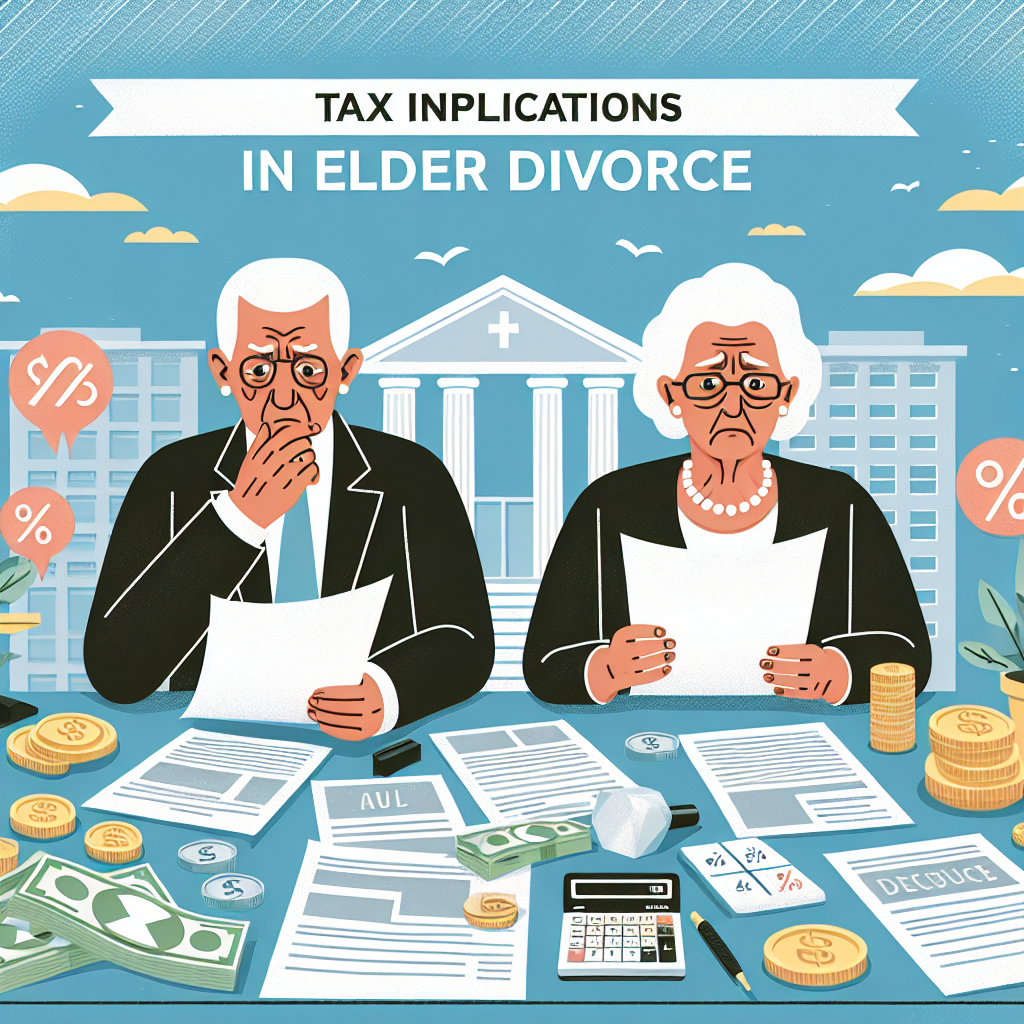
Elder Divorce Tax Implications
“Tax Implications for Elder Divorce”
Elder divorce, also known as late-life divorce, is becoming increasingly common as life expectancy continues to rise. While divorce at any age can be financially and emotionally challenging, the tax implications for elder divorce can add another layer of complexity to the process. In this article, we will explore the key tax considerations that individuals should keep in mind when going through an elder divorce.
“Elder Divorce Tax Consequences”
One of the most significant tax consequences of an elder divorce is the division of assets. When a couple divorces, they must divide their assets, including property, investments, and retirement accounts. In most states, these assets are split equally between the spouses, which can have significant tax implications.
For example, if one spouse receives a large portion of the couple’s retirement savings in the divorce settlement, they may face a hefty tax bill. This is because distributions from traditional retirement accounts, such as 401(k)s and traditional IRAs, are subject to income tax. Therefore, the spouse who receives the retirement savings may need to pay taxes on those funds when they withdraw them in retirement.
In contrast, if the couple’s assets are primarily held in a Roth IRA, the tax consequences may be more favorable. Roth IRA distributions are tax-free as long as the account has been open for at least five years, and the account owner is at least 59 ½ years old. Therefore, if one spouse receives the Roth IRA in the divorce settlement, they may avoid paying taxes on those funds entirely.
“Tax Considerations in Elder Divorce”
Another important tax consideration in elder divorce is alimony or spousal support payments. Alimony is a court-ordered payment from one spouse to the other to provide financial support after the divorce. The tax treatment of alimony payments has changed in recent years, and it is essential to understand the implications for both the paying and receiving spouse.
Prior to 2019, alimony payments were deductible for the paying spouse and considered taxable income for the receiving spouse. However, under the Tax Cuts and Jobs Act of 2017, this tax treatment has been flipped. For divorces finalized after December 31, 2018, alimony payments are no longer deductible for the paying spouse, and the receiving spouse does not have to pay taxes on those payments.
This change in tax treatment may impact the amount of alimony that is negotiated in the divorce settlement. For example, a spouse who is receiving alimony may argue for a higher amount to account for the taxes they will now have to pay on those payments. On the other hand, the paying spouse may push for a lower amount due to the loss of the tax deduction.
“Elder Divorce and Tax Obligations”
Divorcing couples must also consider their tax obligations when it comes to property division. When assets are transferred between spouses as part of a divorce, they are typically not taxable. However, if one spouse receives a property with a significant built-in gain, they may face taxes when they sell the property in the future.
For example, if one spouse receives the couple’s home in the divorce settlement, and the home has appreciated significantly since it was purchased, they may face a large capital gains tax bill when they sell the home. On the other hand, if the property is transferred as part of a divorce agreement, the receiving spouse may be able to use the original cost basis of the property for tax purposes, potentially reducing their tax liability when they sell the property.
“Impact of Elder Divorce on Taxes”
Elder divorce can also impact a couple’s tax filing status. If the divorce is not yet final by the end of the tax year, the couple can still choose to file a joint tax return. However, once the divorce is finalized, they must file as single or head of household. This change in filing status can impact the couple’s tax liability and potential tax deductions and credits they can claim.
For example, filing as head of household has a lower tax rate than filing as single, and it also allows for a larger standard deduction. However, to file as head of household, the individual must have paid more than half the cost of keeping up the home for the tax year and have a qualifying dependent.
“Elder Divorce and Tax Planning”
Given the various tax implications of elder divorce, it is crucial for individuals to engage in tax planning during and after the divorce process. This can help ensure that they are making informed decisions and minimizing any negative tax impacts.
One aspect of tax planning in elder divorce is reviewing the tax implications of the proposed division of assets. For example, if one spouse is receiving a significant amount of retirement savings in the divorce settlement, they may want to consider rolling those funds into a Roth IRA to avoid future tax liabilities. Alternatively, the couple may want to consider a QDRO (qualified domestic relations order) to divide retirement accounts without incurring taxes.
Tax planning can also involve considering the tax implications of any potential alimony payments. For example, if one spouse is receiving alimony, they may want to consider negotiating for the payments to be made in a lump sum rather than spread out over time. This can help them avoid taxes on those payments and provide more financial security in the long run.
“Tax Implications of Divorce for Seniors”
For seniors going through a divorce, there are some additional tax considerations to keep in mind. One of the most significant concerns for seniors is how their Social Security benefits may be impacted by divorce.
If a couple has been married for at least ten years and then divorces, the lower-earning spouse may be entitled to receive Social Security benefits based on their ex-spouse’s earnings. This does not impact the higher-earning spouse’s benefits, but it can provide financial support for the lower-earning spouse. However, if the lower-earning spouse remarries, they typically lose this entitlement.
Additionally, seniors who are divorced and receiving Social Security benefits may face a higher tax bill if they remarry. If their combined income with their new spouse exceeds certain thresholds, up to 85% of their Social Security benefits may be taxable.
“Elder Divorce and Tax Regulations”
It is essential to note that tax regulations surrounding elder divorce can be complex and may differ depending on the state in which the divorce takes place. Therefore, it is crucial for individuals going through an elder divorce to consult with a tax professional who can provide personalized advice based on their specific situation.
These professionals can help individuals understand the potential tax implications of their divorce settlement and provide guidance on how to minimize any negative tax consequences. They can also assist in tax planning for the future to ensure that individuals are in compliance with tax laws and can make the most of their financial situation after the divorce is finalized.
“Navigating Tax Implications in Elder Divorce”
Elder divorce can be a challenging process, and the tax implications can add another layer of complexity. However, with proper planning and advice from professionals, individuals can navigate these tax considerations and make informed decisions that will help them achieve financial security in the years to come.
It is crucial for individuals going through an elder divorce to educate themselves on the tax implications and seek the guidance of a tax professional who can provide personalized advice. By understanding the tax consequences and planning accordingly, individuals can minimize any negative impacts and ensure they are in compliance with tax laws during and after the divorce.
“Elder Divorce and Tax Liabilities”
In conclusion, elder divorce can have significant tax implications for both parties involved. From the division of assets to alimony payments to changes in filing status, it is crucial for individuals to consider the tax consequences of their decisions during the divorce process.
To minimize any negative tax impacts, individuals should engage in tax planning and seek the advice of a tax professional. By doing so, they can ensure they are making informed decisions and setting themselves up for financial stability in their post-divorce life.
Technology Use in Elder Divorce Mediation
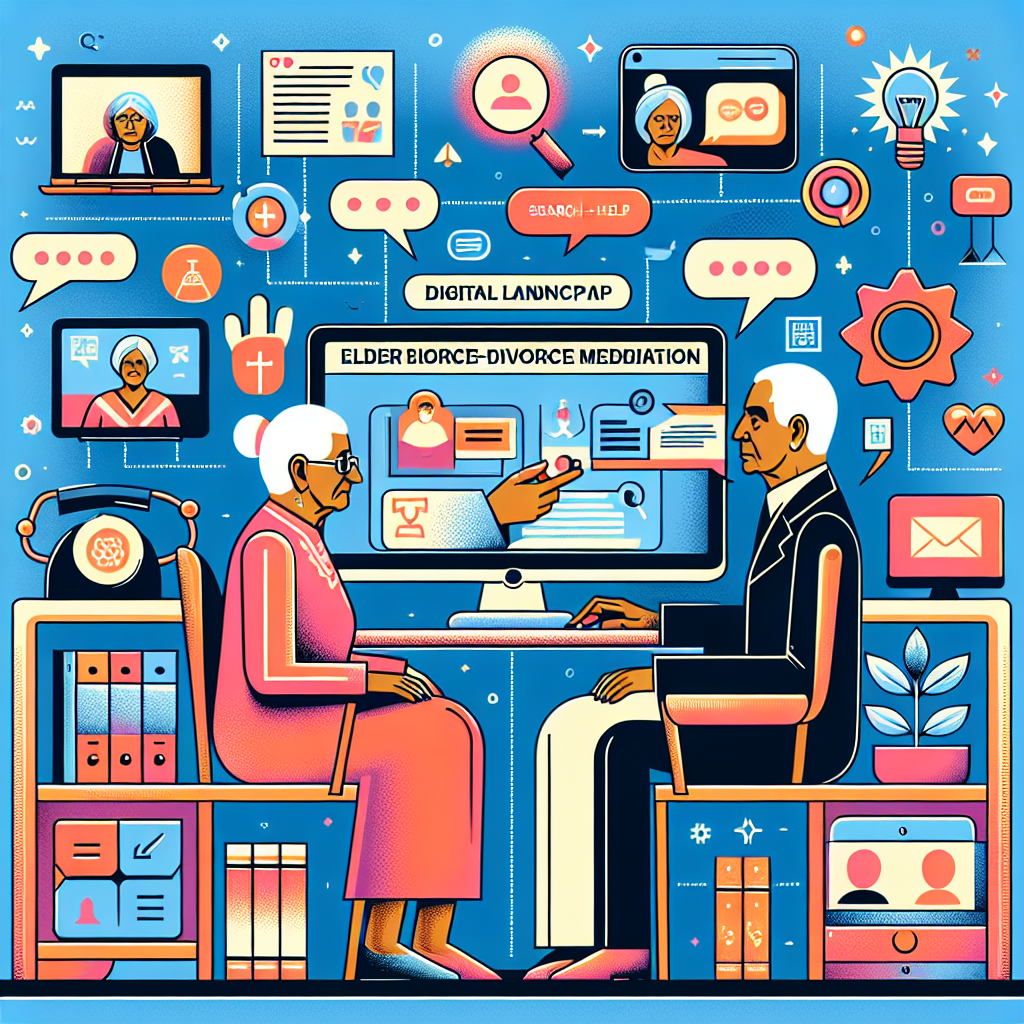
Maximizing Mediation: The Role of Technology in Elder Divorce
Introduction
Elder divorce mediation is a process that helps elderly couples who are going through a divorce to resolve their differences and reach a mutual agreement without going to court. This type of mediation is specifically tailored to meet the unique needs and concerns of elderly individuals, who may have different priorities and challenges compared to younger couples.
Understanding Elder Divorce Mediation
Elder divorce mediation typically involves a trained mediator who works with both parties to facilitate communication and negotiation. The mediator helps the couple to identify and address the key issues that need to be resolved, such as division of assets, spousal support, and child custody. The goal of elder divorce mediation is to help the couple reach a mutually beneficial agreement that is fair and sustainable.
The Role of Technology in Elder Divorce Mediation
In recent years, technology has played an increasingly important role in various aspects of our lives, and divorce mediation is no exception. The use of technology in elder divorce mediation can enhance the entire process by making it more efficient, accessible, and user-friendly for elderly individuals.
Benefits of Integrating Technology in Elder Divorce Mediation
There are several benefits of integrating technology in elder divorce mediation, including:
- Improved communication: Technology allows for real-time communication between the mediator and the couple, making it easier to stay in touch and address any issues that may arise throughout the mediation process.
- Convenience and accessibility: With the use of technology, mediation sessions can be conducted remotely, eliminating the need for elderly individuals to travel to a physical location. This makes the mediation process more convenient and accessible, especially for those with mobility issues.
- Cost-effective: By eliminating the need for in-person meetings, technology can help reduce the overall cost of elder divorce mediation.
- Document management: Technology can also assist in organizing and managing the documents and paperwork involved in the divorce mediation process, making it easier for both parties to keep track of important information.
Online Platforms for Elder Divorce Mediation
One of the most common ways technology is used in elder divorce mediation is through online platforms or software specifically designed for mediation purposes. These platforms provide a virtual space for the mediator and the couple to communicate, negotiate, and reach a resolution. These platforms often offer features such as real-time messaging, document sharing, and video conferencing to facilitate the mediation process.
Virtual Mediation Tools for Elder Divorce Cases
In addition to online platforms, various virtual mediation tools can be used to enhance the elder divorce mediation process. These may include online dispute resolution (ODR) systems, virtual whiteboards, and online mediation software. These tools can assist in organizing and managing the mediation process, making it more efficient and effective.
Mobile Apps for Elder Divorce Mediation
With the increasing use of smartphones and tablets, there has been a rise in the development of mobile apps for mediation purposes. These apps can be useful for elderly individuals who may prefer to use their mobile devices for communication and document management. These apps often offer features such as secure messaging, document storage, and scheduling tools to help manage the mediation process.
Social Media for Marketing Elder Divorce Mediation Services
Social media platforms can be a valuable tool for marketing elder divorce mediation services. These platforms allow mediators to reach a wider audience, engage with potential clients, and build their online presence. Additionally, social media can be used to share helpful information and resources about elder divorce mediation, allowing people to learn more about the process and its benefits.
Data Management and Security in Elder Divorce Mediation
When it comes to using technology in elder divorce mediation, it is important to ensure that sensitive information is handled securely. Mediators should carefully select and use technology tools that prioritize data management and security. This includes using secure platforms, encrypting sensitive data, and implementing data backup systems.
Embracing Technology for the Future of Elder Divorce Mediation
As technology continues to evolve, it is important for elder divorce mediators to embrace and utilize these advancements to enhance the mediation process. By incorporating technology, mediators can provide more efficient and effective services for elderly individuals, making the entire divorce mediation experience more manageable and stress-free.
Conclusion
In conclusion, the use of technology in elder divorce mediation offers numerous benefits for both the mediators and the couples involved. By leveraging technology, mediators can provide a more convenient, accessible, and cost-effective process for elderly individuals going through a divorce. As technology continues to advance, it is crucial for mediators to embrace these digital solutions in order to effectively serve the needs of their clients and improve the overall experience of elder divorce mediation.
The Role of Financial Advisors in Elder Divorce

Elder Divorce Finances: Expert Tips from a Financial Advisor
Introduction
Elder divorce, also known as “gray divorce,” refers to the dissolution of a marriage between individuals over the age of 50. This growing trend has become increasingly common in recent years, with the overall divorce rate for older adults doubling since 1990. While divorce can be a difficult and stressful experience at any age, it can be particularly challenging for older individuals who may have been married for a long time and are facing unique financial considerations. This is where a financial advisor can play a crucial role in helping navigate the financial aspects of elder divorce.
Understanding Elder Divorce
Before discussing the role of a financial advisor in elder divorce, it is essential to understand the unique challenges faced by older individuals going through a divorce. According to a study by the Pew Research Center, the divorce rate for adults aged 50 and older has roughly doubled since the 1990s, and it is now more common for people to divorce later in life than it is for younger couples. Additionally, this study found that the divorce rate for adults aged 65 and older has tripled since 1990.
Elder divorce can be caused by a variety of factors, including increased life expectancy, changing social attitudes towards divorce, and growing economic independence of women. For many older adults, the decision to divorce can also stem from empty nest syndrome, retirement, or simply growing apart from a long-term spouse.
One of the most significant challenges faced by older individuals going through a divorce is the financial impact. After being married for decades, many older couples have intertwined finances, and separating those assets and income sources can be complex and overwhelming. This is where a financial advisor can provide valuable support and guidance.
Role of a Financial Advisor in Elder Divorce
A financial advisor, particularly one with experience in eldercare and divorce, can play an essential role in helping individuals navigate the financial complexities of ending a marriage later in life. Unlike general financial advisors, those with expertise in elder divorce can provide specialized support and guidance tailored to the unique challenges faced by older individuals.
The primary role of a financial advisor during an elder divorce is to help the individual achieve financial stability and security post-divorce. They can provide objective and unbiased advice, help create a plan for dividing assets and income, and offer support and guidance throughout the process.
Additionally, a financial advisor can serve as a mediator between the divorcing couple, helping to facilitate discussions and negotiations regarding financial matters. This can be beneficial in avoiding conflicts and creating a more amicable divorce settlement.
Assessing Financial Resources
One of the first steps that a financial advisor will take in an elder divorce is to assess the couple’s financial resources. This involves identifying and valuing all assets, including properties, investments, retirement accounts, and any other income sources. It is essential to have a clear understanding of the couple’s financial picture before proceeding with the divorce settlement.
Valuing assets can be complex, particularly for older individuals who may have accumulated significant assets over the years. A financial advisor can provide expertise in assessing the value of these assets and provide realistic expectations for the division of assets during the divorce.
In addition to assets, a financial advisor will also consider the income sources of both individuals, including any retirement plans. This is crucial as it can impact the future financial stability of both parties. A financial advisor can also help evaluate potential income streams post-divorce, such as alimony and child support.
Budgeting and Financial Planning
After assessing financial resources, a financial advisor can help the individual create a post-divorce budget. This will include all expenses, such as housing, healthcare, and daily living costs. It is essential to have a realistic budget in place to ensure financial stability and avoid any financial hardships in the future.
Furthermore, a financial advisor can assist in creating short-term and long-term financial goals. This can include rebuilding wealth, saving for retirement, or creating an emergency fund. Having clear financial goals can provide direction and motivation during a challenging time.
Retirement Planning
Divorce can have a significant impact on retirement plans, particularly for couples who have spent decades planning and saving for their future together. A financial advisor can provide expertise in navigating the complex retirement planning process, taking into account any changes in assets and income post-divorce.
For instance, a financial advisor may recommend changes to retirement plans or investment strategies to help the individual rebuild their retirement savings. They can also provide guidance on how to maximize social security benefits, which can be especially helpful for those who may have relied on their spouse’s benefits during retirement.
Estate Planning Considerations
Divorce can also have implications for an individual’s estate plan. A financial advisor can work with an individual’s legal team to update their estate plan and beneficiary designations. This is crucial to ensure that assets are protected and allocated according to the individual’s wishes, especially if there are children or grandchildren involved.
Additionally, a financial advisor can provide guidance on how to protect assets for the future, such as setting up trusts or creating a long-term care plan. This can be particularly important for older individuals who may require care in the future.
Tax Implications of Elder Divorce
Dividing assets and income sources during an elder divorce can have significant tax implications. A financial advisor can provide expertise in understanding the tax consequences of dividing assets and how to minimize tax liabilities through smart financial decisions.
For example, a financial advisor may recommend strategies for dividing assets in a way that minimizes tax liabilities, such as transferring assets with lower tax implications to the lower-earning spouse.
Navigating Social Security Benefits
For divorced individuals over the age of 62, social security benefits can also be impacted by the divorce. A financial advisor can explain the impact of divorce on social security benefits and help the individual maximize their benefits.
For instance, a divorced individual may be eligible to receive social security benefits based on their ex-spouse’s earnings record, which can be beneficial if their own benefits are lower. A financial advisor can help determine the best strategy for claiming social security benefits in this scenario.
Conclusion
Elder divorce can be a challenging and overwhelming experience, particularly when it comes to the financial implications. A financial advisor with expertise in eldercare and divorce can provide valuable support and guidance during this life transition. By assessing financial resources, budgeting and creating a financial plan, planning for retirement, and considering estate and tax implications, a financial advisor can help ensure financial stability and security for an individual post-divorce. If you are considering an elder divorce, it is essential to seek professional help from a financial advisor to navigate the complexities of this situation successfully.
Training and Skills for Elder Divorce Mediators
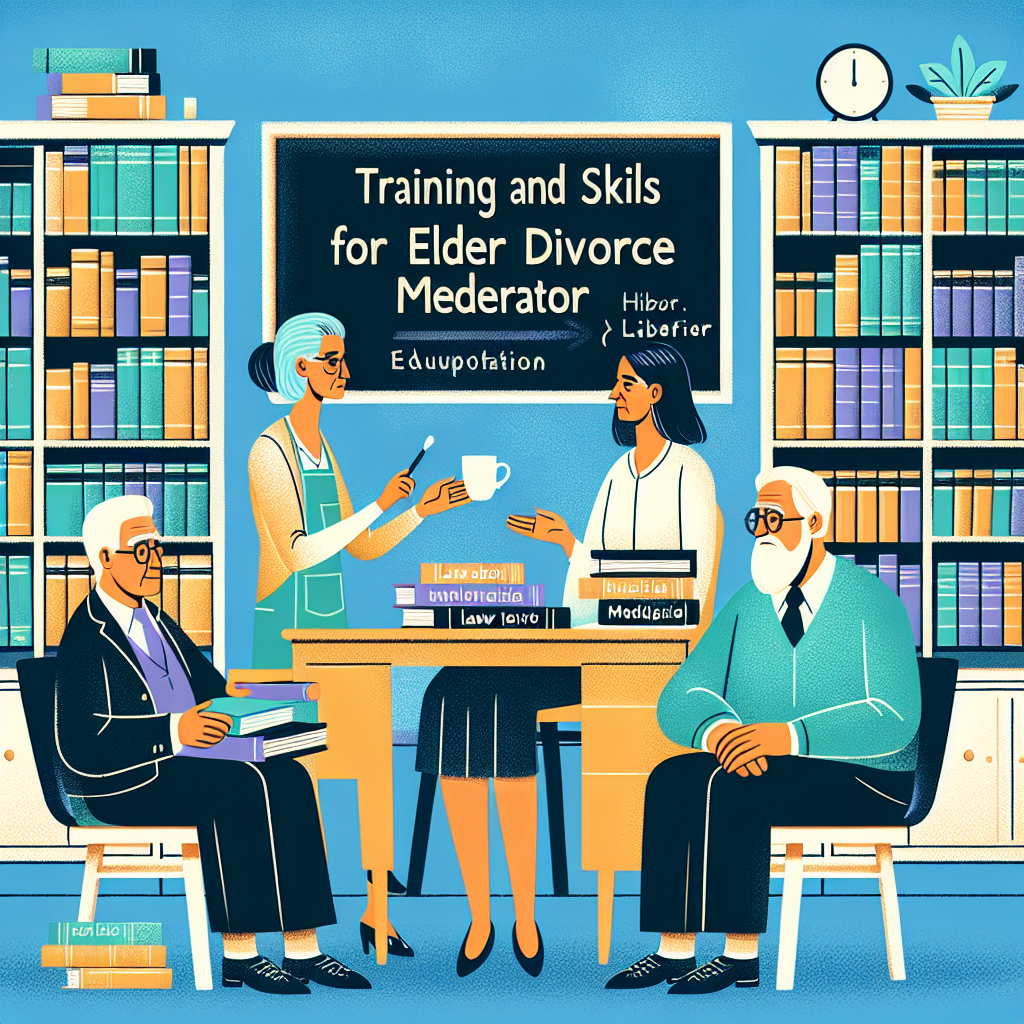
Master Divorce Mediation: Senior Training Guide
Overview of Senior Divorce Mediation Training
Senior divorce mediation training is a specialized form of training that focuses on preparing mediators to handle divorce cases involving elderly individuals. These types of cases often require unique skills and considerations, as the needs and concerns of seniors may differ significantly from those of younger couples. This training is designed to equip mediators with the knowledge, skills, and techniques necessary to effectively facilitate discussions and resolutions between senior couples going through the divorce process.
Understanding the Importance of Senior-Specific Mediation
Elderly divorce cases can be complex, as they often involve not only legal and financial considerations, but also emotional and familial dynamics. It is crucial for mediators to have a thorough understanding of the specific challenges and needs of this demographic in order to effectively assist them in navigating the divorce process. Senior-specific mediation recognizes the unique circumstances and dynamics of these cases and provides targeted training to address them.
Benefits of Specialized Training for Senior Mediators
There are several benefits to undergoing specialized training for senior divorce mediation:
- Enhanced understanding of the aging population: Through this training, mediators gain a deeper understanding of the aging population and the challenges they may face in the divorce process. This knowledge can help mediators to better empathize with their clients and provide more effective support.
- Improved knowledge of legal and financial considerations: Divorces among seniors often involve complex legal and financial considerations, such as retirement assets, pensions, and healthcare arrangements. Senior divorce mediation training equips mediators with the necessary knowledge to address these issues and ensure fair and equitable resolutions.
- Increased sensitivity to emotional and familial dynamics: Mediating a divorce between elderly individuals requires a high level of sensitivity to the emotional and familial dynamics at play. This training can help mediators to better navigate these sensitive discussions and promote more productive outcomes.
- Specialized techniques for mediating with seniors: Senior-specific mediation training provides mediators with specialized techniques and strategies for facilitating discussions and reaching agreements with elderly clients. These techniques may differ from those used in general mediation training, as they take into account the unique needs and considerations of seniors.
Key Components of Senior Divorce Mediation Training
Senior divorce mediation training typically covers a range of topics and skills to prepare mediators for working with elderly clients. Some key components may include:
- Understanding the aging process and its impact on divorce
- Legal considerations for divorces among seniors, including healthcare, retirement, and asset division
- Effective communication techniques for working with elderly clients
- Strategies for addressing family dynamics and conflicts
- Mediation techniques specifically tailored to seniors, such as cognitive and emotional adjustments
- Knowledge of resources and support services available for the aging population
Challenges and Considerations for Mediating Divorces among Seniors
Mediating a divorce between elderly individuals can present unique challenges and considerations for mediators. Some of these may include:
- Health concerns and disabilities: Many seniors may have health concerns or physical disabilities that can make the divorce process more complicated. Mediators need to be aware of and sensitive to these issues.
- Emotional and psychological factors: Divorce can be emotionally taxing for anyone, but for seniors who may be facing changes in their living situation and support systems, it can be particularly challenging. Mediators must be prepared to handle these emotional factors with care.
- Familial relationships: Divorce among seniors can have a significant impact on family relationships, particularly if adult children or other family members are involved. Mediators need to be aware of these dynamics and address them effectively.
- Power imbalances: In some cases, one spouse may have more power or control over the other, which can make it difficult to reach a fair and equitable agreement. Mediators must be prepared to address and balance these power dynamics.
Addressing Unique Needs and Concerns of Senior Couples
Senior divorce mediation training emphasizes the importance of addressing the unique needs and concerns of elderly individuals going through the divorce process. Some ways in which mediators can effectively address these needs and concerns include:
- Providing a safe and supportive environment for discussions
- Being patient and allowing for extra time for discussions and decision-making
- Offering resources and referrals for support services
- Being sensitive to health concerns and accommodating for any physical limitations
- Listening actively and empathetically to each party’s concerns
Techniques for Facilitating Productive Discussions and Resolutions
Effective communication is a critical component of successful mediation, and this is especially true when working with seniors. Some techniques that can help mediators facilitate productive discussions and resolutions include:
- Active listening: Paying close attention to what each party is saying and reflecting back their concerns and feelings can help to build trust and understanding.
- Breaking down complex issues: Divorces among seniors may involve complex legal and financial considerations. Mediators can help to break down these issues into smaller, more manageable pieces to reach agreements more easily.
- Using visual aids: Visual aids, such as charts or diagrams, can be helpful for seniors who may have difficulty processing large amounts of information.
- Encouraging open communication: Mediators can create a safe space for open and honest communication by encouraging both parties to express their thoughts and feelings without judgment.
- Identifying common ground: Finding common ground and areas of agreement can help to build a foundation for further negotiations and resolutions.
Conflict Resolution Strategies for Dealing with Communication and Power Dynamics
In any divorce case, there is the potential for conflicts to arise. In elderly divorce mediation, mediators must be prepared to handle these conflicts with sensitivity and skill. Some strategies that can be helpful in managing conflicts include:
- Using “I” statements: Encouraging both parties to use “I” statements (e.g. “I feel…” instead of “You always…”) can help to reduce defensiveness and promote better communication.
- Reframing and reframing: Mediators can help to reframe negative statements or accusations into more positive or neutral language to promote more productive discussions.
- Brainstorming: Utilizing brainstorming techniques can help to generate creative solutions and alternatives.
- Remaining neutral and impartial: Mediators must remain impartial and avoid taking sides in conflicts to ensure fair and equitable outcomes.
- Addressing power imbalances: If one spouse has more power or control in the relationship, mediators can use strategies to balance the power dynamics and ensure both parties have an equal voice in the mediation process.
Legal and Financial Considerations for Seniors Going through Divorce
Divorces among seniors may involve unique legal and financial considerations. Mediators must have a thorough understanding of these considerations to effectively guide their clients through the divorce process. Some key areas to consider include:
- Retirement assets: Divorces among seniors often involve the division of retirement assets, such as pensions, 401(k)s, and IRAs. Mediators must understand the legal implications of dividing these assets and ensure a fair and equitable distribution.
- Healthcare arrangements: Many seniors may have healthcare arrangements that need to be addressed in the divorce, such as insurance coverage and long-term care plans. Mediators must be aware of these arrangements and ensure they are adequately addressed in the divorce agreement.
- Property division: In addition to retirement assets, there may be other property, such as a family home, that needs to be divided. Mediators must have a good understanding of property division laws and considerations for seniors.
- Spousal support: Depending on the circumstances, one spouse may be entitled to spousal support in a senior divorce. Mediators must understand the laws and considerations surrounding spousal support to reach a fair and equitable agreement.
The Impact of Senior Divorce Mediation Training on the Aging Population
Elder divorce mediation training plays a crucial role in preparing mediators to handle the unique needs and concerns of seniors going through a divorce. By equipping mediators with the specialized knowledge, skills, and techniques necessary to work with this demographic, this training can have a significant impact on the aging population. It can help to ensure that divorces among seniors are handled with sensitivity and fairness, allowing them to move forward in their lives with dignity and respect.
Understanding the Dynamics of Elder Divorce

The Dynamics of Elder Divorce: Understanding Its Impact
Introduction
Welcome to our comprehensive guide on understanding the dynamics of elder divorce. As the population of older adults continues to grow, so does the rate of divorce among this age group. Elder divorce, also known as senior or gray divorce, refers to the dissolution of marriage between couples who are over the age of 50. This unique type of divorce brings with it a set of challenges and considerations that are different from those faced by younger couples. In this guide, we will explore the definition, current statistics, contributing factors, and impact of elder divorce, as well as provide coping strategies and support systems for those going through this difficult process.
Definition of Elder Divorce
Elder divorce is a term used to describe the dissolution of marriage between couples who are over the age of 50. This age group is often referred to as the “empty nesters” or “retirement age,” as their children have typically left the home and they are nearing retirement. It is important to note that while the term “elder” may bring to mind images of very old couples, the reality is that the majority of elder divorces occur in the 50-64 age range.
Current Statistics on Elder Divorce
The rate of divorce among older adults has been steadily increasing in recent years. According to the National Center for Health Statistics, the divorce rate for adults aged 50 and older has doubled since 1990. In fact, one in four divorces now involves couples over the age of 50.
Another study by the Pew Research Center found that while the overall divorce rate has decreased, the divorce rate among adults over the age of 50 has nearly tripled since the 1990s. Additionally, the divorce rate for adults over the age of 65 has increased sixfold during the same time period.
These statistics indicate a significant shift in the demographic of divorce, with more older adults choosing to end their marriages later in life.
Factors Contributing to the Rise of Elder Divorce
There are several factors that contribute to the rise of elder divorce. One of the main reasons is the changing attitudes towards marriage and divorce among older adults. Unlike previous generations, today’s older adults are less likely to stay in an unhappy or unsatisfying marriage simply for the sake of tradition. They are more likely to prioritize their own happiness and well-being, even at the expense of ending a long-term marriage.
Another factor is the increase in life expectancy. With people living longer, older adults may feel like they have more time to start over and find new happiness after a divorce. Additionally, the stigma surrounding divorce has decreased, making it more socially acceptable for older adults to get divorced.
Financial independence is also a major factor in the rise of elder divorce. With more women in the workforce and a higher standard of living, older adults are less reliant on their spouses for financial stability. This allows them to make the decision to divorce without worrying about financial consequences.
Emotional and Financial Impact on Older Couples
Elder divorce can have a significant emotional and financial impact on older couples. After decades of marriage, it can be difficult for older adults to imagine starting over alone. This can lead to feelings of loneliness, anxiety, and depression. The loss of a long-term partner can also bring about a loss of identity and purpose for some individuals.
In addition to the emotional impact, elder divorce can also have a significant financial impact on both parties. Older adults may have to divide their assets, including retirement savings and property. They may also have to adjust to living on a single income, which can be challenging for those who have relied on dual incomes for many years. This can result in a decreased standard of living for both individuals.
Legal Considerations for Elder Divorce
When going through an elder divorce, there are a few legal considerations that are unique to this age group. One important factor to consider is the division of retirement savings. In many cases, retirement accounts are the most valuable asset for older couples. It is important to work with a qualified attorney who has experience dealing with retirement accounts in divorce cases.
Another consideration is healthcare. Older adults may have to navigate Medicare and Medicaid benefits, as well as make decisions about health insurance coverage after divorce. A divorce attorney can help guide individuals through these complex legal issues and ensure that their rights and interests are protected.
Coping Strategies for Older Adults Going Through Divorce
Divorce at any age can be emotionally and mentally taxing, but for older adults, it can be particularly challenging. Here are some coping strategies that may help during this difficult time:
- Seek support from friends and family: Having a strong support system can make a big difference in coping with the emotional impact of divorce. Lean on your loved ones for emotional support and guidance.
- Take care of yourself: It is important to prioritize self-care during this time. Eat well, exercise, and engage in activities that bring you joy and comfort.
- Seek therapy: Therapy can be a helpful tool for navigating the emotional challenges of divorce. A therapist can provide a safe space to process your feelings and develop coping strategies.
- Stay positive: While it may be difficult, try to focus on the positives in your life and look towards the future with hope and optimism.
- Take it one day at a time: Divorce can be overwhelming, so try to take it one day at a time. Set small goals for yourself and celebrate your victories, no matter how small they may seem.
Support Systems for Elder Divorcees
Support systems can be invaluable for those going through an elder divorce. Here are some possible sources of support for elder divorcees:
- Family and friends: As mentioned earlier, the support of loved ones can make a big difference during this difficult time.
- Support groups: There are many support groups specifically for individuals going through a divorce. These groups provide a safe and non-judgmental space to share experiences and receive support from others who are going through a similar situation.
- Therapy: In addition to individual therapy, there are also support groups specifically for individuals going through a divorce. These groups can provide a supportive and therapeutic environment to process feelings and gain coping strategies.
- Community resources: Many communities offer resources and services for individuals going through a divorce. These may include counseling services, legal aid, and support groups.
The Role of Adult Children in Elder Divorce
Divorce can be difficult for adult children to witness, especially when it involves their parents. Here are some ways adult children can support their parents during an elder divorce:
- Listen and validate their feelings: Your parents may have a lot of emotions surrounding the divorce, and it is important to listen and validate their feelings without judgment.
- Be there for them: Just like with any other difficult situation, having the support of loved ones can make a big difference. Be there for your parents and offer your help and support in any way you can.
- Encourage self-care: Remind your parents to take care of themselves during this time. Encourage them to eat well, get enough rest, and engage in activities they enjoy.
- Respect their boundaries: While you may want to offer advice and support, it is important to respect your parents’ boundaries and not push them to do anything they are not ready for.
- Seek your own support: As a child of divorce, it may be helpful for you to seek support from others who have gone through a similar experience. This can help you process your own feelings and provide you with a support system.
Navigating the Dynamics of Elder Divorce
Elder divorce is a complex and challenging experience for all parties involved. As the rate of divorce among older adults continues to rise, it is important to understand the unique dynamics and challenges of this type of divorce. By being aware of the factors contributing to elder divorce and having coping strategies and support systems in place, older adults and their loved ones can navigate this difficult time with resilience and strength.
Balancing Emotional and Practical Decisions

Mastering Emotional vs. Practical Decision Making: Finding Balance
Introduction
Balancing emotional and practical decisions is a crucial aspect of decision-making that many people struggle with. Emotions and practicality are often seen as conflicting forces, with emotions leading to impulsive and irrational decisions while practicality is associated with logic and rational thinking. However, finding a balance between these two is essential for making effective and successful decisions. In this blog post, we will explore the role of emotions and practicality in decision making, the benefits and dangers of each, and provide tips and strategies for finding a healthy balance between the two.
The Role of Emotions in Decision Making
Emotions play a significant role in our decision-making process. They are the driving force behind our choices, influencing our thoughts, behaviors, and actions. When faced with a decision, our emotions are often the first to respond, and they can be intense and overwhelming. For example, the excitement of a new opportunity, the fear of making a wrong choice, or the pressure to please others can all affect our emotions and ultimately influence our decision.
Emotions can also provide valuable information about our needs, desires, and values. They can be a powerful tool to guide us towards decisions that align with our true selves. However, emotions can also be misleading and cause us to make impulsive and irrational decisions. For instance, when we are angry, we may say or do things that we later regret, or when we are under stress, we may make decisions that are not in our best interest.
The key is to acknowledge and understand our emotions without letting them control our decision-making process completely. This requires a certain level of emotional intelligence, which includes being aware of our emotions, managing them effectively, and using them to make informed decisions.
The Benefits of Practical Decision Making
On the other hand, practicality refers to the use of logic, reason, and practical considerations in decision making. It involves weighing the pros and cons, considering the potential consequences, and making a decision based on what is most logical and beneficial in the long run. Practical decision making has several advantages, including:
- Minimizing risks: By taking a practical approach to decision making, we can reduce the chances of making impulsive or rash decisions that may have negative consequences.
- Increased success rate: Practical decisions are often grounded in reality and based on thorough analysis, which increases the chances of a successful outcome.
- Long-term benefits: Practical decisions consider the long-term consequences and benefits, rather than just satisfying immediate desires or emotions.
The Dangers of Ignoring Emotions
While practical decision making has its benefits, solely relying on logic and disregarding emotions can also have its drawbacks. Emotions can provide valuable insights and information that may be overlooked if we only consider practical considerations. Ignoring our emotions in decision making can lead to:
- Inauthenticity: When we ignore our emotions, we may make decisions that are not in alignment with our true selves and may end up living inauthentically.
- Emotional distress: Ignoring emotions can lead to repressed feelings and emotional distress, which can negatively impact our mental and emotional well-being.
- Missed opportunities: Our emotions can guide us towards opportunities that may not be apparent through practical considerations alone.
It is important to acknowledge and address our emotions in decision making to ensure that we are making authentic and well-informed choices.
Finding a Balance Between Emotions and Practicality
So how can we find a balance between emotions and practicality in decision making? It is essential to acknowledge and understand both aspects and strive for a healthy middle ground. Here are some tips and strategies to help achieve this balance:
- Recognize the impact of emotions: The first step is to acknowledge the influence of emotions on our decision-making process. By being aware of their presence, we can take a more objective approach to decision making.
- Consider practical factors: While emotions are important, practical considerations should also be taken into account. Consider the potential consequences, risks, and benefits of each option.
- Reflect on personal values: Reflecting on our values and beliefs can help us make decisions that align with our authentic selves.
- Take time to make a decision: Emotions can be intense and overwhelming in the moment, so it is essential to take a step back and give ourselves time to think and reflect before making a decision.
- Seek support: Talking to a trusted friend, family member, or professional can provide an outside perspective and help us see things more clearly.
The Role of Self-Awareness in Decision Making
Self-awareness is the ability to understand and recognize our thoughts, emotions, and behaviors. It plays a crucial role in finding a balance between emotions and practicality in decision making. By being self-aware, we can:
- Recognize our biases: Our personal biases can cloud our judgment and influence our decision making. Being aware of them can help us make more objective choices.
- Manage emotions effectively: Self-awareness allows us to recognize and regulate our emotions, preventing them from overwhelming us and influencing our decisions.
- Consider our values and beliefs: Understanding ourselves better can help us make decisions that align with our values and beliefs.
Cultivating self-awareness takes time and effort, but it can greatly improve our decision-making skills and overall well-being.
The Impact of External Influences on Decision Making
External influences, such as societal norms, peer pressure, and media, can also play a significant role in our decision making. It is essential to be aware of these influences and not let them override our own emotions and practicality. To avoid being swayed by external factors, you can:
- Stay true to yourself: Remind yourself of your values and beliefs and make decisions that align with them, even if they may not be the most popular choice.
- Avoid comparison: Comparing ourselves to others can lead to making decisions that are not in our best interest. Focus on your own needs and priorities.
- Limit media consumption: The media can often create unrealistic expectations and influence our desires. Be mindful of the media you consume and how it may be affecting your decisions.
The Role of Intuition in Decision Making
Intuition refers to our gut feeling or inner knowing. While it may seem illogical, intuition can be a powerful tool in decision making. It is often based on our past experiences and can guide us towards the right choice. Here are some tips for tapping into and trusting our intuition:
- Pay attention to physical sensations: Our bodies can often provide subtle cues that indicate whether something feels right or wrong. Pay attention to these sensations and use them to guide your decision making.
- Trust your instincts: Sometimes, our gut feeling may not make sense logically, but it is still worth considering. Trust your instincts and use them as another factor in your decision-making process.
- Cultivate mindfulness: Mindfulness can help us quiet our minds and tune into our intuition. Practice mindfulness techniques such as meditation or deep breathing to increase your intuitive abilities.
Finding Support in Decision Making
Finally, seeking support from trusted individuals can be beneficial in decision making. It can provide an outside perspective, offer new insights, and help us see things from a different angle. When seeking support, keep in mind:
- Choose your support system carefully: Make sure you seek advice from someone who has your best interests at heart and is not biased towards a particular outcome.
- Be open to different perspectives: Our support system may provide a different point of view that we may not have considered. Be open to their input and consider it carefully.
- Make the final decision yourself: While seeking support is helpful, ultimately, the decision should be yours. Take ownership of your choices and make sure they align with your needs and values.
Conclusion
In conclusion, finding a balance between emotions and practicality in decision making is crucial for making effective and authentic choices. Both emotions and practical considerations play a significant role, and it is essential to acknowledge and understand both aspects to achieve a healthy balance. By recognizing the impact of emotions, considering practical factors, being self-aware, and seeking support, we can make decisions that align with our true selves and lead to more successful outcomes.
Building Resilience During Divorce Mediation

Boost Resilience: Divorce Mediation Strategies
Introduction
Divorce mediation can be a challenging and emotionally charged process. It involves navigating through a significant life change and making important decisions that will impact your future. It’s normal to feel overwhelmed, stressed, and anxious during this time. However, it’s important to remember that building resilience can help you cope with these challenges and emerge stronger from the experience.
Understanding Divorce Mediation
First, it’s important to understand what divorce mediation is and how it differs from traditional divorce proceedings. Divorce mediation is a process in which a neutral third party, known as a mediator, helps divorcing couples reach agreements on important issues such as child custody, division of assets, and spousal support. It is often considered a more collaborative and less adversarial approach than going to court.
The Importance of Resilience in Divorce Mediation
Building resilience is crucial during divorce mediation because it helps you stay emotionally and mentally strong in the face of challenges. It allows you to adapt to change and overcome obstacles, which is essential during this transitional period. Resilience can also help you maintain a positive outlook and make sound decisions, even when faced with difficult emotions.
Building a Support System
Having a strong support system can make a significant difference in your ability to cope with the challenges of divorce mediation. This can include family, friends, and even professional support, such as a therapist. It’s important to have people who will listen to you, provide emotional support, and offer practical advice. Don’t be afraid to reach out to your support system when you need it.
Cultivating Positive Coping Mechanisms
Having healthy coping mechanisms is essential for building resilience during divorce mediation. It’s common to turn to unhealthy coping mechanisms, such as alcohol or drugs, during times of stress. However, these can ultimately make the situation worse. Instead, focus on activities that promote self-care and help you cope in a positive way, such as exercise, meditation, journaling, or spending time with loved ones.
Communicating Effectively with Your Ex-Spouse
Effective communication is crucial for a successful divorce mediation process. It’s important to be clear, respectful, and open-minded when communicating with your ex-spouse. This can help avoid misunderstandings and conflicts, making the process smoother for both parties. Remember to listen actively and try to understand the other person’s perspective, even if you don’t agree with it.
Setting Boundaries and Managing Expectations
During divorce mediation, it’s important to set boundaries and manage expectations, both for yourself and for your ex-spouse. Boundaries can help you protect your emotional well-being and prevent unnecessary conflicts. Managing expectations can help you prepare for potential challenges and adjust your mindset accordingly. It’s important to be realistic and flexible, as things may not always go as planned in mediation.
Staying Focused on the Future
While it’s natural to dwell on the past during divorce mediation, it’s important to also stay focused on the future. This can help you maintain a positive outlook and keep moving forward. It can also help you make decisions that are in line with your long-term goals. Try to envision the life you want for yourself after the divorce and use this as motivation to keep pushing through the challenges of mediation.
Practicing Self-Care and Self-Compassion
During this difficult time, it’s crucial to prioritize self-care and self-compassion. Be kind to yourself and give yourself the time and space you need to process your emotions. Engage in activities that bring you joy and help you relax. Remember that you are going through a major life change, and it’s okay to not be okay. Practicing self-compassion can help you build resilience and emerge stronger from the experience.
Embracing Change and Moving Forward
Finally, it’s important to embrace change and focus on moving forward. Divorce mediation can be a challenging process, but it also presents an opportunity for growth and positive change. Allow yourself to grieve the loss of your marriage, but also be open to the possibility of a new beginning. Remember that building resilience during this transitional period can help you emerge stronger and more resilient in the future.
Conclusion
Building resilience during divorce mediation is essential for coping with the emotional and psychological challenges of the process. It involves cultivating healthy coping mechanisms, communicating effectively, setting boundaries, and practicing self-care and self-compassion. Remember that it’s okay to ask for help from your support system and to prioritize your emotional well-being. By building resilience, you can navigate the process of divorce mediation in a healthier and more positive way, and emerge stronger from the experience.
Children’s Emotional Well-being in Divorce

Divorce & Children’s Mental Health: Expert Tips for Emotional Well-Being
The Impact of Divorce on Children’s Emotional Health
Divorce is a difficult and emotional process for all parties involved, especially for children. The uncertainty, changes, and conflict that come with divorce can greatly impact a child’s emotional well-being. It is important for parents to understand the potential effects of divorce on their children and take steps to support their emotional health during this challenging time.
Understanding the Emotional Needs of Children During Divorce
Children of different ages may have different emotional needs when it comes to coping with divorce. Younger children may struggle with understanding the concept of divorce and the changes it brings, while older children may experience feelings of anger, guilt, and confusion. It is important for parents to consider their child’s age and individual personality when addressing their emotional needs.
Coping Strategies for Children During Divorce
There are several coping strategies that can help children navigate the emotional challenges of divorce. These can include maintaining a consistent routine, providing a safe and open space for communication, and encouraging healthy outlets for emotions such as journaling or talking to a trusted adult. It is also important for parents to reassure their children of their love and support during this difficult time.
Addressing Common Emotional Challenges Faced by Children of Divorce
Children of divorce may experience a range of emotions, including sadness, anger, anxiety, and confusion. It is important for parents to acknowledge and validate these emotions, while also providing support and guidance for healthy coping mechanisms. Parents should also be aware of potential behavioral changes in their children, such as acting out or withdrawing, and address these with understanding and patience.
Communicating Effectively with Children During Divorce
Open and honest communication is key when it comes to supporting a child’s emotional well-being during divorce. It is important for parents to have age-appropriate conversations with their children about the divorce and provide a safe space for them to express their feelings. Parents should also strive to maintain a positive and respectful co-parenting relationship, as this can greatly impact a child’s emotional stability.
The Role of Co-Parenting in Promoting Children’s Emotional Well-Being
Co-parenting can be a challenging aspect of the divorce process, but it is crucial for the emotional well-being of children. By working together and maintaining a consistent parenting approach, parents can provide a stable and supportive environment for their children. It is also important for parents to avoid involving their children in any conflicts or using them as messengers between the two households.
Seeking Professional Help for Children Coping with Divorce
In some cases, children may benefit from professional help in coping with the emotional impact of divorce. This can include therapy, counseling, or support groups. Seeking outside support can provide children with a safe and neutral space to process their emotions and develop healthy coping strategies. It is important for parents to be open to this option and work together to find the best support for their child.
Creating a Stable and Supportive Environment for Children After Divorce
After a divorce, it is important for parents to work together to create a stable and supportive environment for their children. This can include maintaining a consistent schedule, providing a safe and comfortable living space, and fostering a positive relationship between the child and both parents. This can greatly benefit a child’s emotional well-being and help them adjust to the changes in their family dynamic.
Nurturing Positive Coping Skills in Children Following Divorce
It is important for parents to help their children develop positive coping skills during and after a divorce. This can include encouraging healthy outlets for emotions, such as art or physical activity, and teaching problem-solving skills to help children navigate difficult situations. Parents should also serve as role models for positive coping by managing their own emotions and stress in a healthy way.
The Importance of Self-Care for Parents and Children During the Divorce Process
Divorce can be emotionally draining for both children and parents. It is important for parents to prioritize their own self-care and well-being in order to better support their children. This can include seeking therapy or support, taking breaks when needed, and practicing self-care activities. By taking care of themselves, parents can better support their children through this difficult time.
Communication and Emotional Intelligence
Effective Communication & Emotional Intelligence: Mastering Interpersonal Skills
Introduction
Effective communication is a crucial skill in both personal and professional relationships. It involves the ability to convey thoughts, ideas, and emotions clearly and effectively to others. On the other hand, emotional intelligence refers to the ability to understand and manage one’s own emotions, as well as those of others. When combined, effective communication and emotional intelligence can result in strong relationships, successful problem-solving, and improved overall well-being.
The Importance of Effective Communication in Personal and Professional Relationships
Communication is the foundation of all relationships. Whether it’s with friends, family, colleagues, or clients, effective communication is essential for building trust, understanding, and connection. In personal relationships, communication allows individuals to express their needs, emotions, and desires, leading to a better understanding and deeper connection with their loved ones. In the workplace, effective communication can improve teamwork, productivity, and overall job satisfaction.
In contrast, poor communication can lead to misunderstandings, conflicts, and damaged relationships. It can also hinder problem-solving and decision-making, resulting in negative consequences for both personal and professional life. This highlights the importance of developing strong communication skills, as well as emotional intelligence, to navigate various relationships successfully.
Understanding Emotional Intelligence and Its Impact on Communication
Emotional intelligence is a crucial aspect of effective communication. It involves the ability to understand and regulate one’s emotions, as well as recognize and empathize with the emotions of others. This understanding and control of emotions play a significant role in how individuals communicate and interact with others.
Individuals with high emotional intelligence can manage their emotions and reactions in stressful or challenging situations, leading to more effective communication. They can also pick up on nonverbal cues, such as facial expressions and body language, and adjust their communication accordingly. This can result in better understanding and connection with others, leading to stronger relationships.
The Importance of Active Listening and Empathy in Effective Communication
Active listening and empathy are crucial components of effective communication. Active listening involves fully engaging in the conversation and understanding the speaker’s perspective. It requires paying attention to not just the words being said but also the tone, body language, and emotions conveyed by the speaker.
Empathy, on the other hand, involves understanding and sharing the feelings of others. It allows individuals to see things from another person’s perspective and consider their emotions when communicating. When both active listening and empathy are present, communication becomes more meaningful, and individuals can build stronger connections with others.
How Emotional Intelligence Can Improve Conflict Resolution and Problem Solving
Conflict is inevitable in any relationship, whether it’s personal or professional. However, individuals with high emotional intelligence can effectively manage conflicts and navigate difficult situations. They can remain calm and in control of their emotions, leading to more productive and efficient conflict resolution.
Additionally, emotional intelligence can also improve problem-solving skills. Individuals with high emotional intelligence can assess and understand their own emotions, as well as those of others, leading to more effective problem-solving strategies. They are also more open to considering different perspectives and finding mutually beneficial solutions.
Nonverbal Communication and Its Role in Effective Communication and Emotional Intelligence
Nonverbal communication, such as body language, tone of voice, and facial expressions, plays a significant role in communication and emotional intelligence. It can convey emotions, intentions, and attitudes that may not be expressed through words. This makes it essential to pay attention to nonverbal cues to fully understand and communicate effectively with others.
Individuals with high emotional intelligence can pick up on nonverbal cues and adjust their communication accordingly. This can lead to better understanding and connection with others, as well as avoid potential misunderstandings.
Building Trust and Rapport Through Effective Communication
Effective communication is a crucial factor in building trust and rapport with others. Trust is the foundation of all relationships, and it can be built through honest and open communication. When individuals communicate effectively, they are more likely to be understood and trusted by others, leading to stronger relationships.
Furthermore, effective communication can also lead to the development of rapport, which is a sense of mutual understanding and connection between individuals. This can result in improved communication and collaboration, leading to better outcomes in personal and professional relationships.
Overcoming Barriers to Effective Communication and Emotional Intelligence
There are various barriers that can hinder effective communication and emotional intelligence. These include cultural differences, language barriers, and personal biases. It’s essential to recognize and address these barriers to improve communication and develop emotional intelligence.
Cultural differences and language barriers can result in misunderstandings and misinterpretations, leading to conflicts and damaged relationships. It’s crucial to practice empathy and actively listen to understand different perspectives and communicate effectively with individuals from diverse backgrounds.
Personal biases, such as stereotypes and prejudices, can also hinder effective communication and emotional intelligence. By being self-aware and open-minded, individuals can recognize and overcome their biases and improve their interactions with others.
Practicing Self-Awareness and Self-Regulation for Improved Communication and Emotional Intelligence
Self-awareness and self-regulation are essential skills for developing emotional intelligence and effective communication. Self-awareness involves understanding one’s own emotions, thoughts, and behaviors, while self-regulation involves managing them effectively.
Individuals with high emotional intelligence are self-aware and can regulate their emotions and reactions in different situations. This allows them to communicate more effectively and build strong relationships with others. Additionally, self-awareness and self-regulation also play a crucial role in personal growth and development, leading to overall well-being.
The Benefits of Combining Effective Communication and Emotional Intelligence for Success in All Areas of Life
In conclusion, effective communication and emotional intelligence are essential skills for personal and professional success. By understanding the impact of emotions on communication and developing active listening, empathy, and self-awareness, individuals can enhance their communication skills and develop stronger relationships.
Moreover, emotional intelligence can also improve conflict resolution and problem-solving skills, as well as build trust and rapport with others. By recognizing and overcoming barriers to effective communication and practicing self-awareness and self-regulation, individuals can reap the benefits of combining communication and emotional intelligence for a successful and fulfilling life.
Coping with Loneliness and Isolation

Managing Loneliness: Tips from an SEO Specialist
Coping with Loneliness and Isolation
In today’s fast-paced and interconnected world, it’s easy to feel isolated and disconnected from others. The feeling of loneliness is one that is experienced by many individuals, regardless of age, gender, or background. It can be caused by a variety of factors such as living alone, being geographically separated from loved ones, or even just feeling socially excluded. Loneliness can also be a result of mental health issues such as depression or anxiety. Whatever the cause may be, coping with loneliness and isolation is an important skill to learn in order to maintain good mental well-being.
Understanding Isolation
Before we delve into coping strategies, it’s important to understand the difference between loneliness and isolation. While they may seem similar, there are subtle differences between the two. Loneliness is a subjective feeling of emptiness or lack of connection with others. It is often described as feeling alone even when surrounded by people. On the other hand, isolation is a physical state of being alone or separated from others. It can be caused by external factors such as living alone, being in a remote location, or being in quarantine. Isolation can also be self-imposed due to social anxiety or fear of rejection.
It’s important to recognize that loneliness and isolation can both have negative effects on our mental health. Feeling lonely or isolated for prolonged periods of time can lead to depression, anxiety, and even physical health problems. Therefore, it’s crucial to address these feelings and learn to cope with them in a healthy way.
Overcoming Feelings of Loneliness
Dealing with loneliness can be challenging, but there are strategies that can help you overcome these feelings. The first step is to acknowledge and accept your feelings. It’s okay to feel lonely, and it’s important to be kind to yourself and not judge yourself for feeling this way. Once you have accepted your feelings, you can start to work on managing them.
One effective way to cope with loneliness is by practicing self-care. This means taking care of your physical, emotional, and mental well-being. Make sure you are getting enough sleep, eating well, and engaging in activities that bring you joy. It’s also important to take breaks from social media and technology, as these platforms can often contribute to feelings of loneliness and isolation.
Another way to overcome loneliness is by finding activities that you enjoy and that allow you to connect with others. This can be joining a hobby club, taking a class, or volunteering in your community. These activities will not only help you feel less lonely, but they will also allow you to meet new people and form meaningful connections.
Strategies for Managing Isolation
Isolation can be a difficult state to be in, especially if it is not by choice. However, there are strategies that can help you manage this situation and make the most out of it.
First and foremost, it’s important to maintain a routine and structure in your daily life. This can help you feel more in control and less overwhelmed by the isolation. Make a schedule for yourself that includes activities such as exercise, work or school tasks, and leisure time. Stick to this schedule as much as possible, as it will provide a sense of normalcy and structure to your days.
Secondly, make use of technology to stay connected with others. While physical distancing may prevent us from physically being with our loved ones, technology allows us to stay connected virtually. Schedule regular video calls with friends and family, join online support groups, or participate in virtual events and activities. These connections can help combat feelings of isolation and loneliness.
Mental Health and Loneliness
It’s no surprise that loneliness and isolation can have a significant impact on our mental health. These feelings can lead to depression, anxiety, and even suicidal thoughts. It’s important to take care of our mental health and seek help if needed.
One way to prioritize your mental health is by practicing self-care. As mentioned earlier, this includes engaging in activities that bring you joy, getting enough rest, and taking breaks from technology. It’s also important to practice self-compassion and engage in positive self-talk. Instead of criticizing yourself for feeling lonely, remind yourself that it’s a normal feeling and that you are doing your best to cope with it.
If your feelings of loneliness and isolation are causing significant distress, it’s important to seek help from a mental health professional. They can provide you with tools and strategies to manage these feelings and improve your overall well-being.
The Impact of Social Isolation on Well-being
While loneliness and isolation can have negative effects on our mental health, it’s also important to recognize the impact it can have on our physical well-being. Studies have shown that individuals who experience social isolation have a higher risk of developing chronic health conditions such as heart disease and obesity. This is because social connections play a crucial role in our overall health and well-being.
Therefore, it’s important to prioritize building and maintaining social connections, even if it may be challenging at times. Engage in activities that allow you to interact with others and make an effort to stay in touch with loved ones. These connections are not only important for our mental health, but also for our physical health.
Prioritizing Self-Care in Times of Loneliness
During times of loneliness and isolation, it’s crucial to prioritize self-care. This means taking care of your physical, emotional, and mental well-being in order to cope with these feelings in a healthy way.
In addition to the self-care strategies mentioned earlier, it’s also important to practice mindfulness and relaxation techniques. This can include meditation, deep breathing exercises, or yoga. These techniques can help you manage stress and anxiety, and allow you to be more present in the moment.
It’s also important to engage in activities that bring you joy and give you a sense of purpose. This can be anything from reading a book, painting, or helping others in need. These activities can help boost your mood and provide a sense of fulfillment.
Building Connections to Combat Loneliness
If you are struggling with loneliness and isolation, it’s important to remember that you are not alone. There are many individuals who are also going through the same feelings and are looking for connections. In order to combat loneliness, it’s important to actively seek out social connections.
This can include joining a support group, reaching out to old friends, or even making new connections online. Social media and technology can be powerful tools to help you connect with others and form meaningful relationships. However, it’s important to be cautious and mindful of your interactions online, and to prioritize face-to-face connections when possible.
Coping with Loneliness during a Pandemic
The COVID-19 pandemic has brought about unprecedented levels of loneliness and isolation for many individuals. With physical distancing measures in place, it can be challenging to maintain social connections and engage in activities that bring us joy. However, it’s important to find ways to cope with these feelings during these difficult times.
One way to cope with loneliness during a pandemic is by staying connected with loved ones virtually. Schedule regular video calls or phone calls with friends and family, and make an effort to check in with them regularly. You can also participate in virtual events and activities that allow you to connect with others who share similar interests.
It’s also important to maintain a routine and engage in activities that bring you joy and purpose. This can include exercise, learning a new skill, or working on a passion project. These activities can help you stay occupied and maintain a sense of normalcy during these challenging times.
Supporting Mental Health while in Isolation
Lastly, it’s important to remember to support your mental health while in isolation. This means taking care of yourself physically, emotionally, and mentally, and seeking help if needed.
If you are struggling with your mental health, it’s important to reach out to a mental health professional for support. Many therapists and counselors offer online sessions, which can be beneficial for individuals who are unable to leave their homes.
Additionally, it’s important to practice self-compassion and remind yourself that it’s okay to not be okay. These are challenging times, and it’s important to be kind to yourself and seek help if needed.
In Conclusion
Coping with loneliness and isolation can be challenging, but it’s important to remember that these feelings are temporary and can be managed. By practicing self-care, building connections, and seeking help when needed, you can overcome these feelings and maintain good mental well-being. Remember to be kind to yourself and reach out for support when needed, and know that you are not alone in your struggles.