

Settlement Compliance: Mediation vs. Litigation
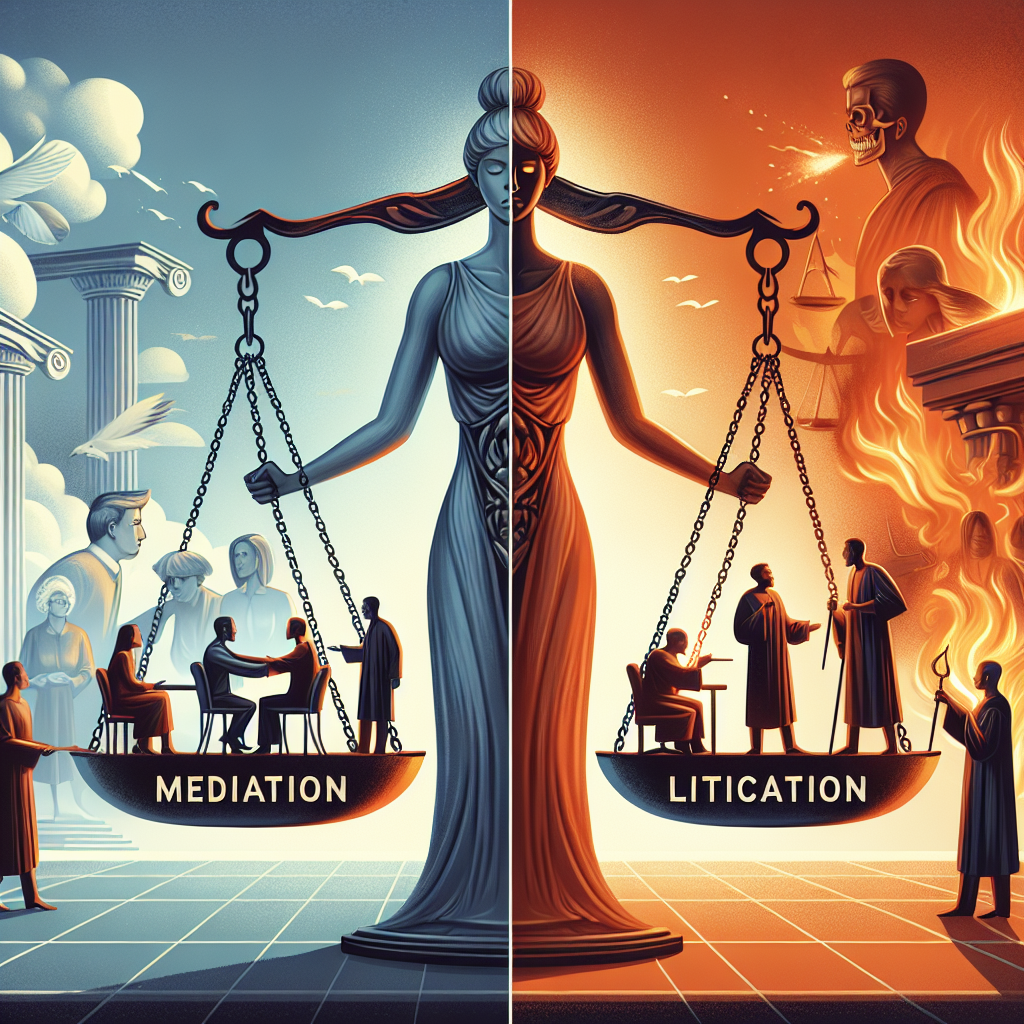
Settlement Compliance: Mediation vs. Litigation
Introduction
Settlement compliance is a crucial aspect of resolving legal disputes. It refers to the process of ensuring that both parties involved in a dispute fulfill their obligations as outlined in a settlement agreement. Choosing the right strategy for settlement compliance is essential in achieving a successful resolution and avoiding further legal complications. In this blog article, we will discuss the differences between mediation and litigation as strategies for settlement compliance and provide insights on how to choose the best approach for your specific situation.
Understanding Mediation
Mediation is an alternative dispute resolution process where a neutral third party helps the parties involved in a dispute to reach a mutually beneficial agreement. This process involves open communication, negotiation, and compromise, with the aim of finding a resolution that satisfies both parties. Mediation is a voluntary process, and the mediator does not have decision-making power.
There are several advantages of using mediation as a strategy for settlement compliance. One of the main benefits is that it allows the parties involved to maintain control over the resolution and reach a solution that works for both of them. Additionally, mediation is often a faster and more cost-effective option compared to litigation. Studies have shown that mediation has a high success rate in resolving disputes, with around 70-80% of cases resulting in a settlement.
Advantages of Litigation
Litigation is the process of resolving legal disputes through the court system. It involves a judge or jury making a decision based on the evidence and arguments presented by both parties. Litigation can be a complex and lengthy process, and it often involves high costs and strict timelines.
However, there are instances where litigation may be the preferred strategy for settlement compliance. For example, if one party believes they have a strong case and is seeking a specific outcome, they may choose to go to court to ensure their rights are protected. Additionally, the court’s involvement can provide a sense of accountability and enforceability in ensuring that the settlement agreement is complied with.
Factors to Consider when Choosing a Strategy
When it comes to choosing a strategy for settlement compliance, there are several factors that should be taken into consideration. These include the nature of the dispute, the time and cost implications, and the relationship between the parties involved.
Differences between Mediation and Litigation
There are significant differences between mediation and litigation when it comes to resolving disputes. One of the main distinctions is the approach to finding a resolution. In mediation, the focus is on open communication and finding a mutually beneficial solution, while litigation is more adversarial and relies on presenting evidence and arguments to a judge or jury.
Confidentiality and privacy are also crucial factors to consider. Mediation is a private and confidential process, whereas litigation is a public process that involves court hearings and documents that are available to the public. Additionally, mediation allows parties to maintain a more amicable relationship, while litigation can often result in damaged relationships between the parties.
Another key difference is the level of control over the outcome. In mediation, the parties involved have more control over the final resolution, whereas in litigation, the decision is ultimately made by a judge or jury.
Successful Settlement Compliance Strategies
Regardless of the chosen strategy, there are a few key elements that can contribute to successful settlement compliance. These include effective communication and transparency, building trust and understanding between the parties, and the use of negotiation skills. Both parties should be open and honest in their communication and work towards finding a mutually agreeable solution.
Mediation vs. Litigation in Business Disputes
In business disputes, both mediation and litigation can be effective strategies for settlement compliance. However, each approach has its own pros and cons that should be carefully considered. For businesses, mediation can be a more cost-effective and time-efficient option, allowing them to focus on their operations and avoid lengthy court proceedings. On the other hand, litigation may be necessary in cases where a specific outcome or legal precedent is sought, and the business is willing to invest the time and resources in pursuing it.
Furthermore, the choice between mediation and litigation in business disputes can have a significant impact on the reputation and future relationships of the parties involved. Mediation can help maintain a positive working relationship between the parties, while litigation can potentially damage reputations and harm future business opportunities.
Some examples of successful settlement compliance strategies in business disputes include the use of mediation to resolve contract disputes, which can save businesses time and money, and the use of litigation to enforce non-compete agreements to protect business interests.
Legal Considerations for Mediation and Litigation
When choosing between mediation and litigation as a strategy for settlement compliance, it is essential to consider the legal requirements and implications of each option. Mediation is a voluntary process, and both parties must agree to participate. It is also essential to ensure that the mediator is qualified and experienced. In litigation, there are strict legal procedures that must be followed, and both parties must adhere to court deadlines and requirements.
Additionally, it is crucial to consider the availability of legal remedies in each strategy. In mediation, the outcome is not legally binding unless it is incorporated into a settlement agreement. In contrast, the court’s decision in litigation is legally binding and enforceable.
Lawyers also play a critical role in settlement compliance. In mediation, lawyers can provide legal guidance and support to their clients, but they do not actively participate in the process. In litigation, lawyers play a more involved role in presenting arguments and evidence to the court. It is essential to seek legal advice and representation for both mediation and litigation to ensure that your rights and interests are protected.
Best Practices for Choosing the Right Strategy
Choosing the right strategy for settlement compliance is crucial in achieving a successful resolution. It is essential to assess the situation objectively, considering all factors such as the nature of the dispute, the time and cost implications, and the relationship between the parties. Seeking professional advice from a lawyer or mediator can also be beneficial in understanding the potential outcomes of each strategy and making an informed decision.
Conclusion
Settlement compliance is a crucial aspect of resolving legal disputes, and choosing the right strategy can greatly impact the outcome. Mediation and litigation are two commonly used strategies for settlement compliance, each with its own advantages and disadvantages. When considering which approach to take, it is essential to evaluate all factors and seek professional advice. By understanding the differences between mediation and litigation and considering the specific circumstances of the dispute, parties can choose the most effective strategy for achieving settlement compliance.
Success Rates of Mediation vs. Litigation

Mediation vs. Litigation: Unlocking Success Rates
Introduction
In today’s world, legal disputes are a common occurrence. Whether it’s a disagreement between business partners, a landlord and a tenant, or a consumer and a company, conflicts can arise in various scenarios. When faced with a legal dispute, individuals and organizations have different options for resolving it. Two of the most commonly used methods are mediation and litigation. Both have their own strengths and weaknesses, and it can be challenging to determine which one is the best for a particular case. In this article, we will delve into the success rates of mediation and litigation and compare them to help you understand which option may be more effective in resolving your legal dispute.
Definition of Mediation and Litigation
Before we dive into the success rates, it’s essential to understand the basics of mediation and litigation.
Mediation is a voluntary and confidential process where a neutral third party, the mediator, helps the disputing parties communicate and reach a mutually agreed-upon resolution. The mediator does not make any decisions but facilitates a discussion between the parties to find a solution that satisfies everyone’s interests. The goal of mediation is to reach a win-win outcome, rather than a win-lose outcome, as in litigation.
Litigation, on the other hand, involves resolving legal disputes by filing a lawsuit in court. The parties involved present their case to a judge or jury, who then makes a final decision on the matter. This process can be lengthy and expensive, as it involves legal representation, court fees, and other related costs. Litigation is often seen as a last resort when other dispute resolution methods have failed.
Differences Between Mediation and Litigation
Mediation and litigation have many differences, including their process, cost, and outcome. Here are some of the key differences between the two methods:
Process: As mentioned earlier, mediation is a collaborative process where the parties involved work together to find a resolution. In contrast, litigation is an adversarial process where the parties present evidence and arguments to convince the judge or jury that they are right.
Cost: Mediation tends to be less expensive than litigation. Since the parties are working together to reach a solution, there are no legal fees, court costs, or other related expenses. In contrast, litigation can be extremely costly due to the involvement of legal representation, court fees, expert witnesses, and other fees.
Timeline: Mediation can be completed relatively quickly, depending on the complexity of the case and the willingness of the parties to cooperate. In contrast, litigation can take months or even years to resolve, as it involves multiple court appearances, motions, and other legal proceedings.
Outcome: In mediation, the parties have control over the outcome and can come to a solution that is mutually agreeable. In litigation, the judge or jury makes the final decision, which may not always be satisfactory for all parties involved.
Pros and Cons of Mediation
Mediation has its own set of advantages and disadvantages, which are important to consider before choosing this method for dispute resolution.
Pros:
- Cost-effective compared to litigation
- Flexible and confidential process
- Parties have control over the outcome
- Mutually satisfying solutions can be reached
- Preserves relationships between parties
Cons:
- The mediator does not have decision-making power
- Success depends on the willingness of parties to cooperate
- Not suitable for complex legal issues
- Not legally binding unless a written agreement is signed
Pros and Cons of Litigation
Litigation also has its advantages and disadvantages, which should be considered before opting for this method for dispute resolution.
Pros:
- Provides a final decision from a judge or jury
- Can address complex legal issues
- Lawyers have a legal duty to act in their client’s best interest
- The final decision is legally binding
Cons:
- Expensive due to legal representation, court fees, and other costs
- Lengthy process with multiple court appearances
- Parties have little control over the outcome
- Can damage relationships between parties
Comparing Success Rates of Mediation and Litigation
Now that we have a better understanding of mediation and litigation and their pros and cons, let’s compare their success rates.
According to a survey by the American Bar Association, mediation has an average success rate of 85%, while litigation has a success rate of 54%. This means that mediation is more likely to result in a mutually satisfying solution for both parties compared to litigation. However, this may vary depending on the specific case and the willingness of the parties to cooperate.
Factors That Affect Success Rates
The success rates of mediation and litigation can be affected by various factors. Here are some of the key factors that can impact the outcome of both methods:
Willingness to Cooperate: As mentioned earlier, the success of mediation heavily relies on the willingness of the parties to cooperate and work towards a mutually agreeable solution. If one or both parties are not open to discussing the issues and finding a resolution, the success rate may decrease.
Complexity of the Case: Mediation may not be suitable for complex legal issues that require a legal decision. In such cases, litigation may have a higher success rate as it involves presenting evidence and arguments to a judge or jury who can make a final decision.
Communication: Effective communication between the parties is crucial for a successful mediation. If there is a breakdown in communication, the chances of reaching a resolution decrease. In contrast, litigation does not rely on communication between the parties as the judge or jury makes the final decision.
Benefits of Choosing Mediation over Litigation
Based on the success rates and other factors discussed above, it’s clear that mediation has its own set of benefits compared to litigation. Here are some of the key benefits of choosing mediation over litigation for dispute resolution:
Cost-Effective: Mediation is significantly less expensive compared to litigation, making it a more affordable option for resolving legal disputes.
Confidentiality: Mediation is a confidential process, which means that the details of the dispute and any agreements reached during the process are not made public. This can be beneficial for parties who want to keep their issues private.
Mutually Satisfying Solutions: As mediation is a collaborative process, the parties have control over the outcome and can come to a solution that is mutually agreeable. This can help preserve relationships and avoid a win-lose outcome, as in litigation.
Benefits of Choosing Litigation over Mediation
While mediation has its advantages, litigation also offers some benefits that may make it a better choice for certain types of disputes. Here are some of the key benefits of choosing litigation over mediation:
Final Decision: Litigation provides a final decision from a judge or jury, which may be necessary for complex legal issues. This decision is legally binding, which means that both parties are required to comply with it.
Legal Representation: In litigation, parties have legal representation who have a legal duty to act in their client’s best interest. This can be beneficial, especially in complex cases where legal expertise is required.
Addressing Complex Issues: As mentioned earlier, mediation may not be suitable for complex legal issues. In such cases, litigation may be a better option for resolving the dispute effectively.
Finding the Best Dispute Resolution Method for You
Both mediation and litigation have their own strengths and weaknesses, and the success rates of each method may vary depending on the specific case. While mediation has a higher average success rate compared to litigation, it may not be suitable for all types of disputes. Ultimately, the best dispute resolution method for you will depend on the specific circumstances of your case, your goals, and your budget. It’s essential to carefully consider all factors and consult with a legal professional to determine the most effective method for resolving your dispute.
The Future of Divorce: Mediation vs. Litigation

Divorce Mediation vs. Litigation: Choosing the Best Path
Introduction
Welcome to our comprehensive guide on the future of divorce and the ongoing debate between mediation and litigation as methods for resolving divorce disputes. Divorce is a difficult and emotional process, and the decision on how to approach it can have a significant impact on the outcome. In recent years, there has been a growing trend towards alternative dispute resolution methods, particularly mediation, as a more amicable and cost-effective way to end a marriage. However, traditional litigation still remains a prevalent option for many couples. In this guide, we will explore the benefits and drawbacks of both approaches and help you make an informed decision on which route may be best for your specific situation.
Understanding Divorce Mediation
Divorce mediation is a form of alternative dispute resolution that involves a neutral third party, the mediator, helping couples come to a mutually agreeable divorce settlement. The mediator’s role is to facilitate communication and assist in negotiating a fair and comprehensive agreement that meets the needs of both parties. Unlike traditional litigation, where a judge makes the final decisions, mediation allows the couple to maintain control over the outcome and work together to find a solution that works for them.
Mediation is typically a less formal and more cooperative process compared to litigation. It can be done in person or through online platforms, and the couple can choose to have their own lawyers present during the sessions or not. The mediator does not provide legal advice but helps the couple understand their options and make informed decisions.
Benefits of Divorce Mediation
One of the main advantages of divorce mediation is its focus on collaboration and communication. Mediation allows the couple to work together in a respectful and cooperative manner, which can be particularly beneficial for couples with children. By avoiding the confrontational nature of litigation, mediation can help preserve the relationship between the couple, which is especially important when children are involved.
Another significant benefit of mediation is its cost-effectiveness. By avoiding lengthy court battles, couples can save a significant amount of money on legal fees. Additionally, mediation typically takes less time than litigation, allowing couples to move on with their lives sooner.
Mediation also offers more flexibility and control over the outcome. Since the couple is involved in the decision-making process, they are more likely to be satisfied with the final agreement. Mediation can also address a wider range of issues compared to what a court can decide on, allowing for a more comprehensive and personalized settlement.
Drawbacks of Divorce Mediation
While mediation has many benefits, it may not be the best option for every couple. One of the main drawbacks is that it requires a high level of cooperation and communication between the parties. If there is a significant power imbalance or a history of abuse in the relationship, mediation may not be a suitable option.
Additionally, since the mediator does not provide legal advice, it’s essential for both parties to have their own legal representation. This can add to the overall cost of the process. Also, if the couple is unable to reach a mutually agreeable settlement, they may have to resort to litigation, resulting in additional time and expenses.
Litigation: What You Need to Know
Litigation is the traditional approach to resolving legal disputes, including divorce. In this process, each party hires their own lawyer, and the case is brought to court, where a judge makes the final decisions on all issues of the divorce. The couple’s lawyers will present their arguments and evidence, and the judge will issue a verdict based on the laws and procedures in their jurisdiction.
Litigation can be a lengthy, complex, and expensive process, and it often involves a lot of conflict and hostility between the parties. It also takes away the couple’s control over the outcome, as the judge has the final say on all decisions.
Pros of Litigation in a Divorce
One of the main advantages of litigation is its formal and structured nature. The rules and procedures of the court ensure that both parties have a fair chance to present their case and that the judge’s decision is based on facts and evidence rather than emotions.
Additionally, in cases of power imbalance or domestic abuse, litigation can provide a safer environment for the victim to express their interests and concerns. Also, litigation can be the best option for complex, high net-worth divorces where there are significant assets and properties to divide.
Cons of Litigation in a Divorce
As mentioned earlier, litigation can be a lengthy, expensive, and emotionally draining process. It can also create a hostile and confrontational atmosphere between the parties, which can have a long-term impact on their relationship, particularly if they have children together.
Moreover, litigation can be a gamble, as the judge’s decision may not align with the expectations or desires of either party. This lack of control over the outcome can result in dissatisfaction and resentment, making it difficult for the couple to move on from the divorce.
The Future of Divorce: Will Mediation Prevail?
The ongoing debate between mediation and litigation for resolving divorce disputes has sparked discussions about the future of divorce. While mediation has gained popularity in recent years, some experts argue that litigation will always have a place in the divorce process.
One factor that may impact the future of divorce is the increasing backlog of court cases, particularly in family law. With the already overwhelmed court system, it’s becoming more challenging and time-consuming for couples to have their disputes resolved through litigation. This may result in more couples turning to mediation as a faster and more accessible option.
Moreover, the growing trend towards alternative dispute resolution methods and the increasing awareness of the benefits of mediation may continue to drive its popularity. As more couples choose mediation and share their positive experiences with others, it may become the preferred method for resolving divorce disputes in the future.
Factors to Consider When Choosing Between Mediation and Litigation
Ultimately, the decision on whether to choose mediation or litigation for a divorce depends on the specific circumstances of each case. Some factors to consider when making this decision include the level of cooperation and communication between the parties, the complexity of the issues involved, and the presence of any power imbalance or history of abuse in the relationship.
It’s also essential to consider the emotional and financial costs of each method and whether the couple is willing and able to compromise and work together towards a mutually agreeable solution. Consulting with experienced lawyers and mediators can also help couples understand the pros and cons of each approach and make an informed decision.
Making the Right Choice for Your Divorce
The future of divorce is uncertain, but it’s clear that mediation and litigation will continue to be prevalent options for resolving disputes. Both methods have their pros and cons, and the decision on which one to choose ultimately depends on the unique situation of each couple.
If you’re facing a divorce and are unsure which route to take, it’s crucial to weigh the benefits and drawbacks of each approach and consider the specific circumstances of your case. Ultimately, the goal is to find the best path forward for your specific situation and make the divorce process as smooth and amicable as possible.
The Role of Communication in Mediation vs. Litigation

Mastering Communication in Conflict Resolution
Introduction
In any conflict or dispute, effective communication is key to finding a resolution. This is especially true in legal settings, where mediation and litigation are commonly used methods of conflict resolution. While both approaches have their own unique processes and techniques, a common factor in both is the role of communication. In this article, we will explore the importance of communication in both mediation and litigation, and how it can impact the outcome of a dispute.
Understanding Conflict Resolution
Before we delve into the role of communication in mediation and litigation, it is important to have a basic understanding of the two processes. Mediation is a form of alternative dispute resolution (ADR) that involves a neutral third party, the mediator, who helps the parties in conflict come to a mutually acceptable resolution. Litigation, on the other hand, is a legal process that involves presenting a case in court and having a judge or jury make a decision. Both processes have their own advantages and disadvantages, but the common goal is to resolve the conflict in a fair and efficient manner.
Importance of Communication in Conflict Resolution
Effective communication is crucial in any conflict resolution process as it helps to identify and address the underlying issues and concerns of all parties involved. In mediation and litigation, communication plays an even more important role as it can determine whether a resolution can be reached or not. Without clear and effective communication, misunderstandings and misinterpretations can occur, leading to further conflicts and hindering the resolution process.
Effective Communication Techniques
To ensure effective communication in both mediation and litigation, there are certain techniques that can be employed by all parties involved. These include active listening, nonverbal communication, and the use of empathy.
Active Listening in Conflict Resolution
In any conflict, it is important for all parties to actively listen to each other. This means truly paying attention to what the other person is saying, without interrupting or formulating a response in one’s mind. In mediation, the mediator can help facilitate active listening by encouraging each party to express their thoughts and feelings without interruption. In litigation, lawyers can ensure active listening by questioning witnesses and allowing them to fully answer without interruption or leading the conversation.
Nonverbal Communication in Conflict Resolution
Nonverbal communication, such as body language and tone of voice, can also play a significant role in conflict resolution. In mediation, the mediator can observe and address any negative nonverbal cues, such as crossed arms or a dismissive tone, which can hinder effective communication. In litigation, lawyers can also pay attention to nonverbal cues from witnesses and address any potential issues that may arise.
Using Empathy to Resolve Conflicts
Empathy, the ability to understand and share the feelings of another, is a powerful tool in conflict resolution. By putting oneself in the other person’s shoes, it becomes easier to see the conflict from their perspective and find common ground. In mediation, the mediator can help parties develop empathy by encouraging them to express their feelings and perspectives, and by highlighting similarities between the parties’ positions. In litigation, lawyers can use empathy to better understand their clients’ needs and effectively convey this to the opposing party.
Conflict Resolution in the Workplace
Effective communication is crucial for conflict resolution in the workplace, where conflicts may arise between employees, managers, or even between a company and its clients. In these situations, communication techniques such as active listening, nonverbal communication, and empathy can be useful in finding a resolution. Additionally, having a clear and thorough communication policy in place can help prevent conflicts from escalating and provide a framework for resolving them in a timely and efficient manner.
Conflict Resolution in Personal Relationships
Communication is also vital in resolving conflicts in personal relationships, such as between family members, friends, or romantic partners. In these situations, emotions may run high, making effective communication even more challenging. However, by using techniques such as active listening, nonverbal communication, and empathy, parties can better understand each other’s perspectives and find a solution that is satisfactory to both.
The Power of Communication in Conflict Resolution
Effective communication is crucial in both mediation and litigation as it can determine whether a resolution can be reached or not. By employing techniques such as active listening, nonverbal communication, and empathy, parties can better understand each other and find common ground, leading to a fair and efficient resolution of the conflict. Whether in a legal setting or in personal relationships, the power of communication should never be underestimated in resolving conflicts.
Time Efficiency in Mediation and Litigation

Efficient Dispute Resolution: Expert Tips for Quick Resolutions
Introduction
Efficient dispute resolution is a crucial aspect of the legal system, especially in today’s fast-paced business world. Disputes between individuals and organizations can be costly and time-consuming, and the longer they go on, the more resources are wasted. That’s why it’s essential to have efficient dispute resolution methods in place to help parties reach a resolution in a timely and cost-effective manner.
What is Efficient Dispute Resolution?
Efficient dispute resolution refers to the process of resolving legal disputes in a timely and cost-effective manner. It involves finding the most efficient and effective way to reach a resolution that is acceptable to all parties involved. This can include methods such as mediation, arbitration, or negotiation.
Benefits of Efficient Dispute Resolution
There are numerous benefits to efficient dispute resolution, both for individuals and organizations. Some of the key advantages include:
- Cost savings: By resolving disputes efficiently, parties can save on legal fees, court costs, and other expenses associated with lengthy litigation processes.
- Time savings: Efficient dispute resolution allows parties to reach a resolution sooner, saving both parties time and resources.
- Preservation of relationships: When disputes are resolved quickly and amicably, there is less strain on relationships between parties, which can be essential in business contexts.
- Less stress: Lengthy and contentious legal processes can be emotionally draining for all parties involved. Efficient dispute resolution can help alleviate some of this stress.
- Control over the outcome: With methods like mediation and negotiation, parties have more control over the outcome and can work together to find a mutually beneficial solution.
Understanding the Process
The process of efficient dispute resolution can vary depending on the method chosen, but there are some general steps that are typically involved:
- Identification of the dispute: The first step is to identify the issue at hand and the parties involved.
- Selection of a dispute resolution method: Parties must choose the most appropriate dispute resolution method based on their specific circumstances.
- Preparation: Before engaging in the dispute resolution process, parties must prepare by gathering relevant documents and evidence and understanding their rights and obligations.
- Facilitation: The facilitator, whether it be a mediator, arbitrator, or negotiator, will guide the parties through the process and help them find a resolution.
- Resolution: Once an agreement is reached, it is typically put into writing and becomes legally binding.
Factors to Consider When Choosing a Dispute Resolution Method
When deciding which dispute resolution method is best for a particular situation, parties should consider the following factors:
- The nature of the dispute: Different methods may be more suitable depending on the type of dispute. For example, mediation may be better for resolving interpersonal conflicts, while arbitration may be more appropriate for complex business disputes.
- The relationship between parties: If the parties have an ongoing relationship, it may be beneficial to choose a method that focuses on preserving that relationship, such as mediation.
- The desired outcome: Parties should consider what they hope to achieve through the dispute resolution process and choose a method that aligns with those goals.
- Time and cost considerations: Some methods, like arbitration, may be faster and more cost-effective than others, such as litigation.
- The availability of parties: Certain methods, like mediation or negotiation, require both parties to be present and willing to participate actively.
Common Types of Efficient Dispute Resolution
There are several methods of efficient dispute resolution, and the most suitable one will depend on the specific circumstances. Some of the most common methods include:
- Mediation: In mediation, a neutral third party, called a mediator, helps the parties communicate and find a mutually acceptable solution to the dispute. Mediation is a voluntary and confidential process that is often used in interpersonal conflicts, employment disputes, and family law matters.
- Arbitration: Unlike mediation, arbitration involves a neutral third party, called an arbitrator, making a binding decision on the dispute. Arbitration is often used in commercial disputes, as it is typically faster and less expensive than traditional litigation.
- Negotiation: Negotiation involves the parties discussing the dispute and attempting to reach a resolution without the involvement of a third party. It can be done informally or with the assistance of lawyers or other advisors.
- Collaborative law: This process is similar to negotiation, but with the added involvement of specially trained lawyers who help the parties reach an agreement collaboratively.
- Med-arb: Med-arb is a combination of mediation and arbitration, where parties attempt to resolve the dispute through mediation, but if unsuccessful, the mediator becomes an arbitrator and makes a final decision.
How to Prepare for a Dispute Resolution
Preparation is crucial in any dispute resolution process, and parties should take the following steps to ensure they are ready:
- Gather all relevant documents and evidence: Having all necessary information on hand will help parties present their case more effectively.
- Understand your rights and obligations: Before engaging in the process, parties should familiarize themselves with their legal rights and obligations to make more informed decisions.
- Research the chosen method: Each dispute resolution method has its own rules and procedures, so it’s essential to understand how it works to be adequately prepared.
- Communicate effectively: Parties should be open and honest in their communication to ensure the process is productive.
Tips for Successful Dispute Resolution
Here are some tips to help parties navigate the dispute resolution process successfully:
- Be open-minded: In dispute resolution, it’s essential to be open to different perspectives and potential solutions.
- Be respectful: Parties should treat each other with respect and avoid aggressive or confrontational behavior.
- Listen actively: Communication is key in dispute resolution, so it’s essential to listen actively and try to understand the other party’s perspective.
- Focus on the issues, not the people: It’s essential to separate the problem from the people involved to avoid personal attacks.
- Be patient: Resolving disputes can take time, so parties should be patient and work towards finding a mutually beneficial solution.
The Role of Mediators and Arbitrators
Mediators and arbitrators play a crucial role in efficient dispute resolution. They are neutral third parties who help facilitate communication and assist parties in reaching a resolution. Some of their key responsibilities include:
- Facilitating the process: Mediators and arbitrators guide the parties through the process and ensure both parties have an opportunity to present their case.
- Managing emotions: Disputes can be emotionally charged, and mediators and arbitrators are trained to manage these emotions effectively.
- Cutting through conflict: Mediators and arbitrators help parties focus on the issues at hand and avoid getting sidetracked by personal conflicts.
- Providing an objective perspective: As neutral third parties, mediators and arbitrators can provide an outside perspective and help parties see the dispute from a different angle.
- Ensuring confidentiality: Mediators and arbitrators must maintain the confidentiality of the dispute resolution process to create a safe and open environment for parties to communicate.
Final Thoughts: Why Efficient Dispute Resolution is Essential in Today’s Business World
The business world moves at a rapid pace, and disputes can have significant consequences for all parties involved. That’s why efficient dispute resolution is essential in today’s business world. By choosing the right dispute resolution method and preparing adequately, parties can save time, money, and relationships while reaching a resolution that works for everyone involved.
Efficient dispute resolution is all about finding the most effective and timely way to resolve legal disputes. Whether it’s through mediation, arbitration, negotiation, or another method, parties can benefit from implementing efficient dispute resolution techniques. By understanding the process, considering relevant factors, and following some tips for success, parties can navigate the dispute resolution process successfully and reach a resolution that works for all parties involved.
Understanding Mediation and Litigation

Mediation vs Litigation: Understanding the Key Differences
Introduction
When faced with a legal dispute, individuals have several options for resolving the issue. The most common approaches are mediation and litigation. While both methods aim to reach a resolution, they differ greatly in their processes, outcomes, and costs. It is important to have a clear understanding of these differences in order to make the right choice for your dispute resolution needs. In this article, we will delve into the basics of mediation and litigation, and explore the key differences between these two methods.
What is Mediation?
Mediation is a form of alternative dispute resolution (ADR) that involves the use of a neutral third party, known as a mediator, to facilitate communication and negotiation between the parties involved in the dispute. The goal of mediation is to reach a mutually acceptable agreement that satisfies the interests of both parties.
In mediation, the mediator acts as a facilitator and does not make any decisions or impose any solutions. Instead, they guide the dialogue between the parties, encourage them to share their perspective, and help them explore potential solutions. The parties are responsible for making their own decisions and reaching an agreement that works for both of them.
Mediation is a voluntary process, meaning that both parties must agree to participate. It is also a confidential process, which means that discussions that take place during mediation cannot be used in future legal proceedings.
What is Litigation?
Litigation, on the other hand, is the process of resolving a legal dispute through the court system. It involves filing a lawsuit and presenting evidence and arguments to a judge or jury, who then make a decision on the outcome of the case.
In litigation, the parties involved are represented by lawyers who advocate for their interests and present their case in court. The judge or jury ultimately decides on the outcome of the case and the parties must abide by the decision.
Litigation is an adversarial process, which means that the parties involved are often in conflict and are trying to prove their case against the other party. It is also a public process, meaning that court records and proceedings are open to the public and can be used in future legal proceedings.
The Role of the Mediator
The role of the mediator is crucial in the mediation process. They act as a neutral third party and facilitate communication between the disputing parties. Some of the key responsibilities of a mediator include:
- Creating a safe and respectful environment for communication
- Encouraging the parties to share their perspectives and interests
- Helping the parties identify common ground and potential solutions
- Guiding the negotiation process
- Ensuring that all parties are heard and understood
- Managing power imbalances and conflicts
- Exploring creative and mutually beneficial solutions
Mediators are trained professionals who have a thorough understanding of communication, conflict resolution, and negotiation techniques. They do not have a stake in the outcome of the dispute and are not biased towards either party. This allows them to remain impartial and focused on finding a resolution that works for both parties.
The Role of the Lawyer in Litigation
In litigation, the role of the lawyer is essential. They represent their client’s interests and advocate for them in court. Some of the key responsibilities of a lawyer in litigation include:
- Gathering evidence and building a case
- Presenting arguments and legal theories in court
- Cross-examining witnesses
- Preparing and filing legal documents
- Negotiating with the other party’s lawyer
- Advising their client on legal strategy and potential outcomes
- Advocating for their client’s best interests
Lawyers are highly trained professionals who have a deep understanding of the law and legal procedures. They are also skilled in negotiation and advocacy, which allows them to effectively represent their clients in court.
Cost Comparison: Mediation vs Litigation
One of the key differences between mediation and litigation is the cost involved. Mediation is generally less expensive than litigation, as it does not involve extensive court fees and legal representation costs.
In mediation, the parties typically split the cost of the mediator’s fees, which can range from a few hundred to a few thousand dollars, depending on the complexity of the dispute. In contrast, litigation can be a costly process, as it involves filing fees, court costs, and legal representation fees, which can add up to tens of thousands of dollars.
Moreover, litigation can be a lengthy process, which means that the parties may have to incur additional expenses for ongoing legal fees and court costs as the case progresses. On the other hand, mediation is often a one-time expense, making it a more cost-effective option for dispute resolution.
Timeframe Comparison: Mediation vs Litigation
The timeframe for dispute resolution is another significant difference between mediation and litigation. Mediation is generally a much quicker process than litigation, as it does not involve lengthy court proceedings.
In mediation, the parties can often reach a resolution within a few sessions, which can last a few hours or a few days. In contrast, litigation can take months or even years to reach a resolution, as it involves multiple court appearances, legal arguments, and evidence gathering.
Moreover, the court’s schedule can also affect the timeline of litigation, as cases may get delayed due to other cases and backlogs. This means that the parties involved may have to wait months or even years for their case to be resolved. In contrast, mediation can be scheduled at a time that works for all parties, making it a more efficient option for dispute resolution.
Confidentiality: Mediation vs Litigation
Confidentiality is another area where mediation and litigation differ greatly. In mediation, all discussions and documents shared during the process are confidential and cannot be used in future legal proceedings. This allows the parties to have open and honest discussions without fear of their words being used against them in court.
In contrast, litigation is a public process, which means that all court proceedings and documents are open to the public. This can be a disadvantage for parties who do not want their dispute to be made public or for those who want to keep certain information private.
Moreover, in litigation, court records can also be used as evidence in future proceedings, which can have long-lasting consequences for the parties involved. This lack of confidentiality in litigation can lead to a more contentious and hostile environment, making it a less appealing option for dispute resolution.
Relationship Preservation: Mediation vs Litigation
Another key difference between mediation and litigation is the impact on the relationship between the parties. In mediation, the goal is to reach a mutually acceptable agreement that satisfies the interests of both parties. This can often lead to a more amicable resolution, which can help preserve the relationship between the parties.
In contrast, litigation is an adversarial process, which means that the parties are often in conflict and trying to prove their case against the other party. This can lead to a more hostile and contentious environment, which can damage or even destroy the relationship between the parties. Moreover, the outcome of a litigation case is often imposed by a judge or jury, which can lead to one party feeling resentful or dissatisfied with the decision.
Making the Right Choice for Your Dispute Resolution Needs
Both mediation and litigation have their own advantages and disadvantages. Mediation is a quicker, more cost-effective, and confidential process that focuses on finding a mutually acceptable solution. On the other hand, litigation is a more formal, public, and adversarial process, which can lead to a more hostile environment and longer resolution timeframe.
When faced with a legal dispute, it is important to consider the nature of the dispute, the desired outcome, and the relationship between the parties involved. Understanding the differences between mediation and litigation can help you make an informed decision about which option aligns with your values and goals. Ultimately, the key is to choose the approach that best meets your needs and helps you reach a satisfactory resolution.
Accessibility and Inclusivity in Online Mediation

Expert Mediation Services: Accessible & Inclusive
Introduction
Welcome to our article on accessibility and inclusivity in online mediation. In this piece, we will explore the importance of making mediation services accessible to all individuals, regardless of their abilities or backgrounds. We will also discuss the impact of technology on the accessibility of mediation services and provide tips on how to design an inclusive online mediation platform. Our goal is to promote the use of inclusive practices in online mediation and ensure equal access for all parties involved.
What is Mediation and Why is it Important?
Mediation is a form of dispute resolution that involves a neutral third party facilitating a conversation between two or more parties in conflict. The goal of mediation is to help parties reach a mutually acceptable resolution without going to court. Mediation is important because it allows individuals to take an active role in resolving their conflicts and can often lead to more satisfactory outcomes compared to traditional litigation.
The Benefits of Accessible Mediation Services
When mediation services are accessible, it allows individuals with disabilities or from diverse backgrounds to participate in the process. This not only promotes equal access and inclusion but also leads to better outcomes for all parties involved. By making mediation services accessible, we create a more equitable and fair justice system for all individuals.
Understanding Inclusivity in the Mediation Process
Inclusivity in the mediation process means ensuring that all parties involved have the opportunity to participate and be heard. This includes individuals with disabilities, individuals from diverse cultural or linguistic backgrounds, and individuals with different communication styles. It also means creating a safe and welcoming environment for all participants, regardless of their background or identity.
The Impact of Online Mediation on Accessibility
With the rise of technology, more and more mediation services are moving online. While this has many benefits, such as convenience and cost-effectiveness, it also presents challenges in terms of accessibility. Online mediation can be a barrier for individuals with disabilities who may require accommodations to participate effectively. It can also create barriers for individuals who are not familiar with technology or who do not have access to reliable internet connection or devices.
Breaking Down Barriers: How Technology is Making Mediation More Inclusive
Despite the challenges, technology has also made significant advancements in making mediation more inclusive. For example, there are now online mediation platforms that offer accessibility features, such as closed captioning and screen readers, to accommodate individuals with disabilities. These platforms also have user-friendly interfaces to make it easier for individuals with varying levels of technology proficiency to participate in the process.
Designing an Inclusive Online Mediation Platform
When designing an online mediation platform, it is important to keep inclusivity in mind. This means considering the needs of individuals with disabilities and individuals from diverse backgrounds. Some key features to include in an inclusive online mediation platform may include:
- Accessibility features, such as screen readers and closed captioning
- User-friendly interface with clear instructions and easy navigation
- Language options to accommodate diverse linguistic backgrounds
- Ability to customize font size and color for individuals with visual impairments
- Option for participants to request accommodations or assistance
Ensuring Equal Access for Individuals with Disabilities
To ensure equal access for individuals with disabilities, it is important to follow web accessibility guidelines when designing an online mediation platform. This includes adhering to the Web Content Accessibility Guidelines (WCAG) 2.1, which provides recommendations for making web content accessible to individuals with disabilities. Some key considerations include providing alternative text for images, using color contrast for text and background, and ensuring keyboard accessibility.
Addressing Language and Cultural Diversity in Online Mediation
Language and cultural diversity are important factors to consider in online mediation. It is crucial to have language options available for participants who may not be fluent in the primary language used in the mediation session. This can be achieved through language interpretation services or by providing mediation sessions in multiple languages. Additionally, it is important to educate mediators on cultural differences and how to effectively communicate and mediate with individuals from diverse backgrounds.
The Future of Inclusive Mediation Services
Accessibility and inclusivity in online mediation are crucial for promoting equal access and achieving satisfactory outcomes for all parties involved. By using technology and following accessibility guidelines, we can break down barriers and create a more inclusive justice system. It is our hope that online mediation platforms will continue to improve and prioritize inclusivity, ensuring that all individuals have equal access to justice.
Benefits and Limitations of Online Mediation

Exploring the Pros and Cons of Online Mediation
Introduction to Online Mediation
Welcome to the world of online mediation, where conflicts can be resolved from the comfort of your own home. With the rise of technology and the increasing use of virtual communication, online mediation has become a popular option for resolving disputes. This form of mediation offers convenience, cost-effectiveness, and accessibility, making it a viable choice for many individuals and businesses.
What is Online Mediation?
Online mediation, also known as virtual mediation or internet mediation, is a process of resolving disputes through online communication platforms. It involves a mediator facilitating a conversation between parties in conflict, who are not physically present in the same location but are connected through technology. This can include video conferencing, email, instant messaging, and other online tools.
The Benefits of Online Mediation
There are several advantages to using online mediation as a means of dispute resolution.
- Convenience: One of the biggest benefits of online mediation is the convenience it offers. Parties can participate in the mediation process from any location, as long as they have access to a reliable internet connection. This eliminates the need to travel, saving both time and money.
- Cost-effectiveness: Online mediation can be a more cost-effective option compared to traditional in-person mediation. As there is no need for parties to physically meet in the same location, there are no costs associated with travel and accommodation. This can make online mediation a more affordable option for those on a budget.
- Accessibility: Online mediation can be a more accessible option for individuals with disabilities or those living in remote areas. It eliminates the need for physical mobility and can be accessed from anywhere with an internet connection, making it a more inclusive option.
- Flexibility: Due to the virtual nature of online mediation, it offers more flexibility in scheduling. Parties can participate in the mediation process at a time that is convenient for them, without the need to coordinate schedules for in-person meetings.
The Downfalls of Online Mediation
While online mediation offers many benefits, it also has its limitations that should be considered.
- Lack of face-to-face interaction: One of the main drawbacks of online mediation is the lack of face-to-face interaction. This can have an impact on the ability to read body language and nonverbal cues, which are important in understanding the other party’s perspective and building trust.
- Technological barriers: Online mediation heavily relies on technology, and technical issues can arise, causing disruptions or delays in the process. This can be frustrating and may impact the effectiveness of the mediation.
- Confidentiality concerns: There may be concerns about the confidentiality of online mediation, as the internet is not a secure medium. Parties should ensure they are using a reliable and secure platform for their mediation process.
- Cultural and language barriers: Online mediation may be more challenging for parties from different cultural backgrounds or who speak different languages. Without the ability to read body language or use interpreters effectively, miscommunication or misunderstandings may arise.
Cost Comparison: Online Mediation vs. In-Person Mediation
When considering online mediation as an option for resolving disputes, it is essential to compare the costs with traditional in-person mediation.
In-person mediation can involve costs such as:
- Travel expenses for all parties involved
- Accommodation costs for parties traveling from out of town
- Meeting room rental fees
- Mediator’s fees for travel and accommodation
On the other hand, online mediation typically involves only the mediator’s fees and the cost of the online platform being used. In some cases, parties may also need to pay for any technical support required to use the platform effectively.
Effectiveness of Online Mediation
The effectiveness of online mediation depends on various factors, such as the complexity of the dispute and the willingness of parties to participate in the process. While it may not be suitable for all types of conflicts, online mediation has been proven to be successful in resolving a wide range of disputes, including family, workplace, and business conflicts.
Studies have shown that online mediation has a similar success rate to in-person mediation, with some even reporting higher rates of settlement and satisfaction among parties. This suggests that online mediation can be just as effective as traditional mediation in resolving conflicts.
The Role of Technology in Online Mediation
Technology plays a crucial role in online mediation, as it is the medium through which parties communicate and engage in the process. Therefore, it is essential to choose the right online mediation platform that is reliable, secure, and easy to use.
There are various online mediation platforms available, each with its own features and capabilities. When selecting a platform, parties should consider factors such as:
- Security measures in place to protect confidentiality and privacy
- User-friendly interface and features for effective communication and document sharing
- Technical support in case of any issues or difficulties
It is also crucial for parties to familiarize themselves with the platform before starting the mediation process to ensure a smooth and effective experience.
Choosing the Right Online Mediation Platform
The right online mediation platform will depend on the specific needs and preferences of parties involved in the dispute. Some popular online mediation platforms include:
- Zoom: A video conferencing platform with features such as breakout rooms for private conversations and screen sharing for document sharing.
- Mediate.com Virtual Mediation Lab: A virtual mediation platform with features such as live audio and video, document sharing, and a built-in whiteboard for brainstorming solutions.
- Olive: An online mediation platform specifically designed for family disputes, with features such as video conferencing, document sharing, and a secure messaging system.
Parties should research and compare different platforms before selecting the one that best suits their needs and budget.
Tips for a Successful Online Mediation
To ensure a successful online mediation experience, parties should keep the following tips in mind:
- Choose the right platform: As mentioned earlier, selecting the right online mediation platform is crucial for an effective process.
- Prepare and test technology beforehand: Parties should ensure they have a reliable internet connection and test the platform before the mediation begins to avoid any technical issues.
- Establish ground rules: Parties should agree on ground rules for the mediation, such as speaking one at a time and respecting each other’s views.
- Use video whenever possible: While video conferencing may not always be possible, parties should try to use it as much as possible to allow for nonverbal communication.
- Be patient and respectful: As with any mediation process, patience and respect are key to a successful outcome.
Is Online Mediation Right for You?
Online mediation offers many benefits and can be a successful and effective means of resolving disputes. However, it may not be suitable for every situation, and parties should carefully consider their specific needs and preferences before choosing this form of dispute resolution.
Ultimately, the success of online mediation will depend on the willingness of parties to communicate and find a mutually agreeable solution. With the right platform, technology, and mindset, online mediation can be a convenient, cost-effective, and accessible option for resolving conflicts.
Building Rapport in Virtual Mediation Sessions

Build Virtual Mediation Rapport: Expert SEO Tips
Understanding the Importance of Building Rapport in Virtual Mediation
In today’s digital age, the use of technology has become an essential part of our daily lives, including in the legal field. With the rise of virtual mediation, it has become crucial for mediators to understand the importance of building rapport in online communication.
Rapport refers to the harmonious relationship and connection between individuals, established through mutual trust and understanding. In virtual mediation, building rapport is essential in creating a safe and comfortable environment for parties to openly discuss their conflicts and reach a resolution. It also helps in fostering cooperation and collaboration between the mediator and the participants, leading to a more successful mediation session.
The Evolution of Virtual Mediation and Its Impact on Rapport Building
Virtual mediation has been around for quite some time; however, it has gained more popularity in recent years due to advancements in technology and the need for alternative dispute resolution methods. With the ongoing pandemic, the use of virtual platforms for mediation has become a necessity rather than an option.
This shift to virtual mediation has posed several challenges, including the difficulty of building rapport in an online setting. In traditional face-to-face mediation, rapport building often starts with the mediator’s physical presence, body language, and tone of voice. However, in virtual mediation, these non-verbal cues are limited, making it more challenging to establish rapport.
Key Elements of Rapport Building in Virtual Mediation
Despite the limitations of virtual mediation, there are still key elements that mediators can focus on to build rapport with the participants. These include establishing a supportive and empathetic environment, active listening, cultural sensitivity, and effective communication.
Creating a supportive and empathetic environment is crucial in making parties feel comfortable and safe in discussing their conflicts. Mediators can achieve this by setting ground rules, ensuring confidentiality, and showing understanding and empathy towards each party’s perspective.
Active listening is also vital in virtual mediation rapport building. It involves giving full attention to what the parties are saying, asking clarifying questions, and summarizing their statements to show understanding and ensure everyone’s voice is heard.
Cultural sensitivity is another essential element in building rapport in virtual mediation. It requires mediators to be aware of cultural differences and adapt their communication style to accommodate diverse backgrounds. This helps in creating a sense of inclusivity and understanding among the participants.
Lastly, effective communication is crucial in virtual mediation rapport building. Mediators must use clear and concise language, avoid technical jargon, and actively engage with the participants to establish a connection and understanding.
Utilizing Non-Verbal Cues for Establishing Rapport in Virtual Mediation
Although virtual mediation limits the use of non-verbal cues, there are still ways for mediators to utilize them to build rapport. These include maintaining eye contact, using appropriate facial expressions, and having a professional and attentive body posture throughout the session.
Mediators can also use visual aids, such as hand gestures and nodding, to show agreement or understanding. These non-verbal cues help in creating a more personal and engaging atmosphere, leading to better rapport with the participants.
The Role of Active Listening in Building Rapport in Virtual Mediation
Active listening is an essential skill in building rapport in virtual mediation. It involves giving full attention to the parties and demonstrating understanding and empathy towards their perspectives.
One way to actively listen in virtual mediation is by using paraphrasing and summarizing techniques. This shows the parties that their concerns are being heard and understood, leading to a stronger connection and trust between the mediator and participants.
Active listening also helps in creating a safe and supportive environment for parties to share their thoughts and emotions. By actively listening to their concerns, mediators can show empathy and build rapport, leading to more effective communication and conflict resolution.
Cultural Awareness and Sensitivity in Virtual Mediation Rapport Building
In virtual mediation, cultural awareness and sensitivity are vital in building rapport with participants from diverse backgrounds. It requires mediators to understand and respect cultural differences and adapt their communication style accordingly.
Mediators can achieve cultural awareness and sensitivity by educating themselves on different cultural norms, values, and communication styles. This helps in avoiding misunderstandings and creating an inclusive and understanding environment for all parties.
Additionally, mediators should also be mindful of their own cultural biases and prejudices. By being aware of their own biases, they can better understand and connect with individuals from different cultural backgrounds and establish stronger rapport in virtual mediation sessions.
Building Trust and Empathy Through Effective Communication in Virtual Mediation
Effective communication is crucial in building trust and empathy in virtual mediation. Mediators must use clear and concise language, avoid technical jargon, and actively engage with the participants to establish a connection and understanding.
One way to build trust and empathy through communication is by using open-ended questions. This allows parties to share more information and express their feelings, leading to a deeper understanding and connection between the mediator and participants.
It is also essential for mediators to use positive and supportive language in virtual mediation. This helps in creating a safe and non-judgmental environment, leading to better rapport and cooperation between parties.
Technology Tools for Enhancing Rapport Building in Virtual Mediation
Advancements in technology have provided mediators with various tools to enhance rapport building in virtual mediation. These include virtual whiteboards for visual aids, breakout rooms for private discussions, and chat functions for real-time communication.
Mediators can also use virtual icebreakers and team-building activities to create a more relaxed and comfortable atmosphere, leading to better rapport between parties. Additionally, the use of virtual backgrounds can also help in creating a more professional and engaging setting for virtual mediation sessions.
Overcoming Challenges and Pitfalls in Virtual Mediation Rapport Building
Despite the benefits of virtual mediation, there are still challenges and pitfalls that mediators may face in building rapport with the participants. These include technical difficulties, distractions, and lack of non-verbal cues.
To overcome these challenges, it is essential for mediators to have a backup plan in case of technical issues and to set ground rules for minimizing distractions during the session. Additionally, mediators can also encourage participants to use their webcams to increase the use of non-verbal cues and build rapport.
Best Practices for Successful Rapport Building in Virtual Mediation
Building rapport in virtual mediation requires mediators to establish a supportive and empathetic environment, actively listen, be culturally aware and sensitive, and use effective communication techniques. It is also essential to utilize non-verbal cues and technology tools to enhance rapport building and to overcome challenges and pitfalls that may arise.
By implementing these best practices, mediators can successfully build rapport with participants, leading to more productive and successful virtual mediation sessions.
Case Studies of Online Divorce Mediation

Unlocking Online Divorce Success Stories
Benefits of Online Divorce Mediation for Couples
Online divorce mediation offers numerous benefits to couples who are going through a divorce. This modern approach to resolving conflicts and disputes allows couples to work through their issues in a virtual setting, making the process more convenient and accessible.
One of the main benefits of online divorce mediation is the ability to save time and money. Rather than scheduling in-person meetings with a mediator, couples can communicate and work through their issues from the comfort of their own homes. This eliminates the need for travel and can significantly reduce the overall cost of the divorce process.
Additionally, online mediation services offer a more flexible schedule, allowing couples to work through their issues at a time that is convenient for both parties. This can help to speed up the process and reduce the overall stress and tension associated with a traditional divorce.
Online mediation can also be a more private and discreet process. Rather than discussing personal and sensitive matters in a public setting, couples can communicate and negotiate in a confidential virtual environment. This can help to maintain the privacy of both parties and protect their personal information.
Another significant benefit of online divorce mediation is the emphasis on communication and cooperation. In traditional in-person mediation, couples may struggle to communicate effectively and may feel pressured to reach a resolution quickly. With online mediation, couples have more time and space to express their needs and concerns, leading to more productive and respectful discussions.
Success Stories: How Online Divorce Mediation Helped Save Relationships
Online divorce mediation has helped countless couples save their relationships and avoid a lengthy and contentious divorce process. One of the main reasons for this success is the emphasis on communication and cooperation.
Through virtual mediation, couples are encouraged to work together to find mutually agreeable solutions to their issues. This can help to improve their communication and understanding, leading to a more amicable and respectful relationship, even after the divorce is finalized.
Additionally, online mediation allows couples to address underlying issues and work through them in a more productive and constructive manner. This can help to heal wounds and strengthen the relationship, ultimately leading to a more positive outcome for both parties.
Online divorce mediation can also help to reduce the stress and tension associated with a traditional divorce. By working through their issues in a more relaxed and private environment, couples can avoid the emotional and financial strain often associated with a lengthy court battle. This can also help to preserve the well-being of any children involved in the divorce.
How Online Divorce Mediation Simplifies the Process
One of the significant advantages of online divorce mediation is the simplified process it offers compared to traditional methods of divorce. With virtual mediation, the entire process can be completed remotely, from start to finish.
This means that couples do not need to physically appear in court or attend in-person mediation sessions, which can be time-consuming and costly. Instead, all communication and negotiations can take place online, making the entire process more convenient and accessible for both parties.
Additionally, online mediation can also help to expedite the divorce process. With traditional methods, couples may have to wait weeks or even months for a court date or mediation session. However, with online mediation, couples can work through their issues at a pace that is comfortable for them, potentially speeding up the process and reducing the overall time and stress involved.
The simplified process of online divorce mediation can also help to reduce the likelihood of disputes and conflicts arising. By working through their issues in a more cooperative and respectful manner, couples may be more likely to reach a mutual agreement, rather than engaging in a lengthy court battle.
The Cost-Effective Solution for Divorce
Divorce can be a costly and financially burdensome process for many couples. However, online divorce mediation offers a more cost-effective solution compared to traditional in-person methods.
With virtual mediation, couples can save money on travel expenses, court fees, and attorney charges. Moreover, since the process is completed remotely, it eliminates the need for couples to take time off work or hire expensive childcare services to attend in-person court dates or mediation sessions.
Additionally, online divorce mediation also allows couples to control the cost of the process. With traditional methods, the length and complexity of the divorce can significantly impact the total cost. However, with online mediation, couples can work through their issues at their own pace, potentially reducing the overall cost and financial strain.
The simplified and streamlined process of online divorce mediation can also help to save time, which can translate into cost savings. By avoiding lengthy court battles and reducing the need for extensive legal representation, couples can save a significant amount of money and still achieve a fair and equitable resolution.
Improving Communication and Reducing Conflict through Online Mediation
Communication and cooperation are critical components of a successful divorce process. However, traditional in-person methods of divorce can often lead to increased conflict and tension between couples.
With online divorce mediation, couples have the opportunity to improve their communication and reduce conflict through a more structured and respectful process. Rather than engaging in heated arguments and confrontations, couples can work together to find solutions and reach a mutually agreeable outcome.
The virtual environment of online mediation can also help to reduce the emotional strain often associated with divorce. By allowing couples to communicate and negotiate in a private and confidential setting, they can avoid the added stress and tension of attending in-person court dates or mediation sessions.
The structured and guided process of online mediation can also help to prevent misunderstandings and miscommunications, leading to a more efficient and productive resolution of the issues at hand.
Empowering Couples to Make Informed Decisions
Online divorce mediation empowers couples to take control of their divorce process and make informed decisions that are in their best interest. By providing a virtual platform for communication and negotiation, couples can actively participate in the process and have a say in the outcome of their divorce.
This level of empowerment can help to improve the overall satisfaction and fairness of the divorce process. Rather than feeling like bystanders in a lengthy court battle, couples can work together to find solutions that meet their individual needs and priorities.
Online mediation also allows couples to access a wide range of resources and information to help them make informed decisions. This can include legal advice, financial planning, and other support services that can help couples navigate the divorce process with confidence and clarity.
The empowerment offered by online divorce mediation can help couples to achieve a more positive and amicable resolution, which can set the foundation for a healthier post-divorce relationship.
The Role of Technology in Modern Divorce Mediation
The use of technology has revolutionized many aspects of our lives, and divorce mediation is no exception. Thanks to advancements in technology, couples can now access virtual mediation services from anywhere in the world, at any time.
The use of technology also allows couples to communicate and negotiate in a more structured and organized manner. With online mediation, couples have access to a range of online tools and resources, such as virtual whiteboards and document sharing, which can help to streamline the process and keep all parties on the same page.
Technology also plays a significant role in preserving the privacy and confidentiality of the mediation process. By using secure and encrypted platforms, couples can communicate and share sensitive information without the risk of it being accessed by unauthorized parties.
The role of technology in modern divorce mediation also extends to the use of online payments and electronic signatures, making the process more convenient and efficient for all parties involved.
Overcoming Common Misconceptions about Online Divorce Mediation
Despite the numerous benefits of online divorce mediation, there are still some common misconceptions and reservations surrounding this modern approach to resolving conflicts and disputes.
One of the main misconceptions about online mediation is that it is not as effective as traditional in-person methods. However, studies have shown that online mediation can be just as successful, if not more successful, in reaching a mutually agreeable outcome for couples.
Moreover, some people may believe that virtual mediation lacks the personal touch and connection that comes with in-person communication. However, with the use of video conferencing and other interactive tools, couples can still engage in face-to-face communication and build a rapport with their mediator, just as they would in a traditional setting.
Another common misconception is that online mediation is only suitable for couples who have a good relationship and get along well. However, the structure and guidance of virtual mediation can be beneficial for couples who are experiencing high levels of conflict, as it can help to reduce tension and improve communication.
It is essential to research and gather information on online divorce mediation before making any judgments or assumptions. By understanding the process and its benefits, couples can make an informed decision on whether it is the right approach for them.
Online Mediation: A Time-Saving Alternative to Traditional Divorce
Divorce can be a long and drawn-out process, especially when using traditional in-person methods of mediation. However, online mediation offers a more efficient and time-saving alternative that can benefit both parties involved.
With virtual mediation, couples do not have to take time off work or rearrange their schedules to attend in-person meetings. This can help to save time and reduce the overall duration of the divorce process.
Additionally, online mediation also eliminates the need for lengthy court proceedings, which can often result in delays and extended wait times for a final resolution. By working through their issues remotely, couples can reach a mutually agreeable outcome in a more timely and efficient manner.
The use of technology and online tools can also help to streamline the process and save time. By having access to all necessary information and resources in one digital location, couples can avoid delays and confusion that may arise from using traditional methods.
The Future of Divorce: How Online Mediation is Revolutionizing the Process
Online mediation has the potential to revolutionize the way couples approach divorce and conflict resolution. As technology continues to advance, virtual mediation services are becoming more accessible and efficient, offering an attractive alternative to traditional methods.
With more and more couples turning to online mediation, it is likely that this modern approach will become the preferred method of resolving conflicts and disputes in the future.
The use of technology and virtual platforms can also open up opportunities for couples who may have previously been unable to access in-person mediation services due to geographical or financial limitations. This can help to ensure that all couples have access to a fair and equitable resolution, regardless of their circumstances.
The emphasis on communication, cooperation, and mutual agreement in online mediation can help to promote a more amicable and respectful approach to divorce, leading to healthier post-divorce relationships and improved overall well-being.
Online divorce mediation offers numerous benefits and advantages to couples going through a divorce. With its emphasis on communication, cooperation, and convenience, this modern approach to resolving conflicts and disputes can help to simplify the process and preserve the well-being of all parties involved. Moreover, as technology continues to advance, the future of divorce is likely to be shaped by innovative and accessible online mediation services.